I’ve been blessed this year with thoughtful, kindhearted students. As a whole, my 3rd and 4th grade classes each have their own unique characters. Fourth grade is much like a bookish older brother, while 3rd grade is a slightly insecure younger sister who loves craft projects. While it’s been an interesting year to see these trends emerge, I am already wondering what traits will strengthen and diminish as we (God willing) head into a more normal school year in the fall.
As both individuals and classes, young humans are unique. In practice, most educators no longer ascribe to John Locke’s 17th century concept of tabula rasa. The majority of educators I’ve seen make a concerted effort to acknowledge the unique gifts, talents, and interested students bring to the classroom, instead of viewing their students’ as consumers. At the same time, it goes without saying that all teachers are unique, and carry their own mixture of gifts. Before the school year comes to a close, I want to share what I’ve learned from my students’, and what I’ve observed them absorbing from me.
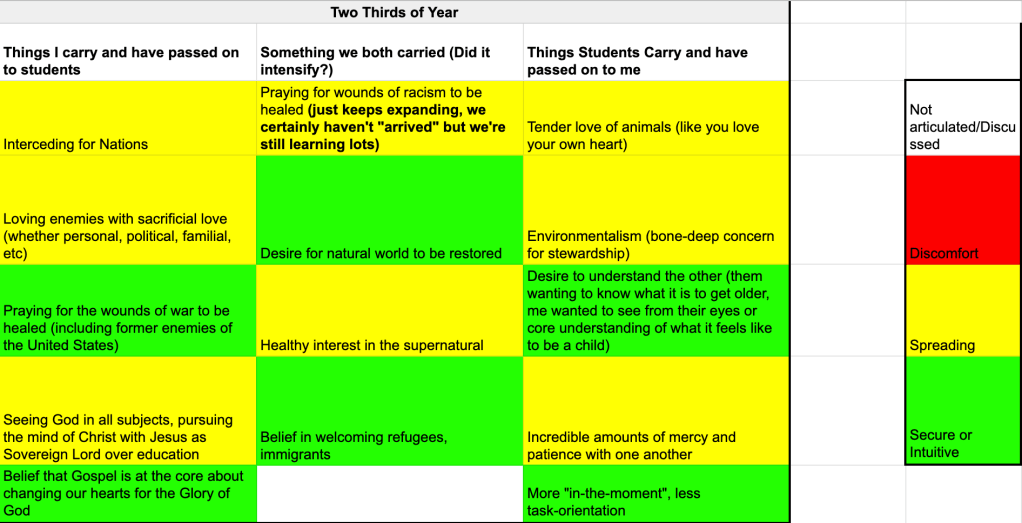
Think of this table as a kind of Venn Diagram. On the left are my interests, on the right are students’ interests, and in the middle are things we have in common. As the colors shift from red to yellow to green, that represents a deepening interest or comfort with a specific topic.
At the Beginning
Two-Thirds Down: As of March 14th
What they’ve received from Me
Focus on the Nations and Prayer
At the beginning of the year, not many of my students were comfortable with praying out loud. Through our Praying for the Nations projects, students became increasingly comfortable praying as both individuals and as members in a group. They allowed me to take them down a road of prayer that most wouldn’t have chosen, but many enjoyed. I saw students energized by the importance of their prayers, and their passion providing opportunities for them to step outside of self-consciousness to focus on others. I saw very unmotivated students pour their hearts into prayer. I also saw students develop a healthy curiosity about other countries, learn how to google information like pros, and internalize some basic concepts of intercession (like praying for the opposite thing to be released over a region, praying specifically about wars/regional conflicts, etc). Wow!
Praying for Enemies
This was a harder sell, but by praying for the people who led the Capitol Insurrection and talking about how it felt to be DC residents during that time, we really tapped into something powerful. Students are beginning to complain less about people who they disagree with politically and pray more for them. They are starting to see the connections between sacrificial forgiveness for those who hurt us and how conviction from the Holy Spirit can change people’s hearts.
Praying Healing over Past Enemies of War
I barely touched on the concept of praying for our past enemies and for the wound of war to be healed, but something deep inside of students just understood. Praise God!
Seeing God in All Subjects
When we met, students were not used to seeing Jesus as Lord of all subjects. As they’ve noticed connections between topics they once saw as separate, they are starting to see God’s closeness in all things. This has involved reflection and Bible study, as well as plenty of support from me, helping to bridge the gap. Studying concrete examples of people who were led from faith into social action has helped them understand (ex: stories of Saints who loved animals, like Francis of Assisi). I am praying that God will continue to develop their insight, as it can take a while for them to see that God is simultaneously greater than our understanding AND within the facts.
Believing that the Gospel is the key for Changing Hearts (and Social Change)
This is probably my greatest contribution this year. The kids seem to know that I care about this more than anything else, and seem to be intentionally clued into this concept across subjects. May genuine Christlike love always lead us into the unknown to follow Jesus!
What I’ve received from them
Tender Love of Animals (like you love your own heart)
I have been just overwhelmed by students’ love for animals this year. Their passion has caused me to reflect on the ways I interacted with animals at their age, and the emotions behind feeling grief over the brokenness of creation. Check out this post about what those conversations have looked like!
Environmentalism
If I’m being completely honest, I’ve gotten a little too sloppy in my habits. I just was not as convicted as I should have been when it comes to energy conservation, recycling, and more. My students’ sincere concern for the islands of trash in the Atlantic and Pacific oceans really changed me.
Organic Connection
Throughout the school year and like all years, I’ve listened to my students eagerly and enjoyed figuring them out. This year, my students had so many questions for me about what it meant to be an adult, what it means to grow older, and about me in general. In my last school, we had to skip morning meetings and other important rituals because my administrators saw connection as an enemy of learning (it was not valued in and of itself). It took me a while to realize that I had permission to make connection central and not something that had to be snuck in almost secretively. If I’m being honest, this is one thing I picked up from my former workplace that has taken time to unlearn, but my students are sincere and savvy. I’m excited to have another year with my 3rd graders, and see my 4th graders thrive in the challenge of middle school.
More in the Moment, Less Task-Oriented
Having more freedom and autonomy to manage my day has allowed me to be much more in the moment with student interests. Them being so young has also forced me to set aside my grown up cares in order to have fun and meet them where they’re at. To be fair, balance has been hard to come by during this time of distance learning, but I’ve gotten us into a routine of shutting off screens over snack and lunch, and writing, reading, or socializing face to face after our morning and afternoon Zoom calls. I’m reflecting this week on how Benedictine rhythms can further balance and strengthen these opportunities once we return from Spring Break.
Conclusion
As I plan for next Quarter and next school year, it’s refreshing to see how much there still is to learn, but how much we’ve learned already. I have a couple tricks up my sleeve to end the school year strong. For now, I will use the rest of my Spring Break to store up rest like a cactus takes in water.
March was full, sweet, and sour. Some hints of rest, lots to consider, and some weighty concerns for prayer.
Simple Pleasures
Being on Spring Break!
March 26th was my 7 year Jesus-versary
Seeing my students hungry to know more about God. Our lunch period frequently turns into a student-led theology block where they bring me their wildest questions (ex: “How can I be closer with God?”). My third graders will literally hold their breath until I have finished answering so they can insert their question right after the words have left my mouth. I breath when they are talking. And we go back and forth like that until they have run out of burning questions and are ready to talk about something less intense (like dogs).
My new hammock. Some purchases are frivolous, but others are life-changing. I’m so excited to read books on my kindle and lounge throughout the rest of this week and summer!
Enjoying the benefits of Intermittent Fasting
Just re-started mosiacing with a friend! Looking forward to the stress relief and the creative outlet
Deeply celebrating Easter and Passover with my new church community. Feeling really at home in that space and getting to share meals with people.
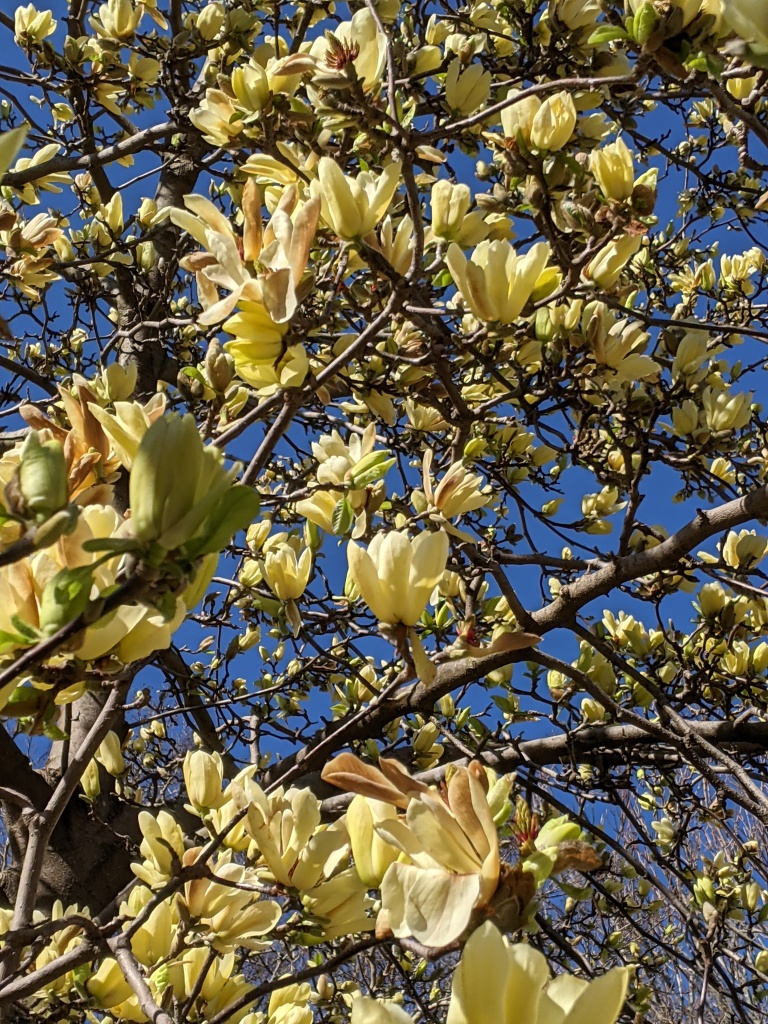
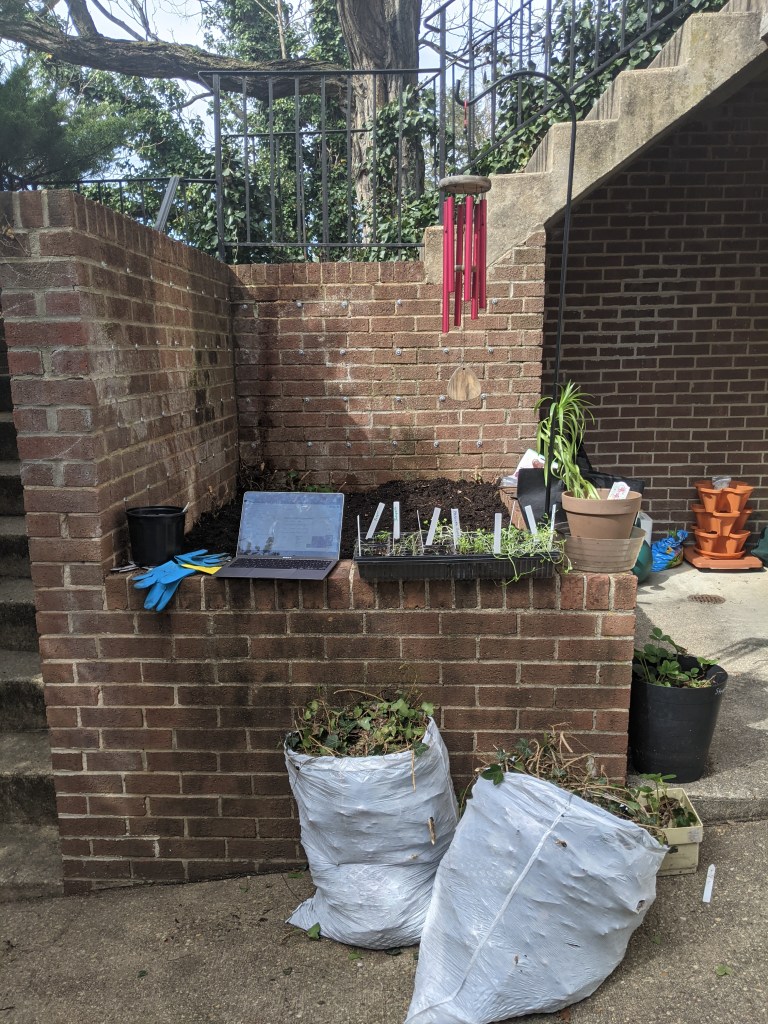
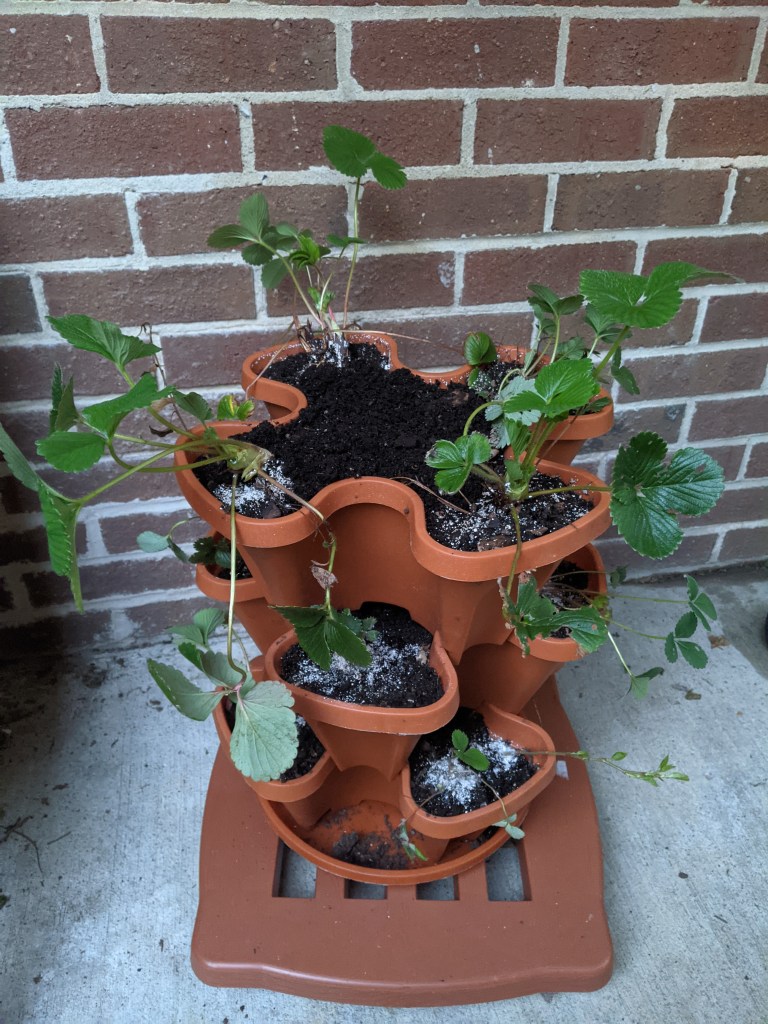
Gardening! Repotting my strawberries, seeing my crocus, daffodils, and grape hyacinth bloom, ripping out English Ivy and adding a trellis. planting my vining Jasmine and sweet peas, having many seedlings on the way
Important Updates
I will find out later this month if I’ve been awarded a scholarship that has the potential to pay for the rest of my degree
Been receiving some important dreams about next steps regarding career stuff
Shifting Priorities on Friendships
I intentionally pulled back from my normal rhythms of hanging out with friends last month, both to focus my energy on completing my Contextual study and to reflect on how my priorities for friendship having changed within the last year. Lately I’ve noticed that I am seeking out certain types of people more than I have in the past, and needing more distance from others, based on the season of life I’m in. These are some general trends I’m noticing as my preferences shift.
Personalities I crave like I’m missing a vitamin:
People who will talk to me about Theology and want to go deeper
People who are wildly creative (in prayer, in their teaching as a craft, in entrepreneurship, and more)
People who are dead-set on worshipping Jesus as the sole object of their sight!
People who believe the Church is worth fighting for
People who genuinely LOVE making peace with those who disagree with them
An added plus
The type of people who clean up trash that isn’t theirs, and genuinely want to leave spaces better than they found them.
People who love to cook and will push my creativity. Also, people who will let me feed them and will enjoy my food.
People who are anointed listeners, who can help detect the root cause if I’m sharing something tender and encourage/empower me to pray into it.
People who are weirder than me (so I don’t have to be the weirdest for a while).
Gardeners! This one has the effect of being soothing to me, because so much of my family is into gardening, horticulture, botany that people who have similar interests carry a specific kind of peaceful familiarity. Also, people who aren’t necessarily skilled but have an interest in talking about plants and will allow me to share the many things I know.
People who take big risks, people who aren’t afraid to speak with conviction (whether in gentleness or healthy boldness).
People who I can comfortably talk to about next to nothing (history, ease, accumulated time). To be able to pull this off, you have to be really good at taking yourself less seriously.
People with pets I can play with.
People who have a lot of working knowledge about different cultures and can apply it fluently in a way that honors and ministers to those communities.
Women who have more experience than me, both in age or by the virtue of other life experiences (as mentors, adoptive older sisters, adoptive grandmothers, friends).
Becoming less crucial
People who had specific advice for how to navigate D.C. (first 2 years of me moving here).
Friendships with people who are different from me just for the sake of learning from those differences (pursuing difference is healthy only when you preemptively build rapport by building common ground).
Adventure partners who AREN’T also hungry for God.
Would Judas have still killed himself if the religious authorities had taken accountability for their role in Christ’s death?
How can Benedictine spirituality provide me a model of classroom management for after Spring Break? How can it help re-balance our classroom dynamic this fall, in a mostly post-COVID school year?
How did animal and plant life look before and after the Fall?
Things I’m Praying For
At work:
Favor (not favoritism), the softening of hearts
For everyone in my school community to know the love of Christ personally, at an identity level
Since kindergarten, students in my 3rd and 4th grade classes have zealously studied environmental pollution at a rate that has baffled their teachers. Through whole group research on the North Atlantic and Pacific Oceanic Garbage Patches to guest appearances by 1001 pets on Zoom to Student Inquiry projects on pollution, students’ enchantment with nature knows no bounds.
Quail was a frequent visitor from December until March
Comparing her doggo to the Otters we studied that day and to foxes
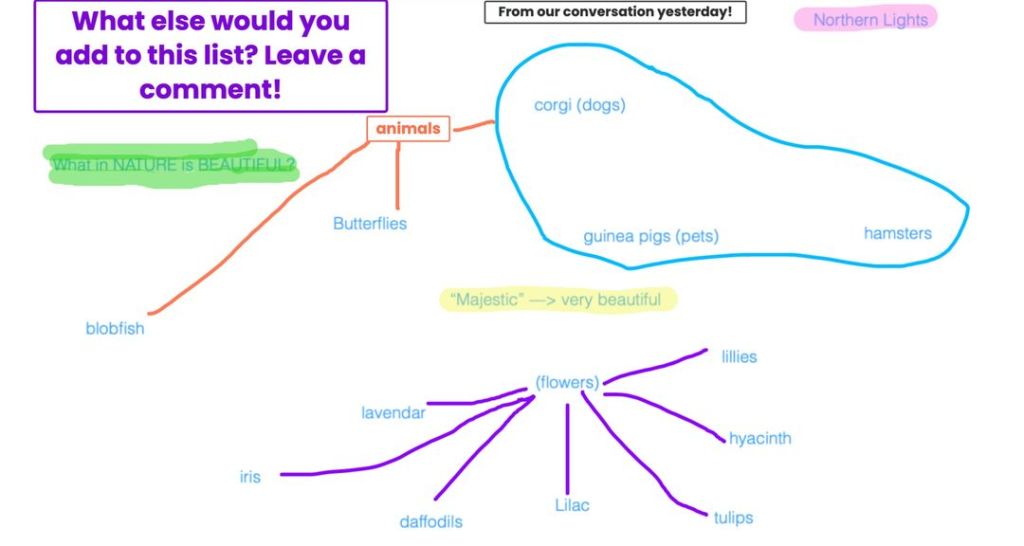
There are many things students love about nature, from various kinds of flowers to obscure animals. As students’ love of animals has grown, their capacity to be heartbroken at the brokenness of animals has also increased, along with sensitivity to the realities of life and death that we experience on this side of eternity. Just several weeks ago, one of my students’ quails passed away. His grief over his quail inspired this activity, as the sadness it caused him to lose his appetite for several days.
Undoubtedly, nature has its fair share of cruelty. From animals who cannibalize, drown, consume, or maim one another to the diseases that ravage both flora and fauna, creation is imperfect. Whether by encountering baby birds or shells that tell the story of life too soon ended to quieting an irrationally anxious dog, students encounter evidence of that imperfection all the time.
Is there an antidote to creation’s brokenness? And how should we as human beings react to environmental dysfunction far greater than ourselves?
Environmental Sin
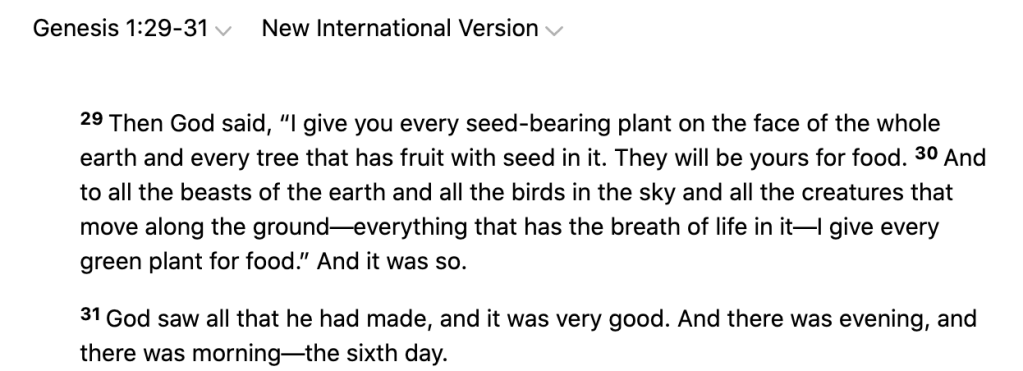
Originally, Adam and Eve were entrusted with the stewardship of all of creation. God created humans and all animals and plants according to his own heavenly blueprints. As co-laborers, humans were responsible for the safe keeping and care of nature. Animals were created to be under humans careful protection, but not in conflict with them. God designed humans to consume grains, seeds, and fruit, and animals were created as herbivores. In this state of being, humans were in right relationship with God and the rest of creation.
However, human’s sin drastically altered creation. As stewards, Adam and Eve’s sins had monumental effects on the life forms under their care. As a general rule, the precepts that God gives to humans have always effects on the animals under their care. For example, in Deuteronomy 28, the regulations related to Sabbath rest were not just for the Israelites, but their livestock. In Exodus 23:12, God also protects the Israelites livestock as an extension of the graces he extends to them as a people traveling through the wilderness, towards a new land.
Sin had the effect of placing a barrier between God and human beings (Ezekiel 1:22, Matthew 27:51). The removal of the blessing of God and manifest presence of God on the earth monumentally changed relationships between humans and creations. Humans, animals, and plants began to die or develop diseases. Humans no longer experienced the intimacy of life in the supernatural realm, and the Earth was no longer like Heaven. Plants began to produce “thorns and thistles” (v20), and there was enmity between humans and animals (v15). This set of consequences brought with it enmity between men and women, and enmity between people groups more broadly.
Hope for Creation
So what can be done to counteract these curses? It is important to recognize that as originators of sin, humans are responsible for the redemption of the Earth. Part of this has to do with the intrinsic connection humans have to the Earth. The Hebrew word for man is “admah”, which translates to dust or earth. Since man was made from dust (Gen 2:7) and is set to steward it, restoring humanity is inseparably connected to the redemption of the Earth. Therefore, Christ’s death and resurrection isn’t just a promise made to humans, but a promise of redemption to all of creation more broadly.
In spite of the effects of sin on creation, animals still demonstrate the majesty and beauty of God in unique ways. One could argue that God’s grace has preemptively covered plants and animals as evidenced by their many adaptations, to overcome their limited circumstances. A great example of this are troglodytes, cave-dwelling animals who retain non-functional eyes. One can also see the mercy of God in the way that animals can serve as surrogate mothers to animal infants from the same or different species.
There are several popular theories among theologians about the exact ways God created the Earth, according to Genesis. While some people believe the Earth was created in 7 calendar days (Young Earth Creationism), there is enough evidence of changes in human lifespan and years as a whole to question the concreteness of humans experience of time prior to the Patriarchs (see Genesis 6:3).
Understanding the exact period of time that it took God to create the earth falls into a category of Holy Mysteries that I believe has to be revealed sovereignly by the Holy Spirit. That being said, I do wonder whether “days” in the biblical sense is much like “ages”. It is important to notice the specific order of creation mirrors many current scientific findings about the formation of the Universe. Genesis 1:1 discusses the earth being “formless and void”, which relates to these scientists theory of protoplanets. Over time, elements combined to create the sun and other solar system oddities, hence, “Let there be light.” The reference in Genesis 1:6 to “separating the waters above and below” relates to the creation of water on earth and atmospheres, as well as Earth and Heaven in the supernatural realm (“the spirit of God was hovering over the waters”). I believe Genesis 1:5, in which God separates light and darkness, should be interpreted both literally and abstractly as a spiritual reality. The reference in Genesis 1:6 to “separating the waters above and below” relates to the creation of water on earth and atmospheres, as well as Earth and Heaven in the supernatural realm (“the spirit of God was hovering over the waters”). Allowing dry ground to appear (Genesis 1:9-10) reminds me of the concept of Pangea. The creation of plants (Genesis 1:11-12) cooled the climate and provided much of the oxygen necessary for the development of animals. Further developments in the solar system, the stars, and the moon allowed for the seasons (the exact timing of this one is still a puzzle to me). Animals first developed in the water then the sky and land (Genesis 1:24-25). Eventually, God created human beings (Genesis 1:27-28). It ends in rest.
In general, I recognize that our current understanding of science has room to change and grow over time. At the same time, because of the nature of these Holy Mysteries, I believe that the most fruitful scientists will actually be people whom God can trust with the revelation of these mysteries, and who are alive in the Spirit.
If Darwin were unilaterally correct, I believe that we would see creation acting in not just more sophisticated, but more spiritually redeemed ways over time. Although I love nature, that is not my experience of most animals or plants (with the exception of dogs…just joking). I believe that nature needs saving just as much as humans do. And I’m looking forward to seeing plants, animals, stars, and all manner of created things restored by the one who has conquered it all.
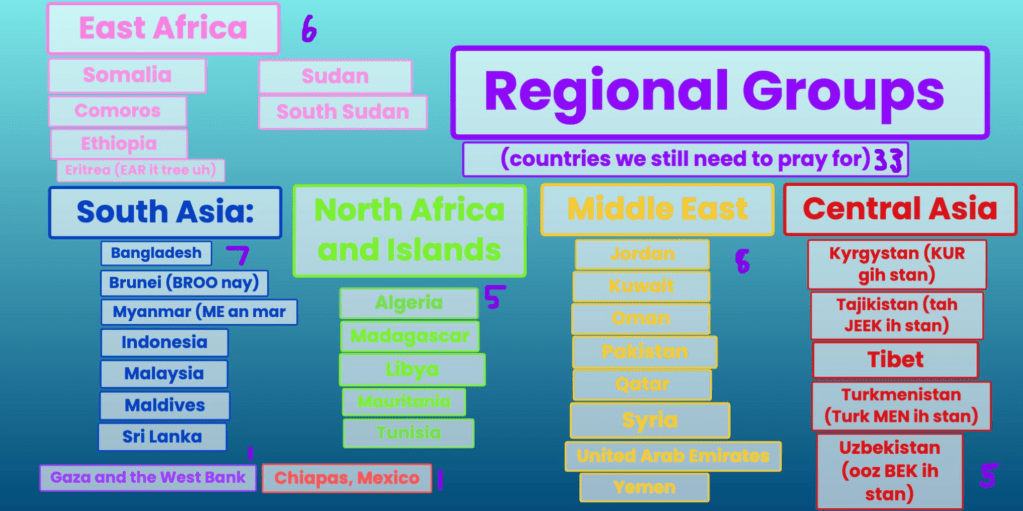
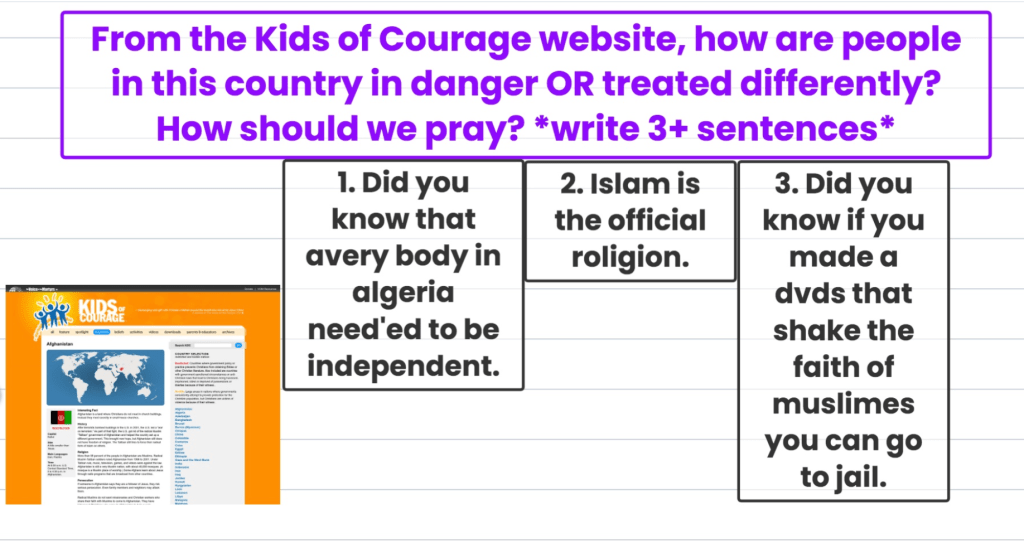
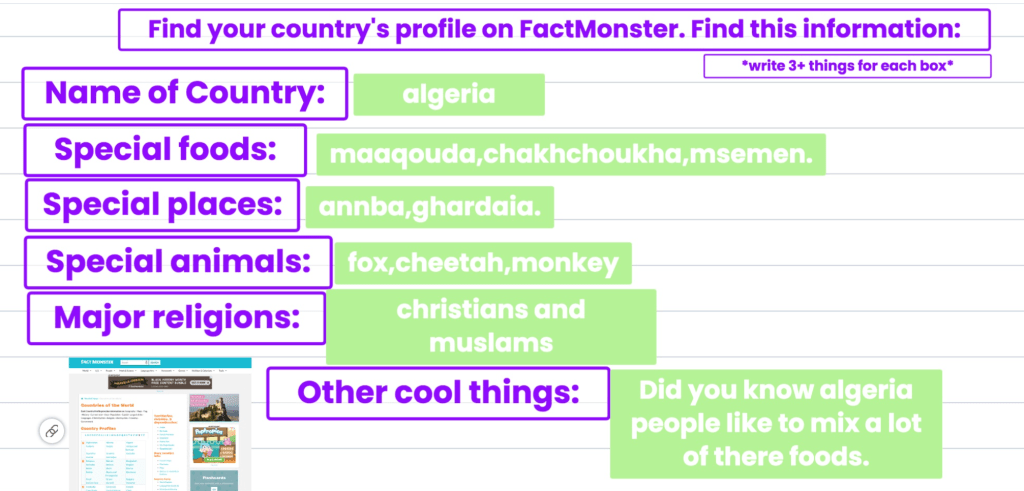
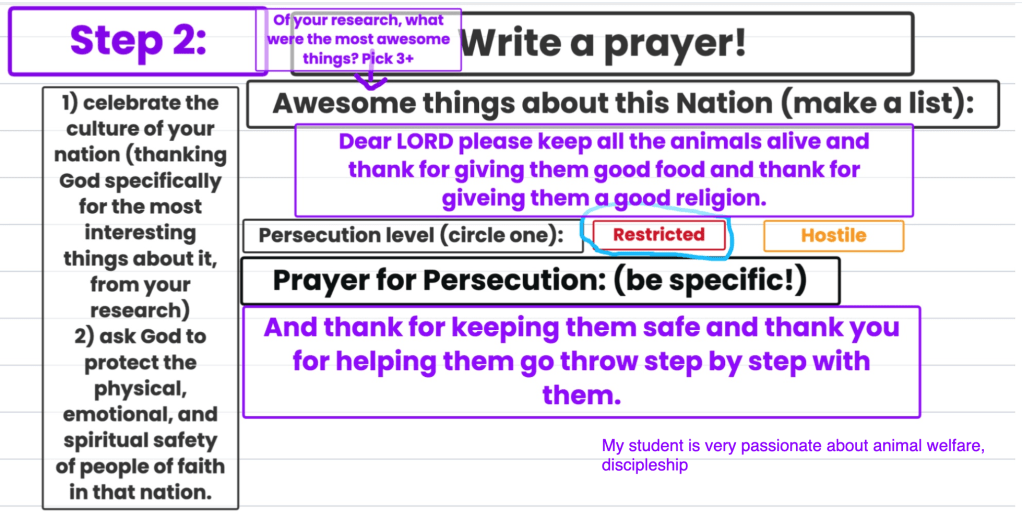
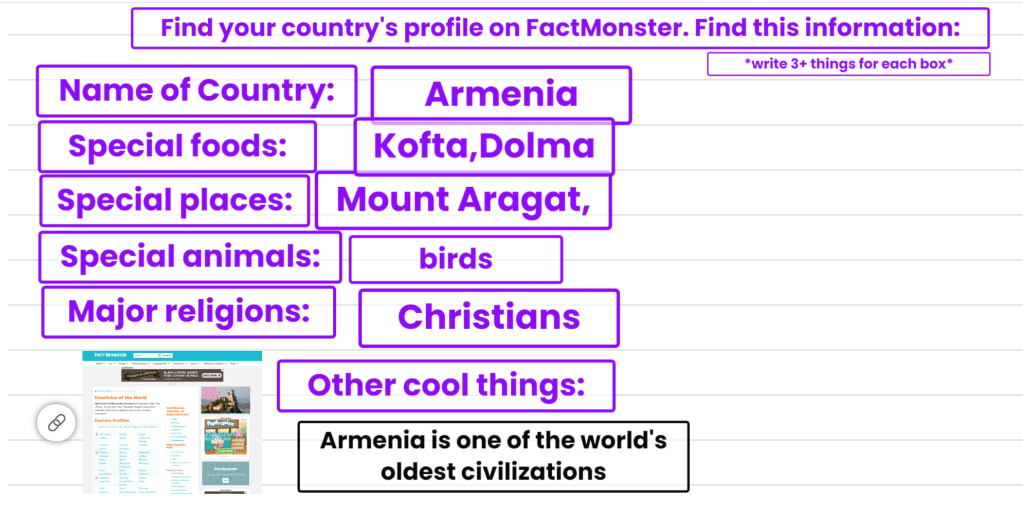
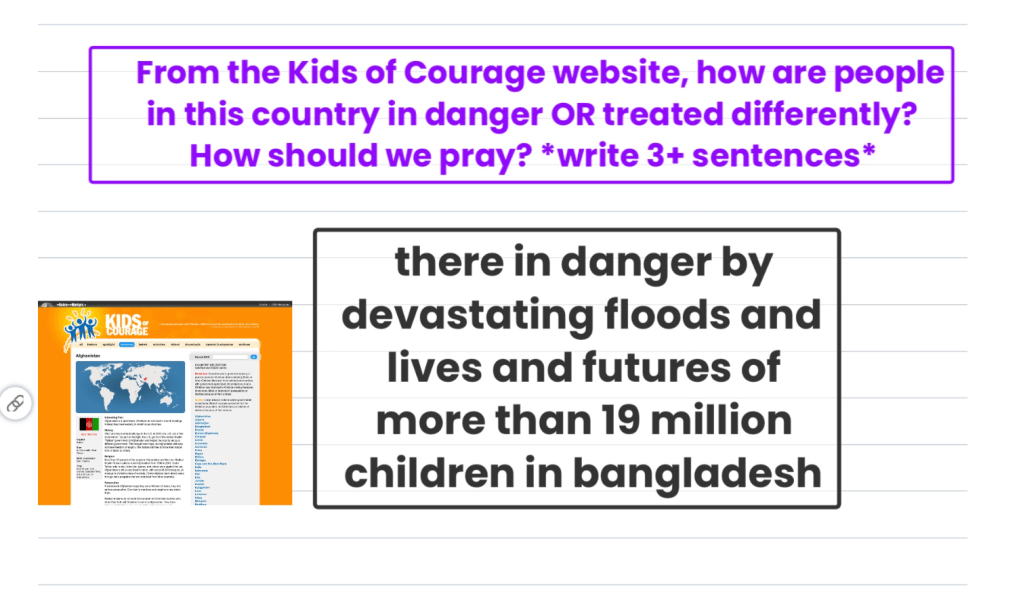
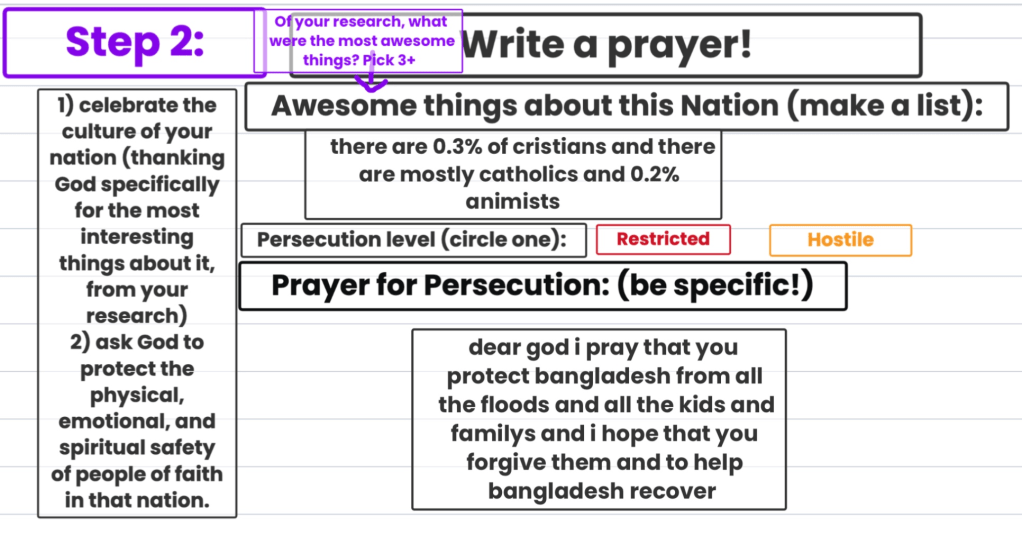
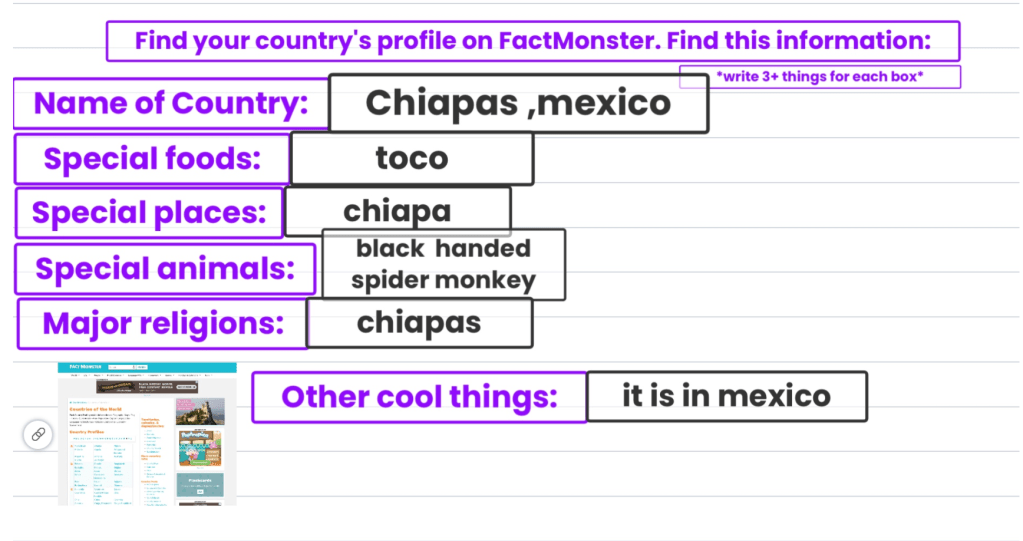
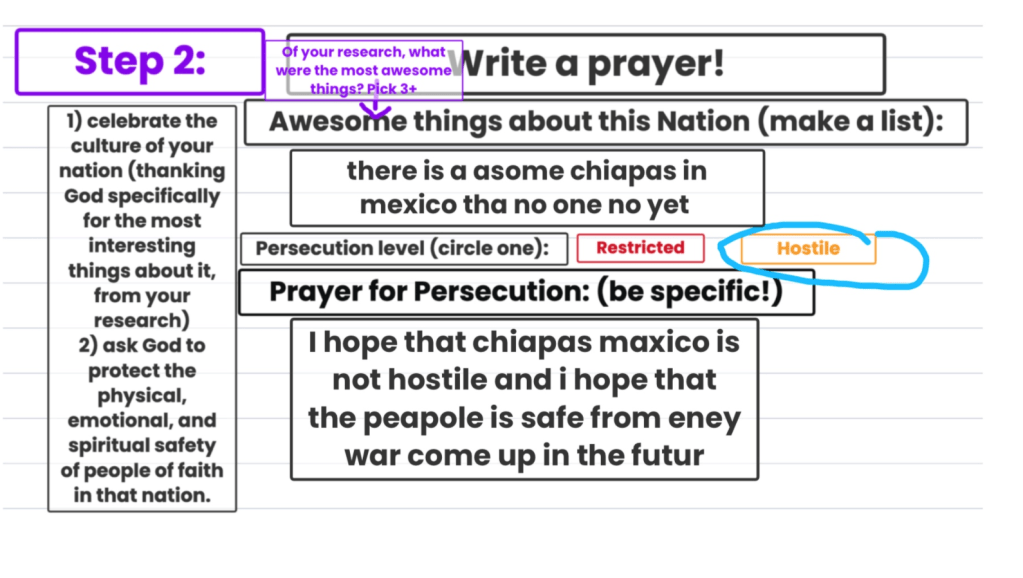
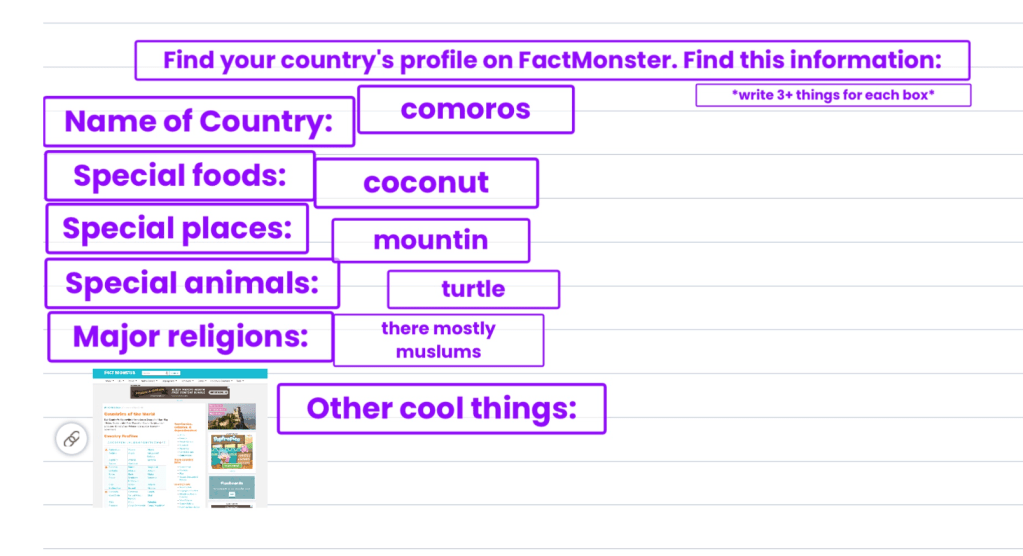
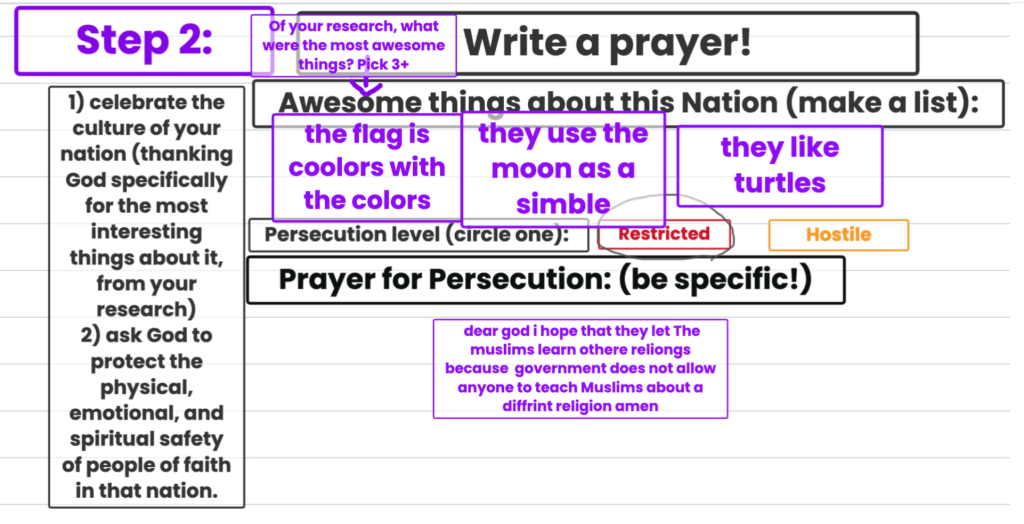
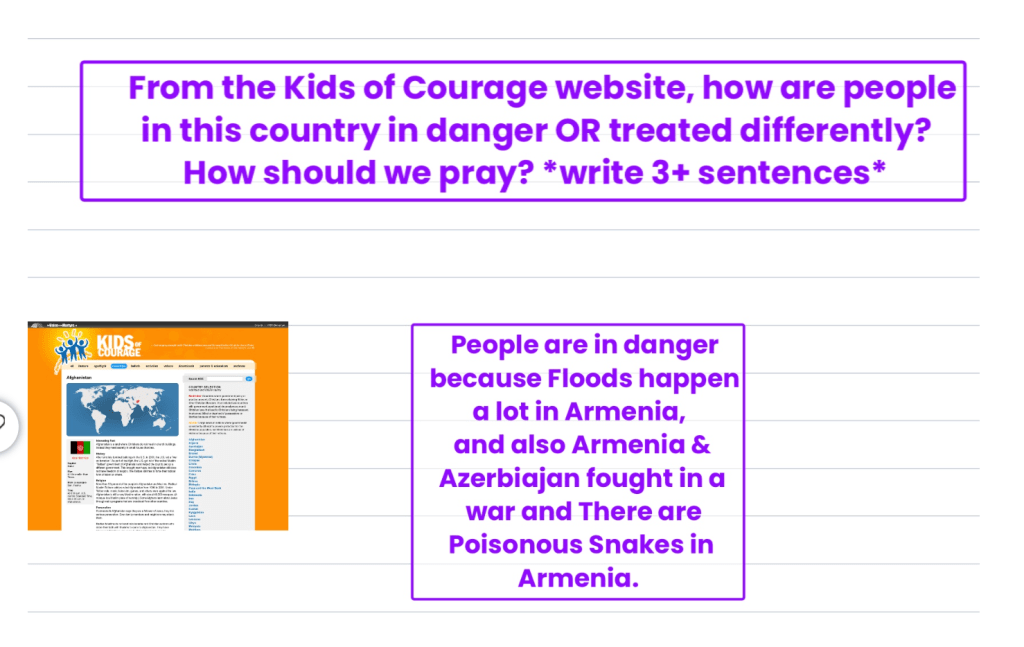
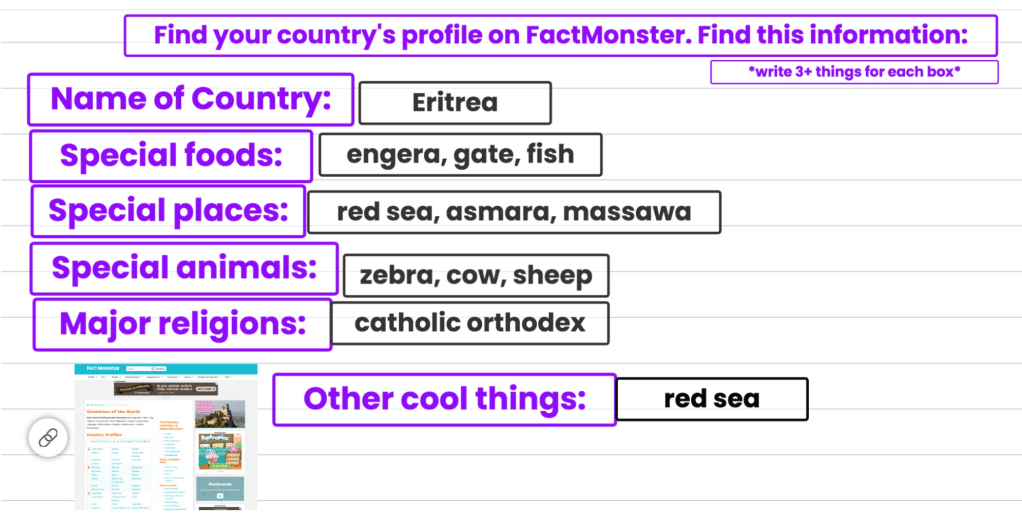
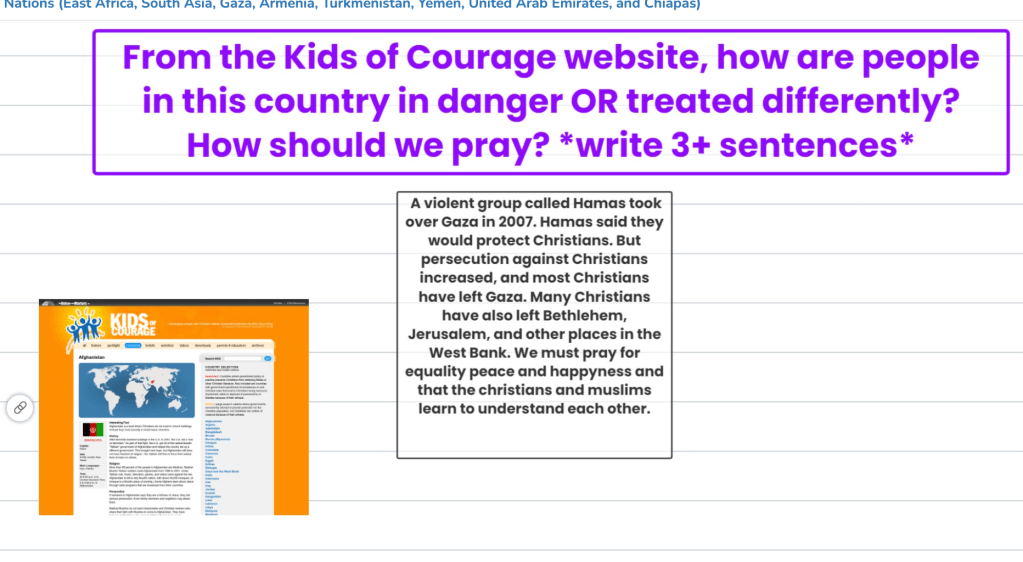
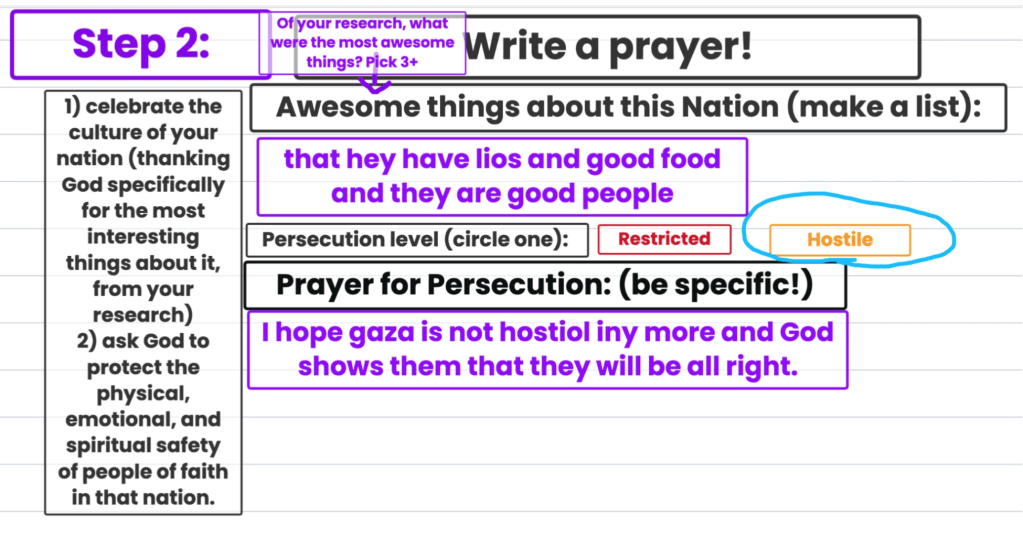
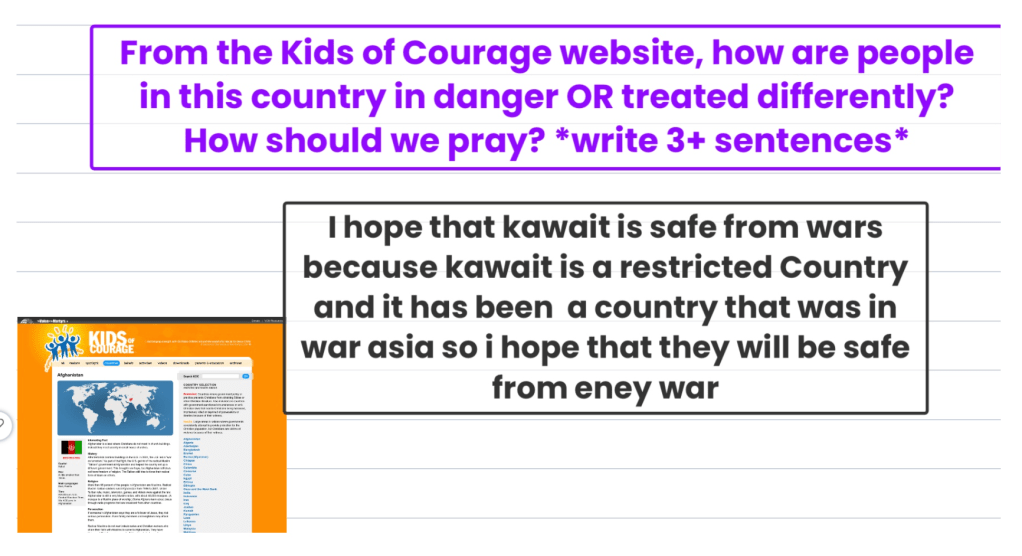
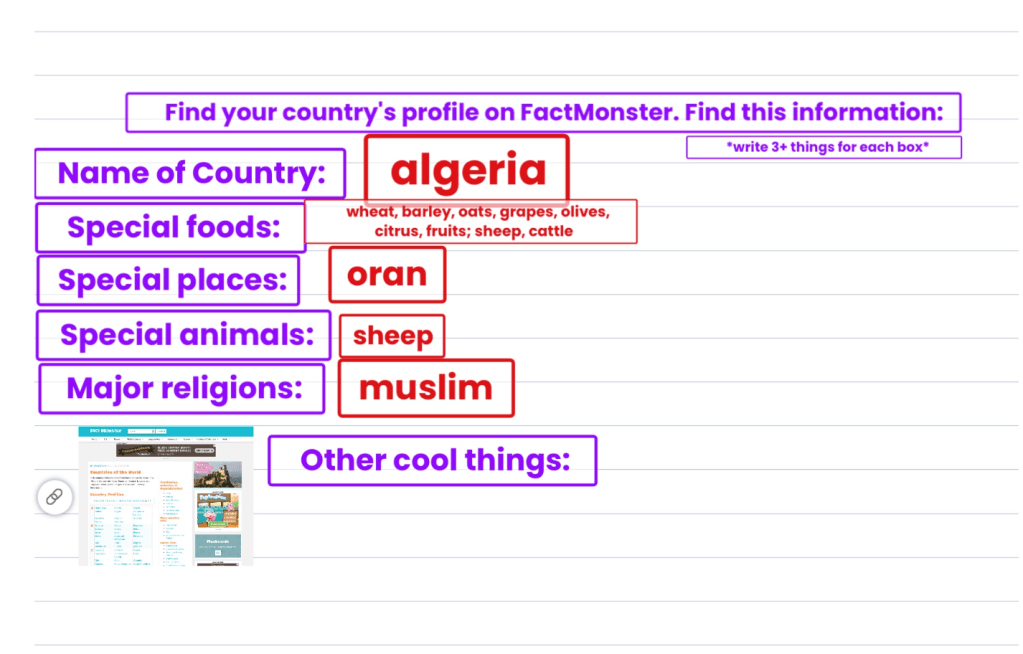
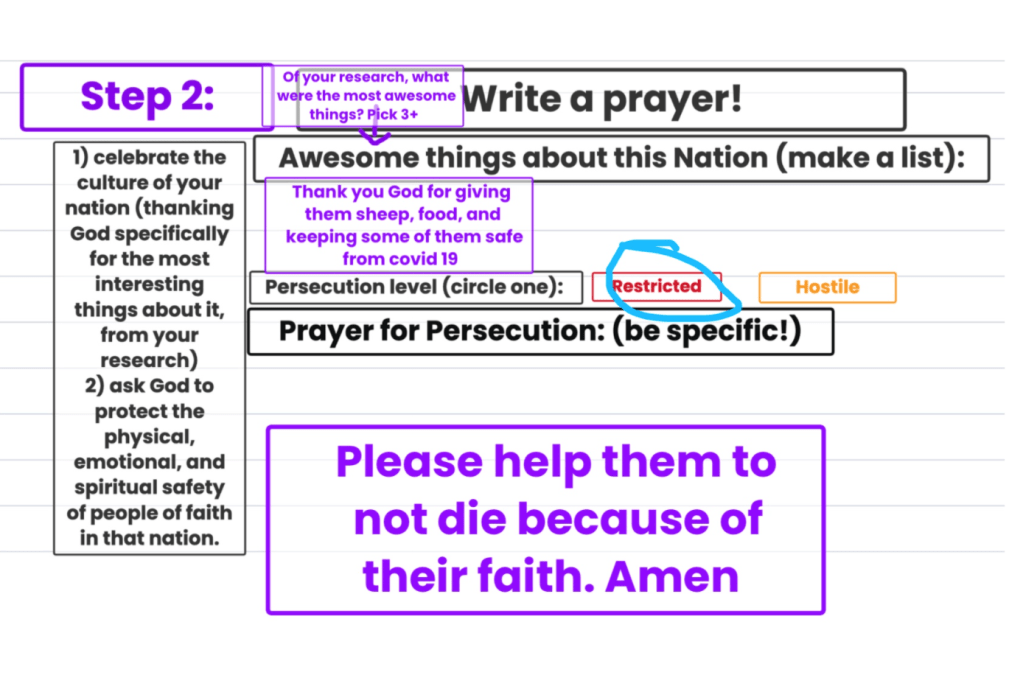
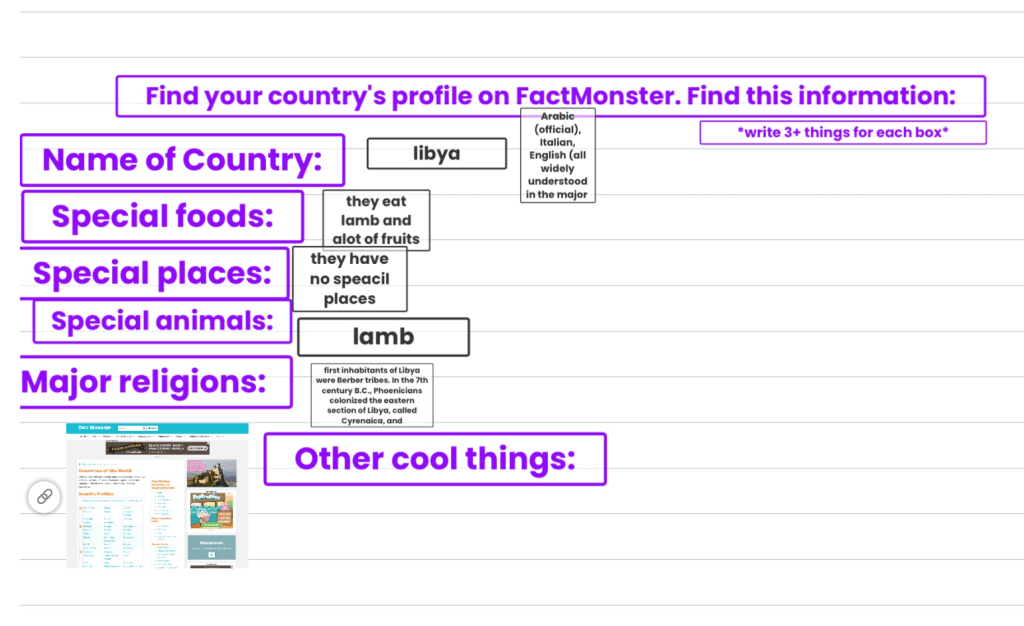
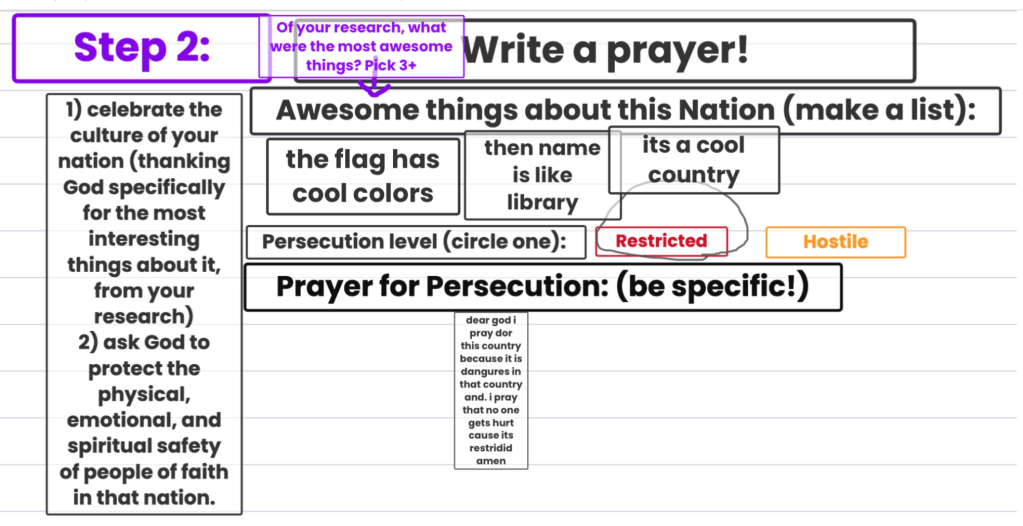
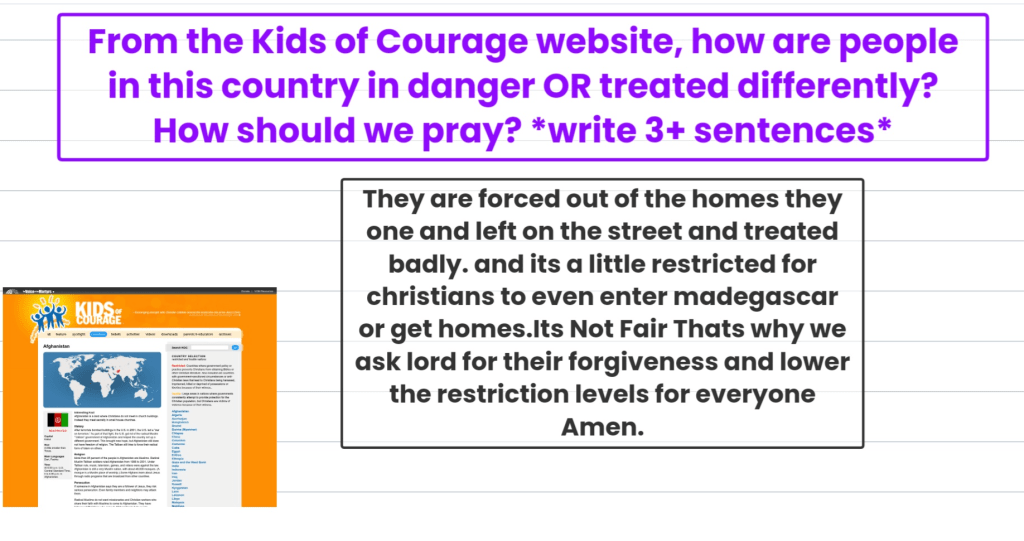
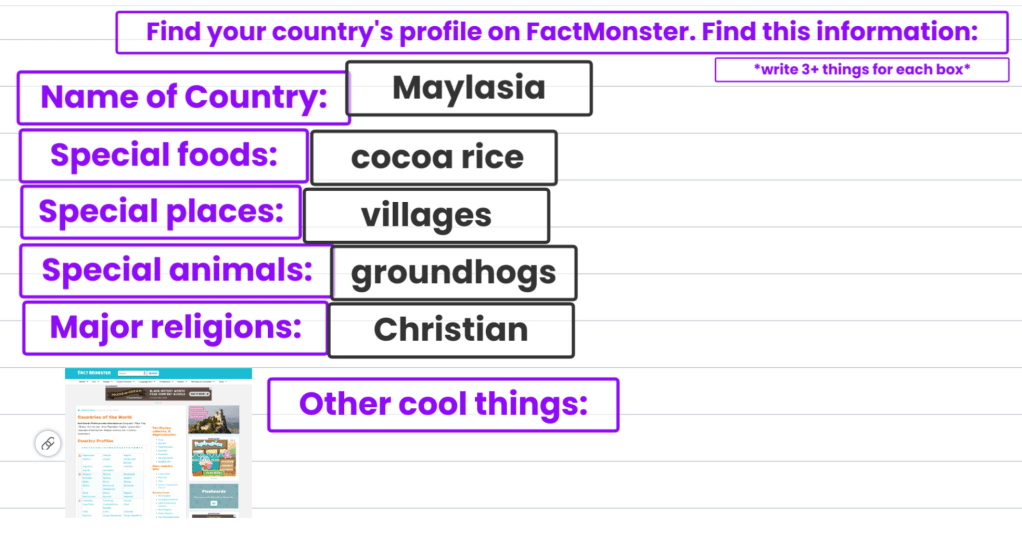
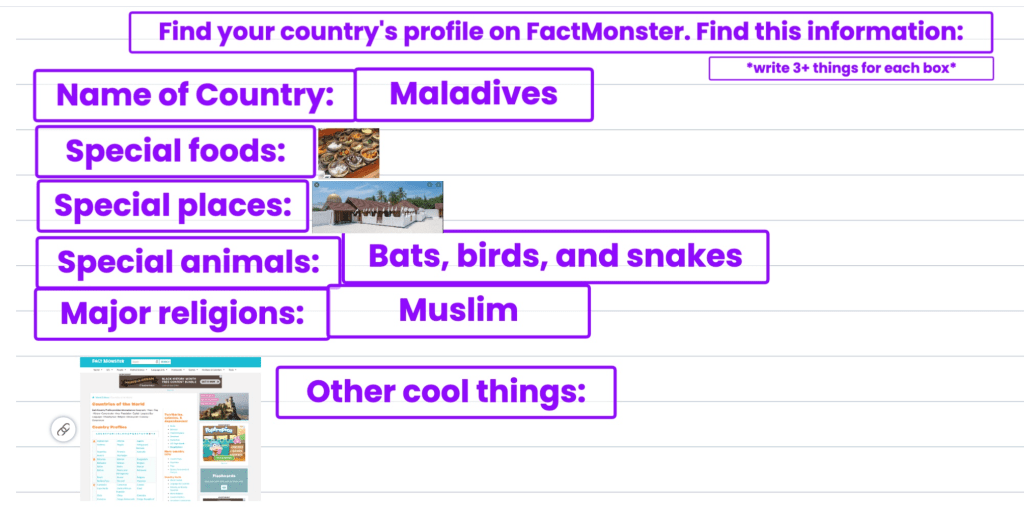
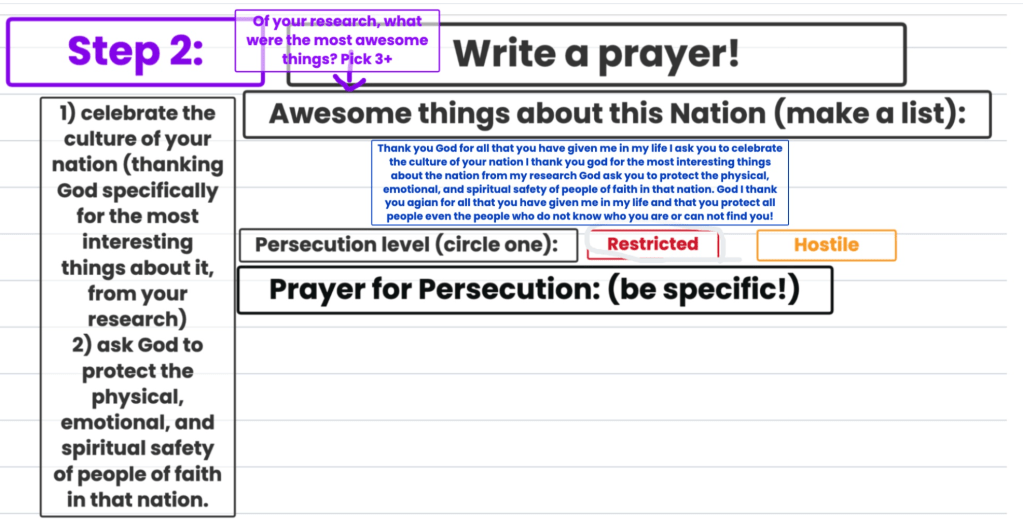
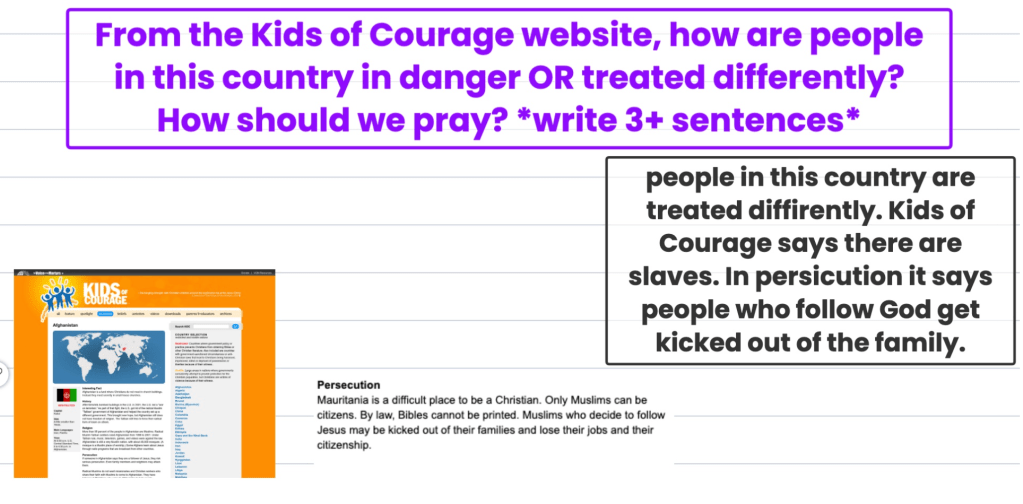
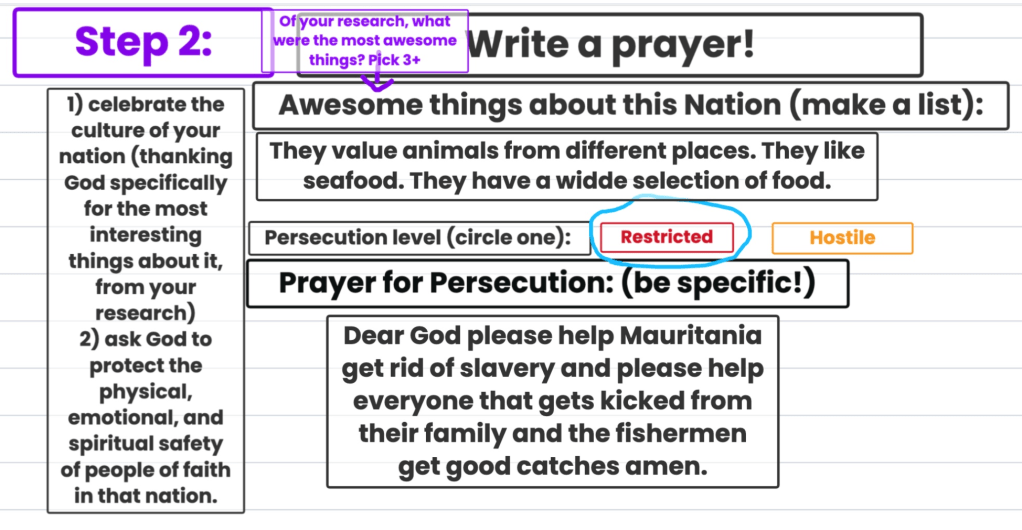
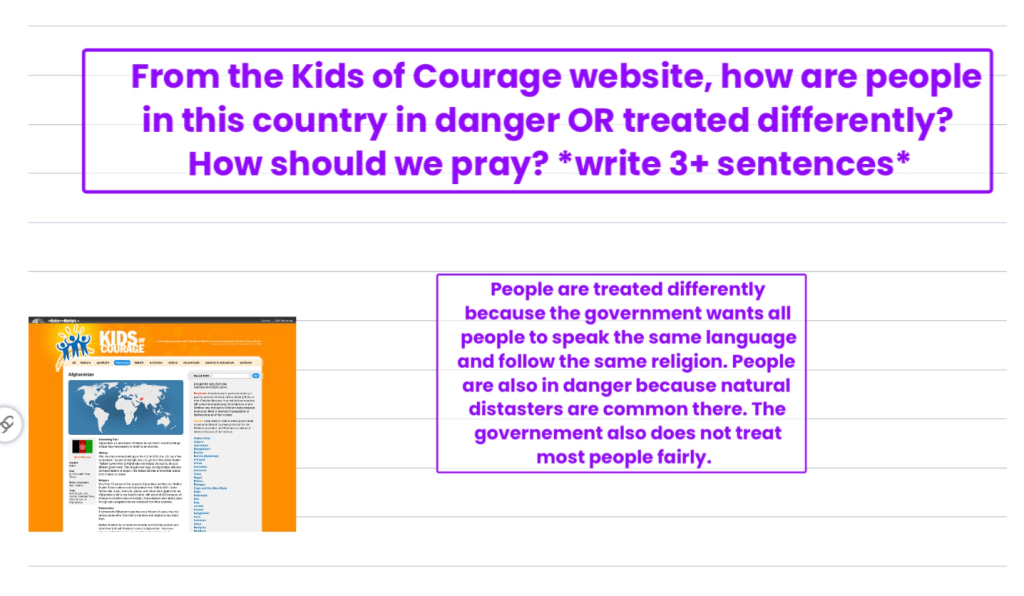
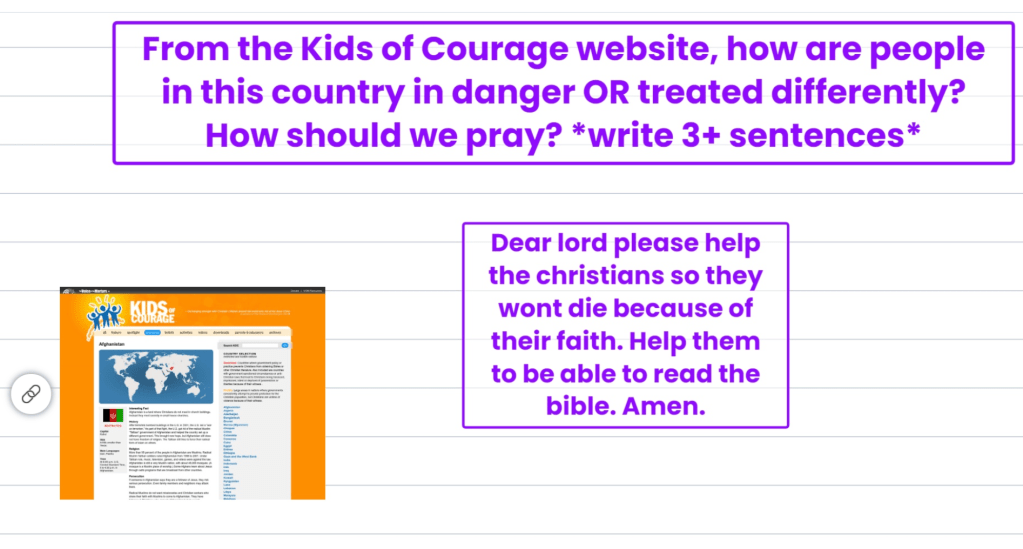
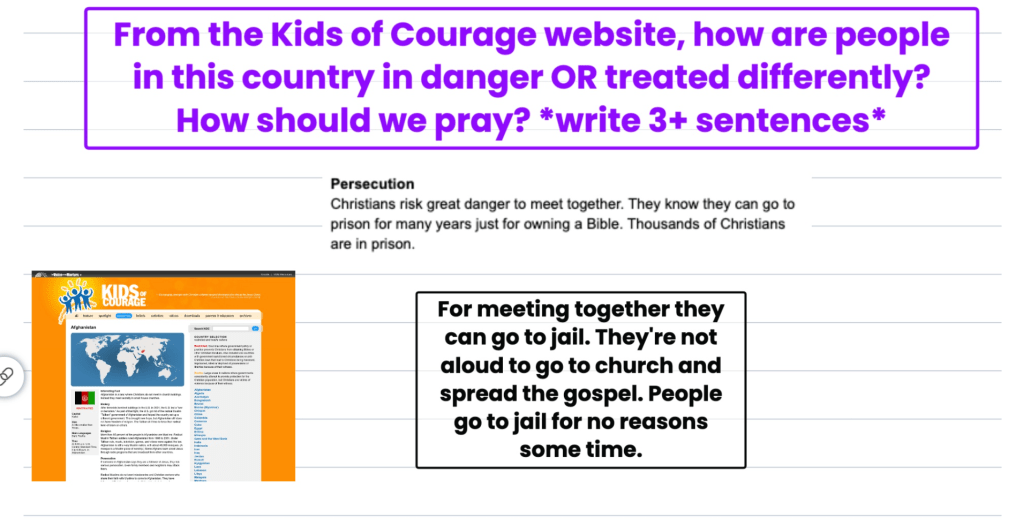
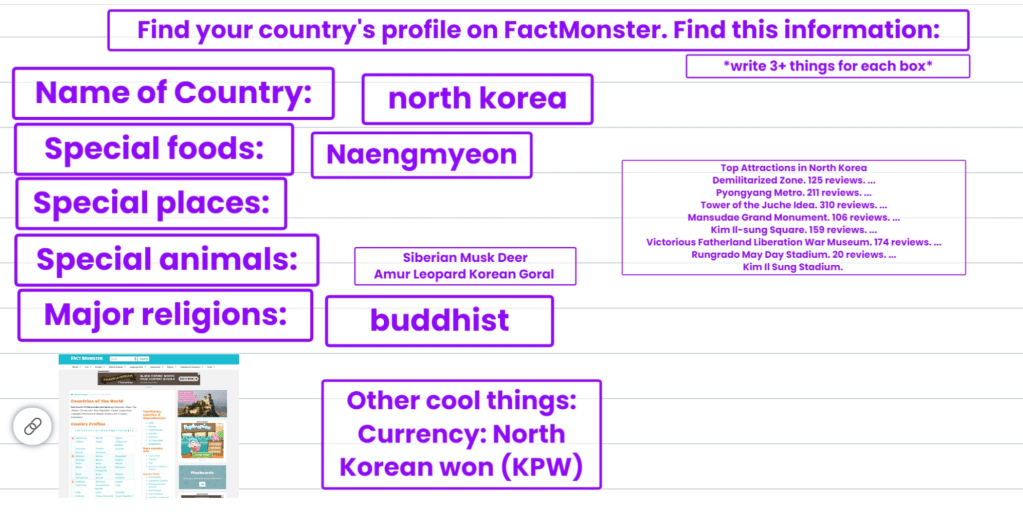
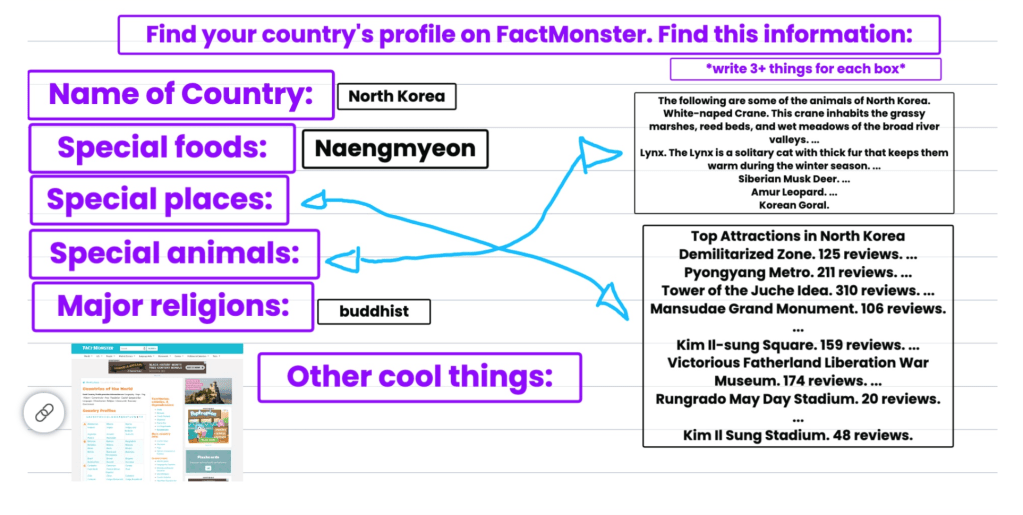
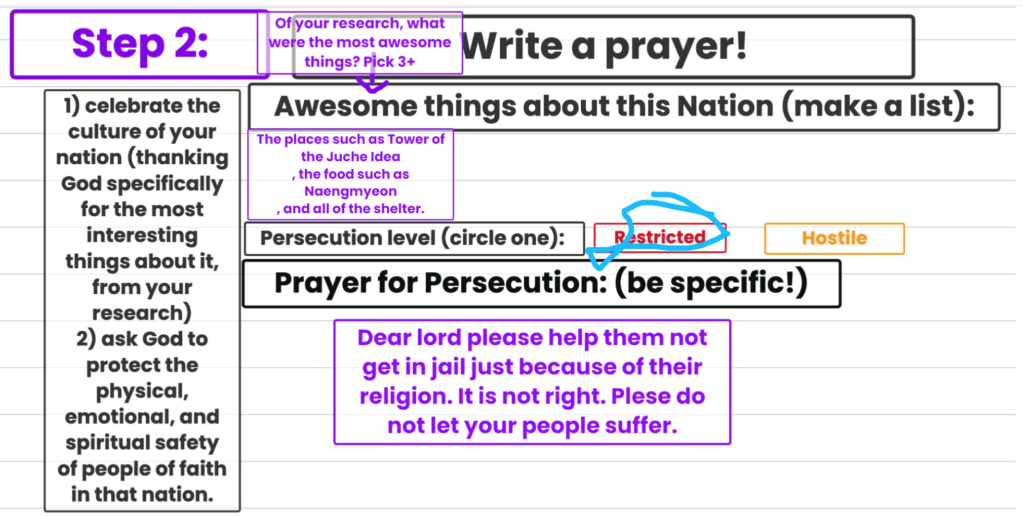
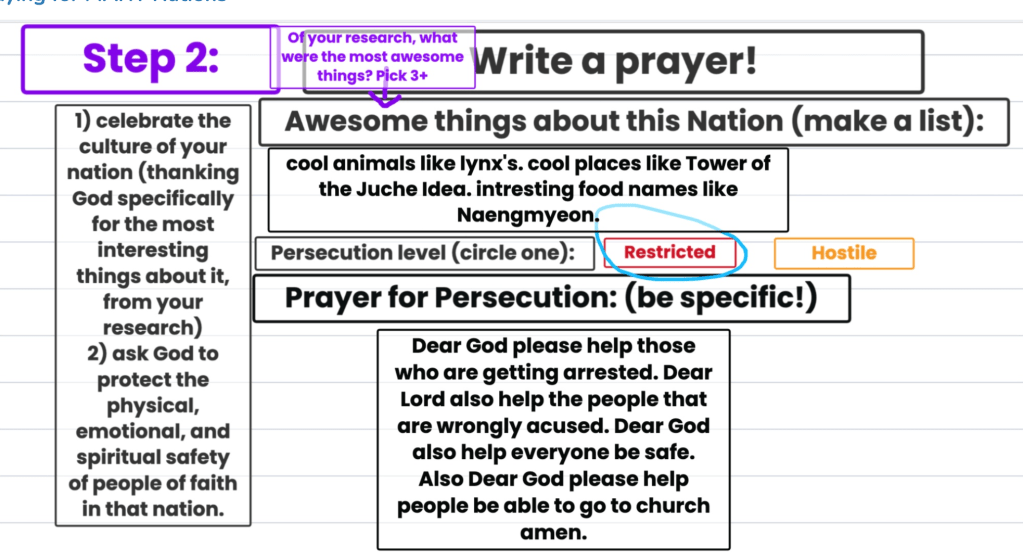
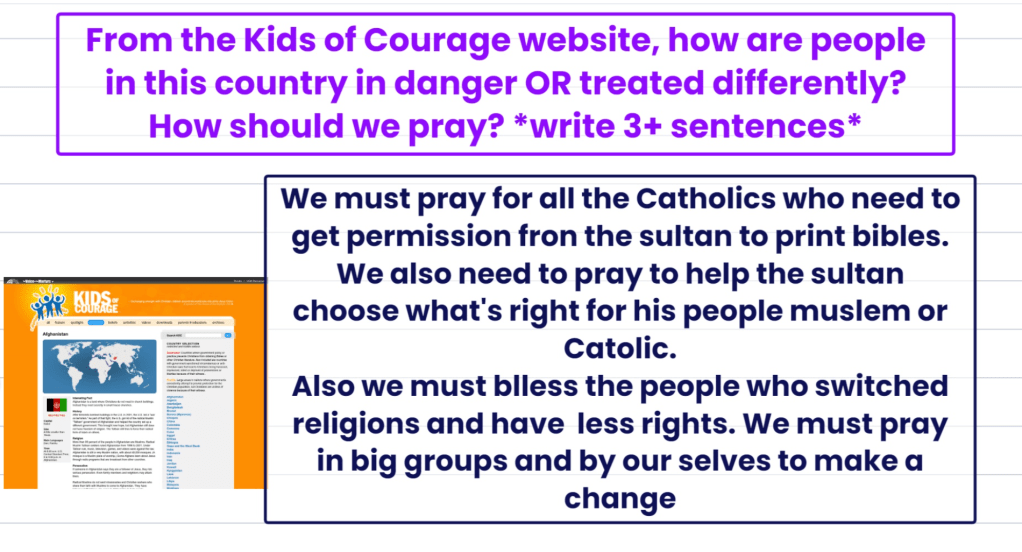
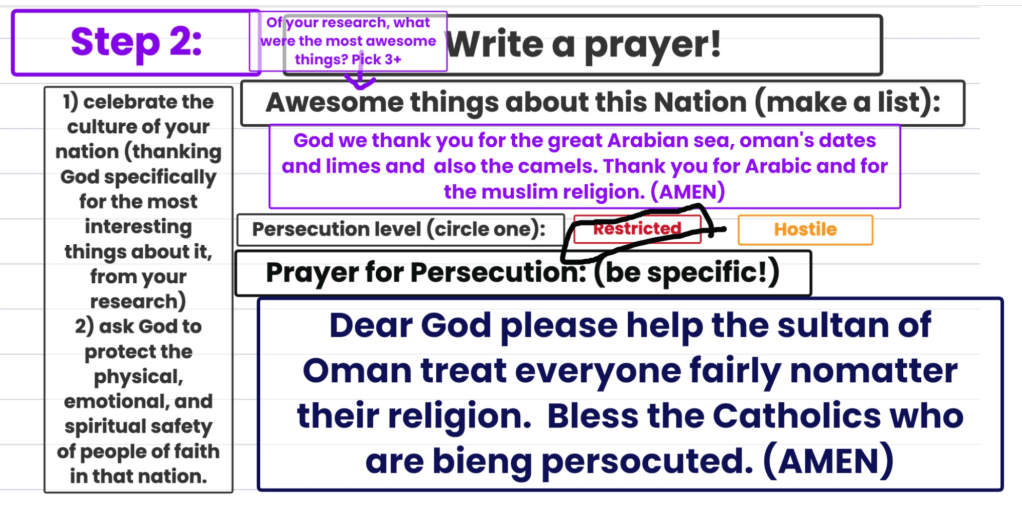
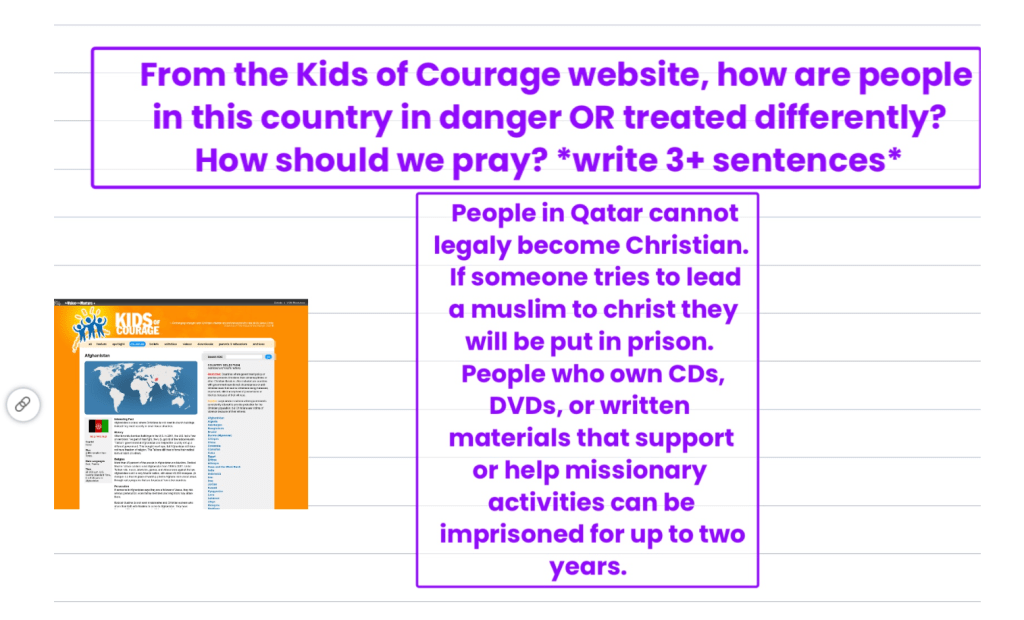
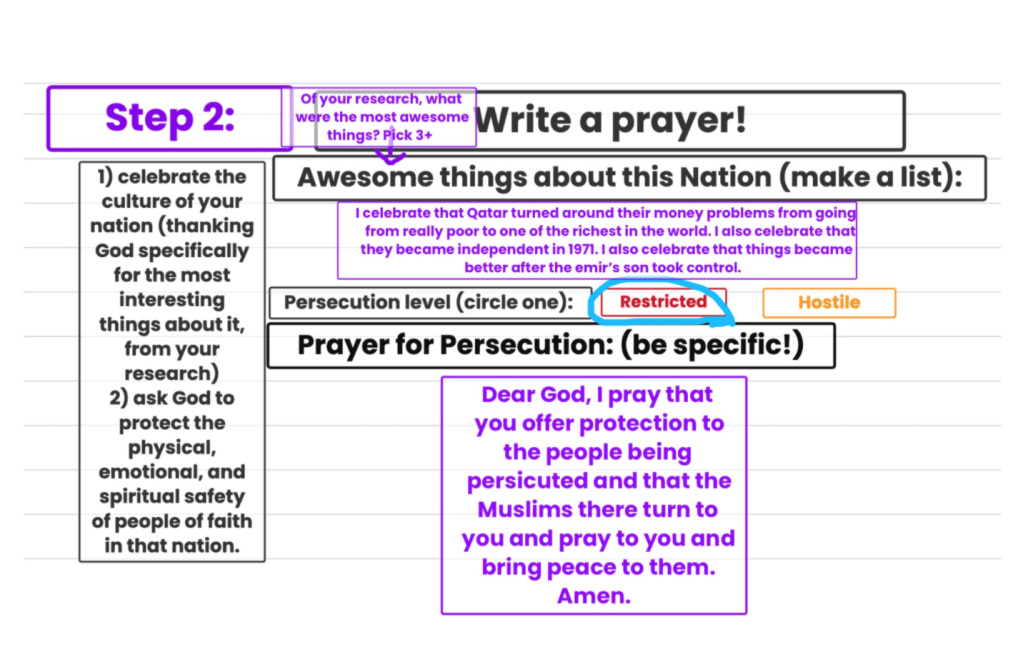
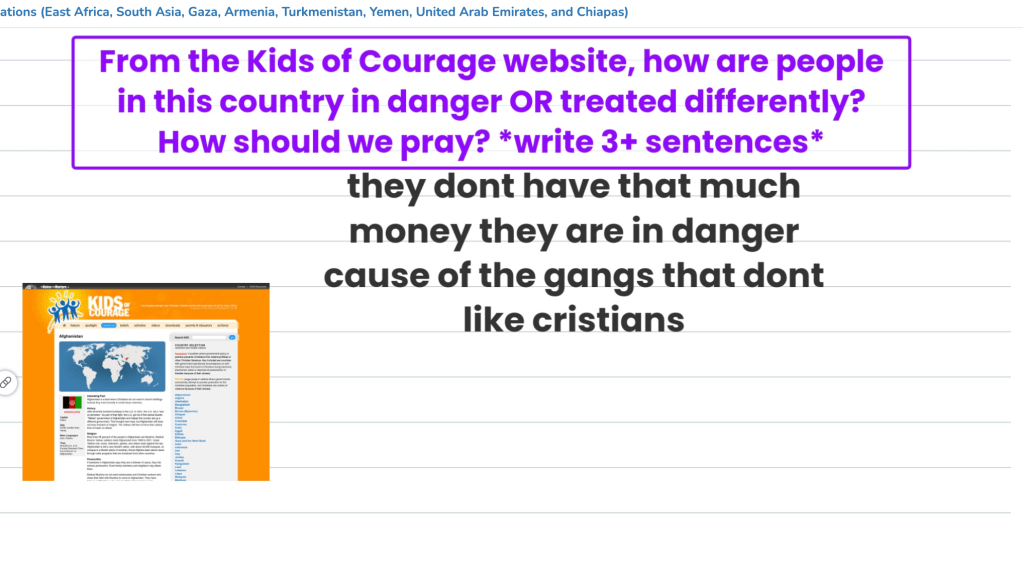
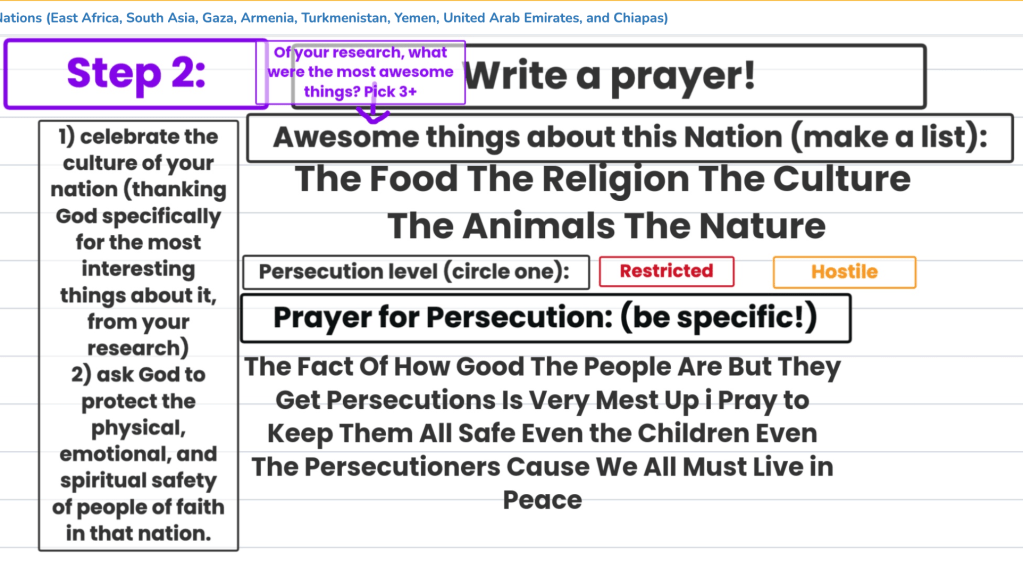
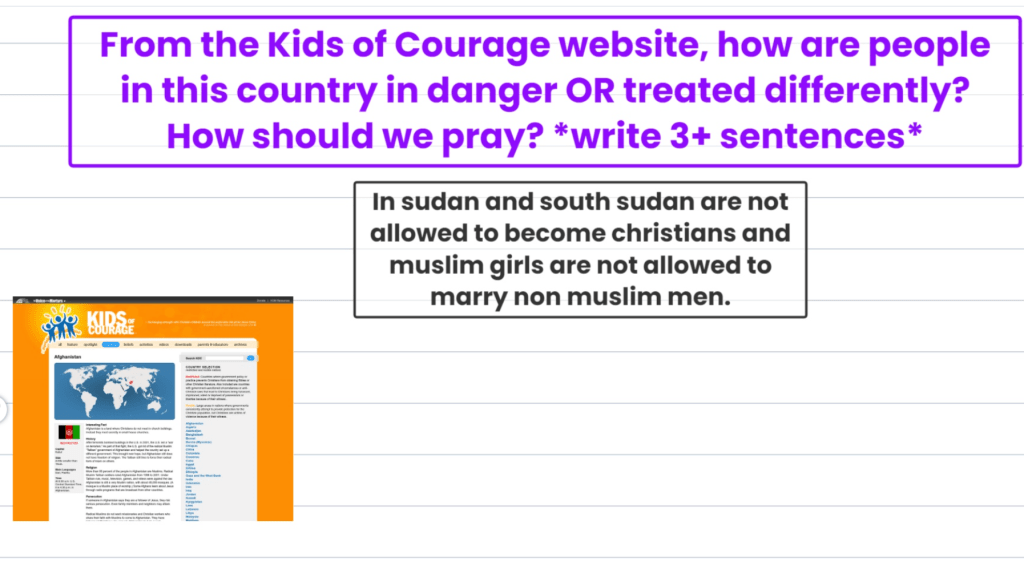
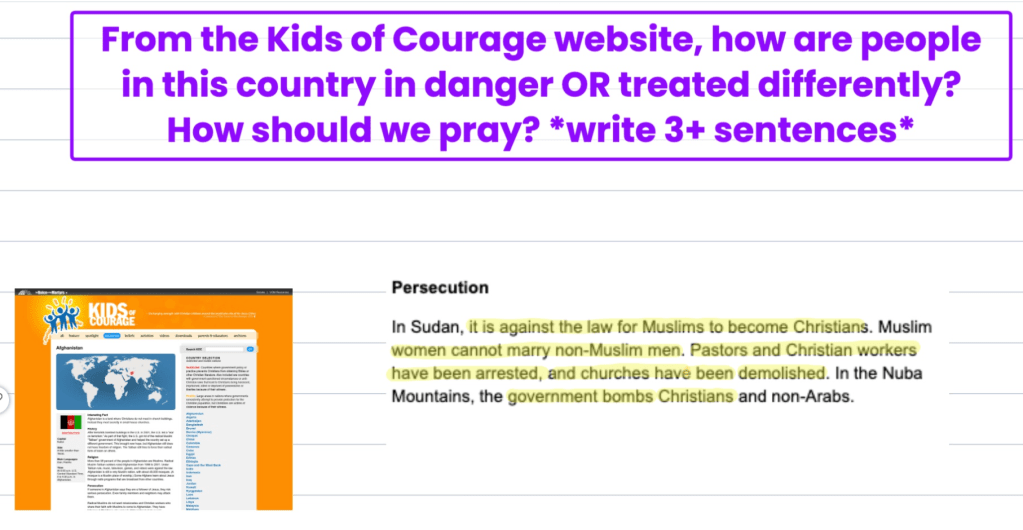
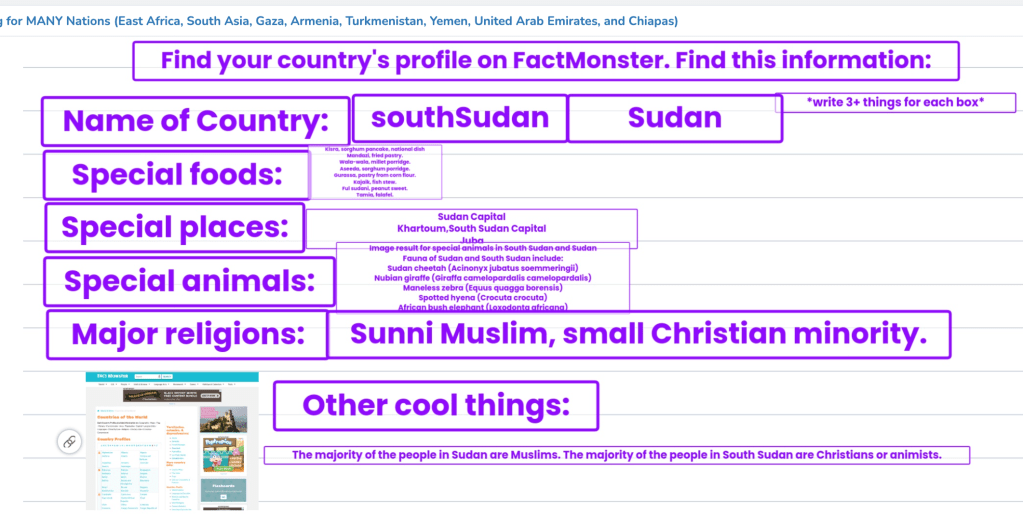
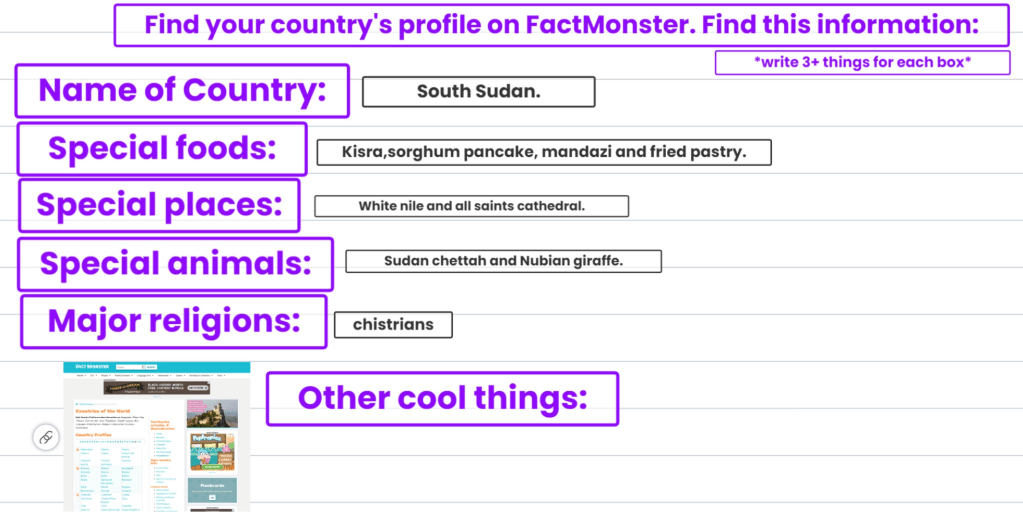
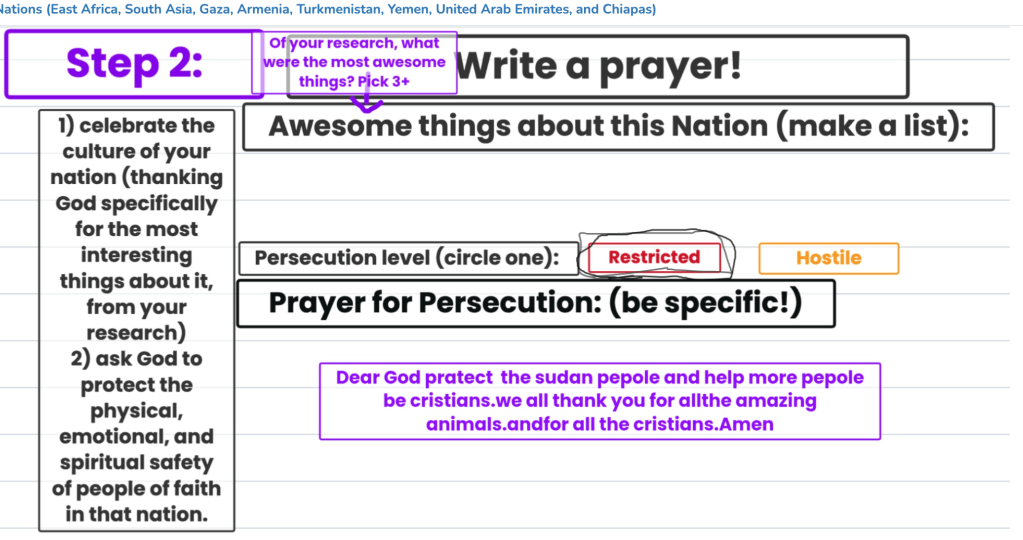
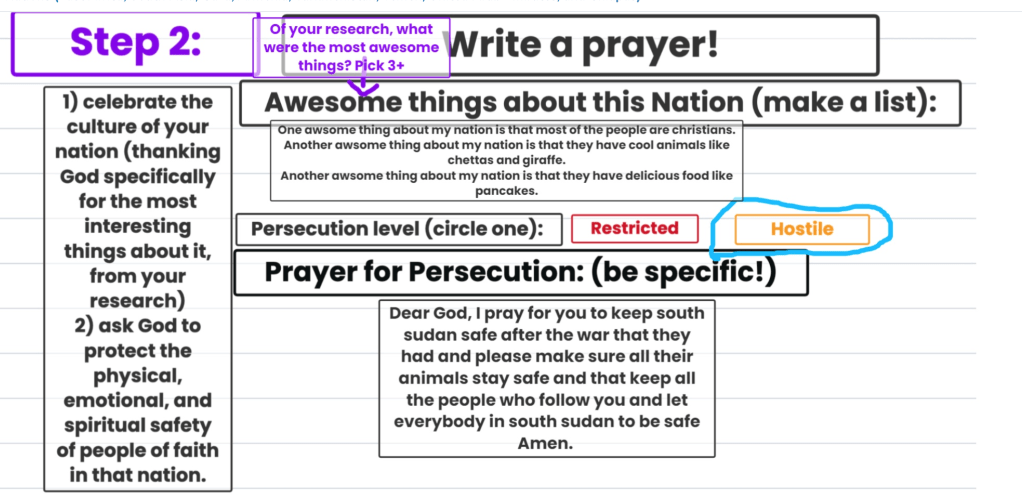
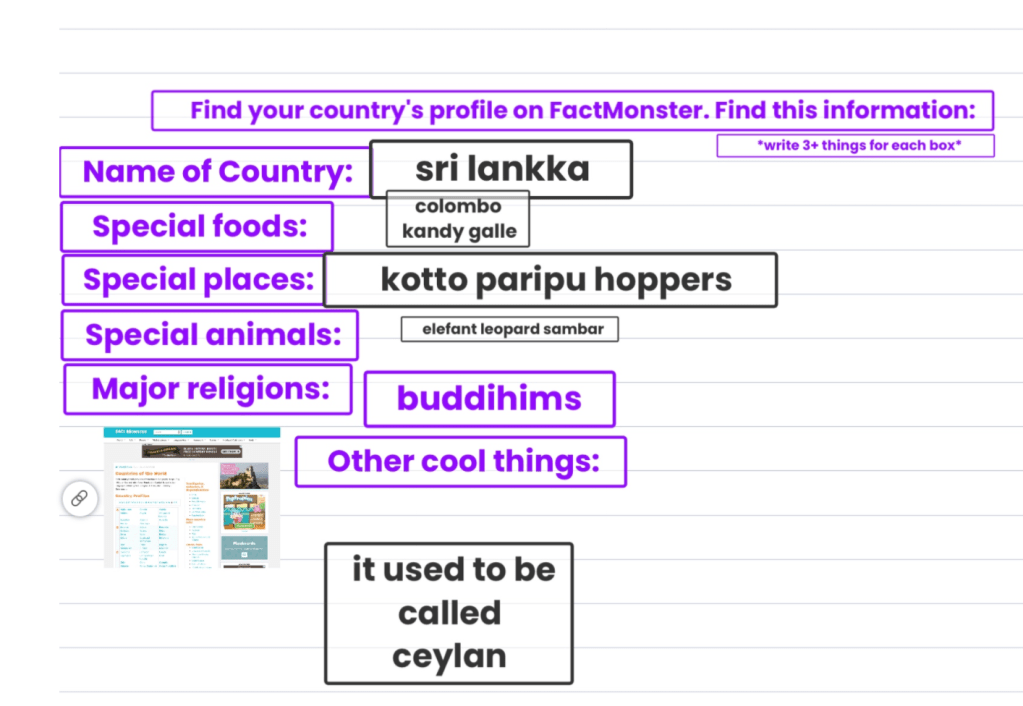
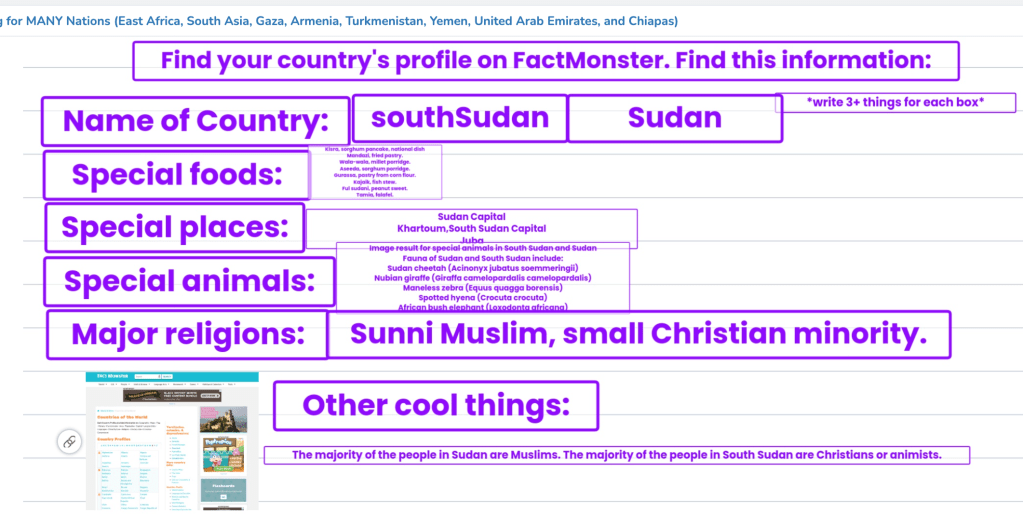
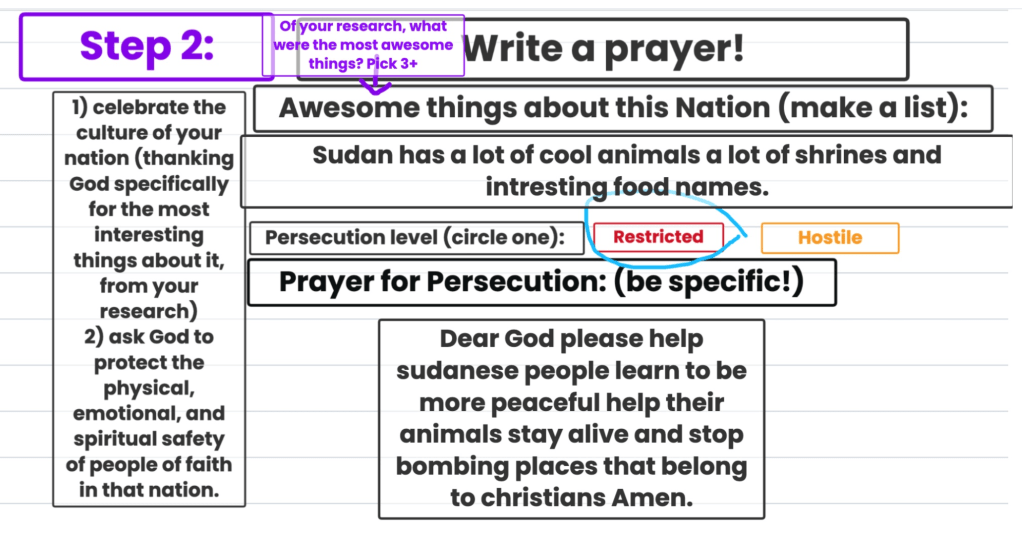
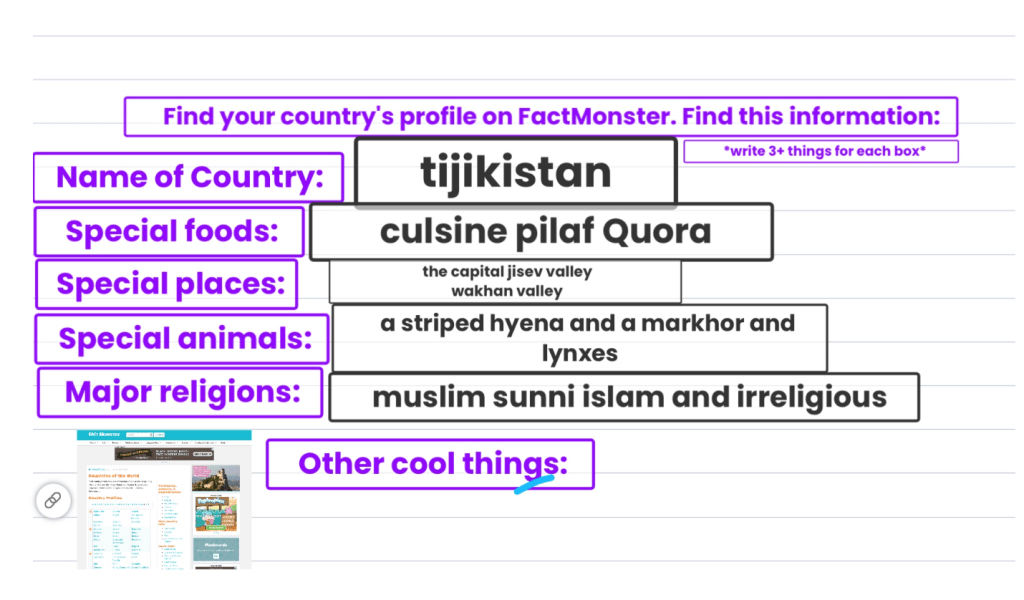
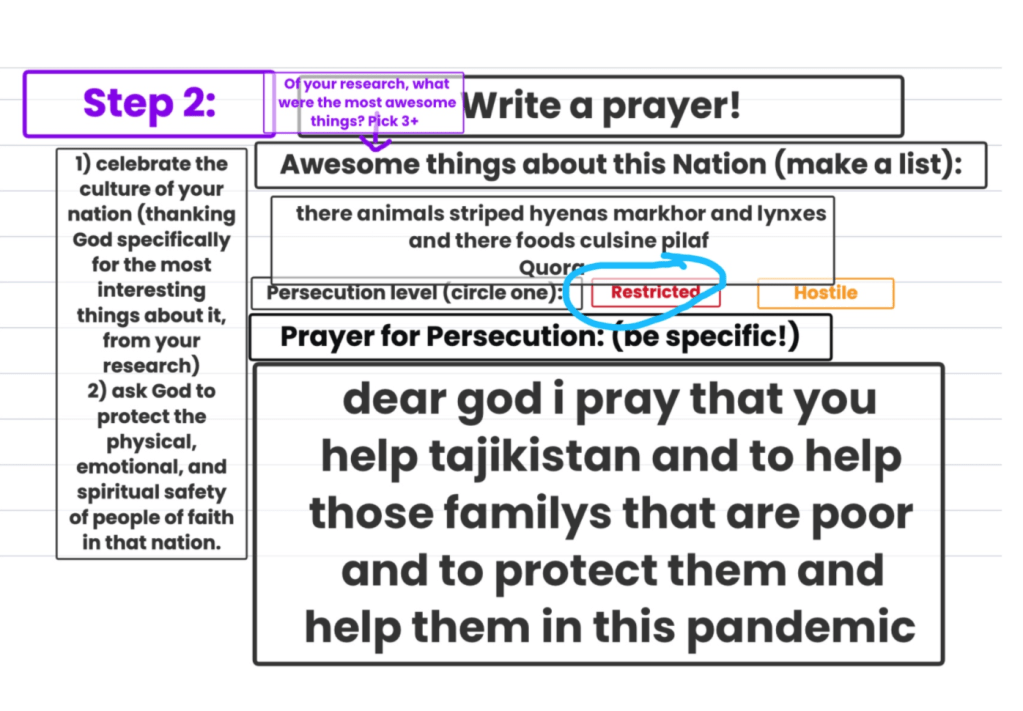
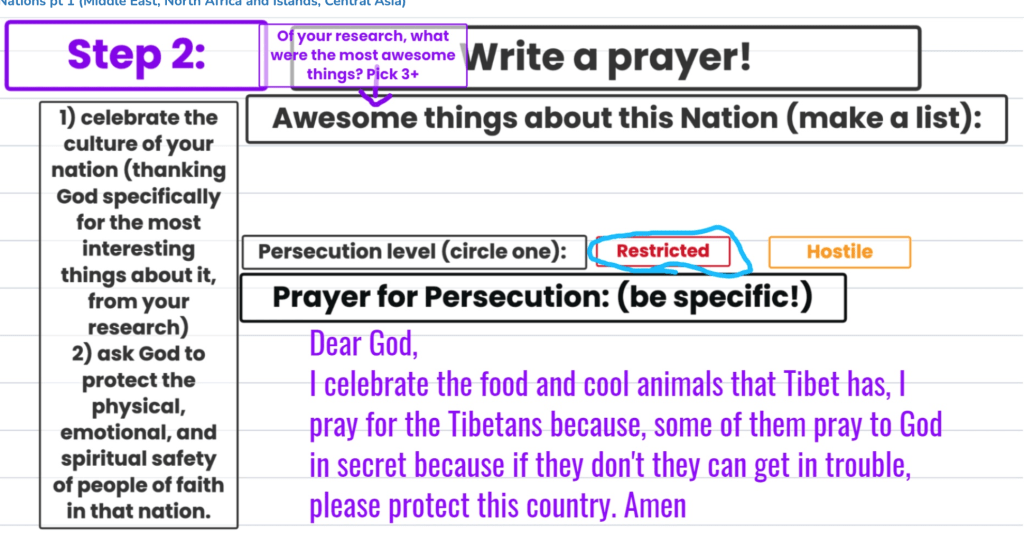
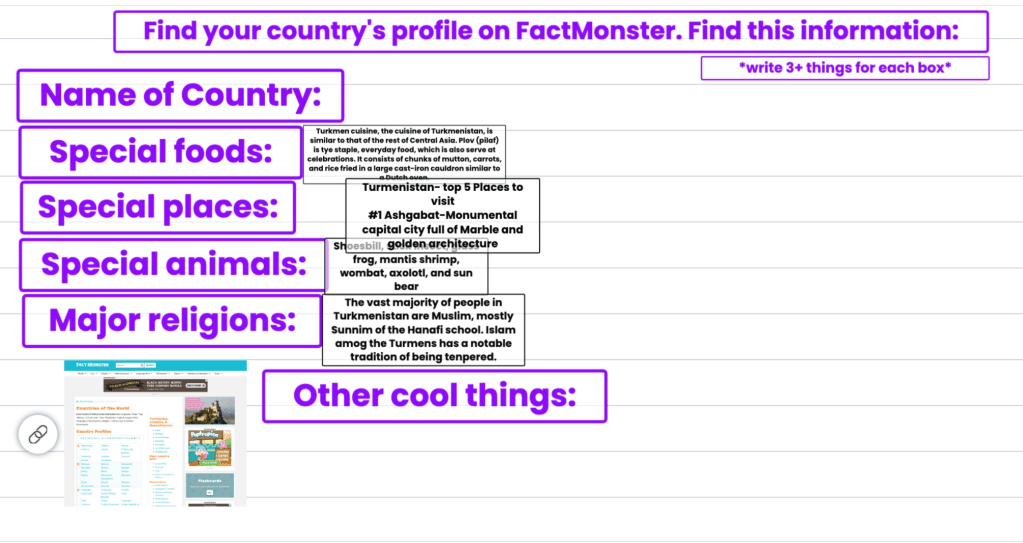
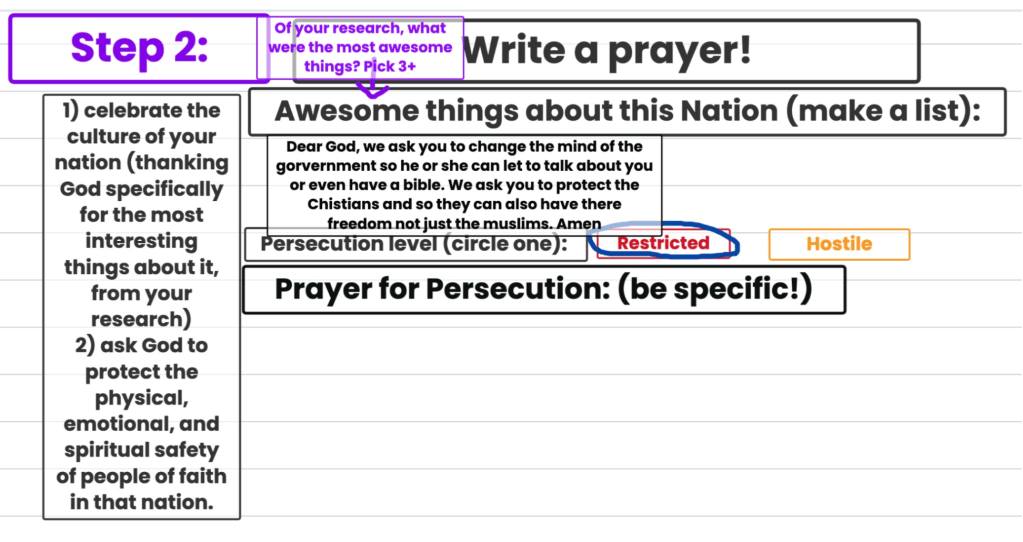
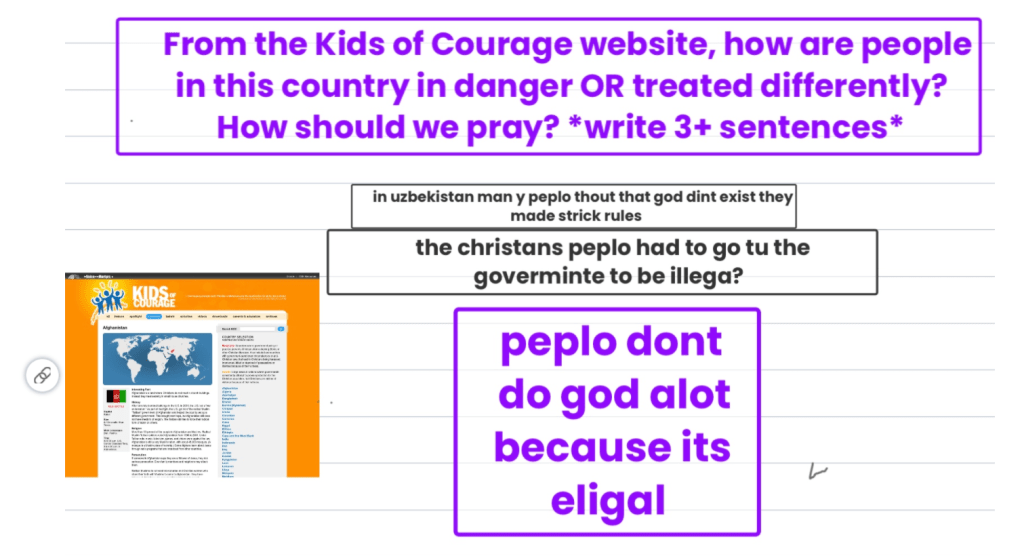
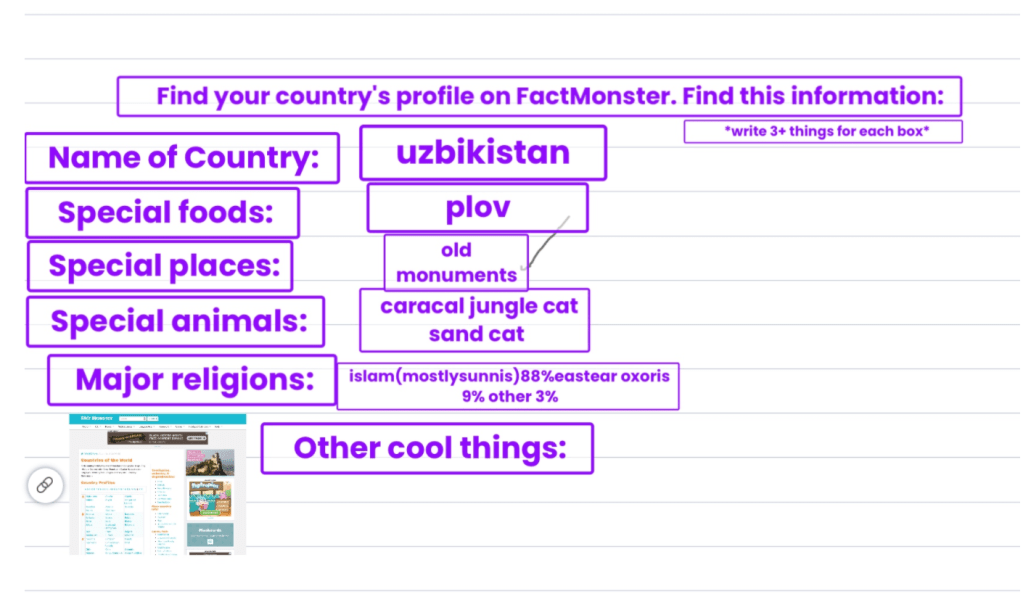
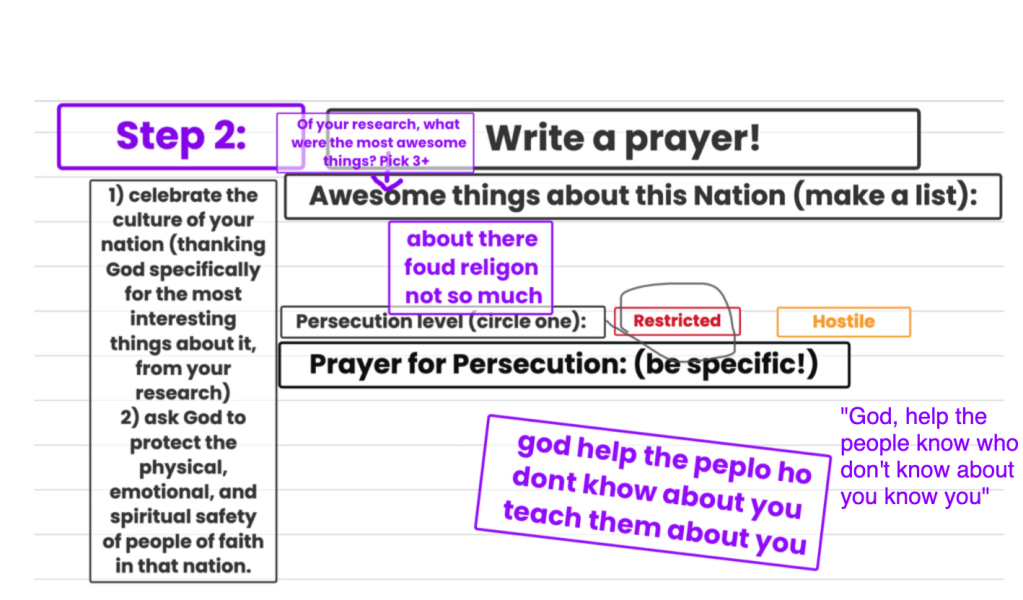
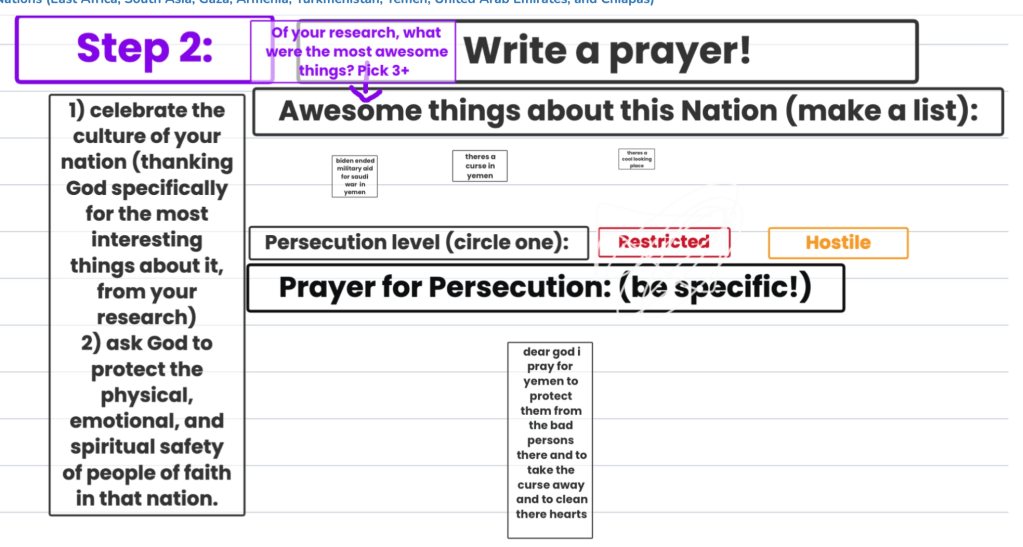
For this assignment, students created individual prayers based on the needs of believers in specific nations. They celebrated each country’s culture and special characteristics, and offered prayers for a variety of topics.
Why not just study nations? Why is Prayer necessary?
It is my prayer that God would grow genuine love in my students’ hearts for these nations, and use their lives to serve the well being of the people there. While I’m sure some will become missionaries, their positive influence may be indirect, through business, working with international nonprofits, loving people of that nationality who have transplanted to the U.S., or in a variety of ways only God knows. My students know that I’ve prayed this form them, and while some might be skeptical, I still believe God wants to give them the nations.
In the West, we tend to be culturally short-sighted, dangerously self-absorbed and without self-awareness. We tend to imagine that the world revolves around us, and in international relations, that has cost us dearly. The things that the U.S. has done abroad but not yet repented of include toppling other countries economies, introducing unsustainable privatized models for healthcare and retirement, exporting nutritionally bankrupt dietary tendencies, and failing to equip other nations in a way that would make them our partners, instead of our financial and social dependents. I have wondered if our need for influence as a nation comes from insecurity, and I have seen our limited effort to know and love other nations leaving a negative legacy.
Some (but not all) students prayed for Evangelism. Many prayed for the spiritual and physical needs of the people, including:
Healing from War
Protection from COVID 19 and Religious Extremism
Religious Freedom and Equal Rights under the law
For people to know the Transformative Love of Jesus, and the Peace of Christ
Celebrating Animals and Landforms
Discipleship
Protection from False Accusation or Arrest
One student faithful prayed the Lord’s prayer over his nations. Others faithfully focused on nation’s interesting animals, foods, or special attributes. While I was sometimes surprised by the direction of students’ prayers, I felt that the Holy Spirit was guiding their prayers. Once students had researched their nation and composed a prayer, we met together in regional groups to pray together.
Check out the images below to find out how students’ prayed!
Algeria: Protection and Discipleship
Armenia: Healing from War, Protection from snakes and floods
Bangladesh: Protection from Floods, Protection for children and families, Forgiveness and healing
Brunei: Evangelism
Chiapas (state), Mexico: Safety, against Gang violence
Comoros: Religious Freedom and Equal Rights
Ethiopia: Celebrating landforms, Healing from War, Freedom from Religious Extremism
Eritrea: Peace of Christ, Protection, Healing from War
Gaza and the West Bank: Peace between Israelis and Palestinians, Against mutual persecution
Indonesia: Protection and Peace of Christ
Jordan: Freedom of Religion, Equal rights under the law
Kuwait: Protection from War
Kyrgyzstan: Freedom of Religion
He meant to type “Kyrgyzstan”
Libya: Protection and Peace of Christ
Madagascar: Freedom of Religion and from War, Celebrating islands and culture
Malaysia: Freedom, Kingdom of God established in Malaysia
Maldives: Protection and for people to know the Love of Jesus
Mauritania: Social belonging, Ending modern day slavery, Economic well-being
Learn more about Modern-day slavery in Mauritania here.
Myanmar: End of Government-led violence, Protection, and Hearts turned towards Jesus
North Korea: Protection from Arrest and False Accusation, Freedom of Religion
Oman: Protection for those who Convert, Equal Rights, Freedom of Religion
Pakistan: Truth over False Accusation, Equal Opportunities to participate in Government
Qatar: Protection, Evangelism, and the Peace of Christ
Somalia: Peace of Christ, Freedom, and Safety for Children
South Sudan: Healing from War and Celebrating Animals
Sri Lanka: Healing and Transformative Love
Sudan: Safety from Religious Extremism and Celebrating Animals
Syria: Protection
Tajikistan: Freedom from Poverty and Safety from COVID-19
As both a former child and now a teacher, I have come to believe that you cannot fully address student misbehavior without viewing it from a spiritual lens.
For many years of my life, I found myself caught in family patterns which I gradually learned to change as an adult. As a child, I frequently tested limits and my actions mirrored the instability of my home life. Ultimately, my teachers and friends did reach me. By experiencing the consequences that my actions had on loved ones AND being wooed into change by the love I had for them, a process of transformation started in me that eventually led me to Jesus. To this day, loyalty and love still motivates me to love others when its difficult (something I learned through loving family).
Now as a teacher, I have had many opportunities to reach out or isolate myself from students, based on their behavior. I have learned that most students respond to love, and most have the will to change if they are doing the wrong thing. Children often know when their actions are wrong, but they don’t always know how to stop. They usually need someone to show them a better way.
So how do you respond to the internal needs of students in a way that starts with the spiritual issue, and provides freedom that manifests in the emotions and their natural environment?
Know Your Students’ Families
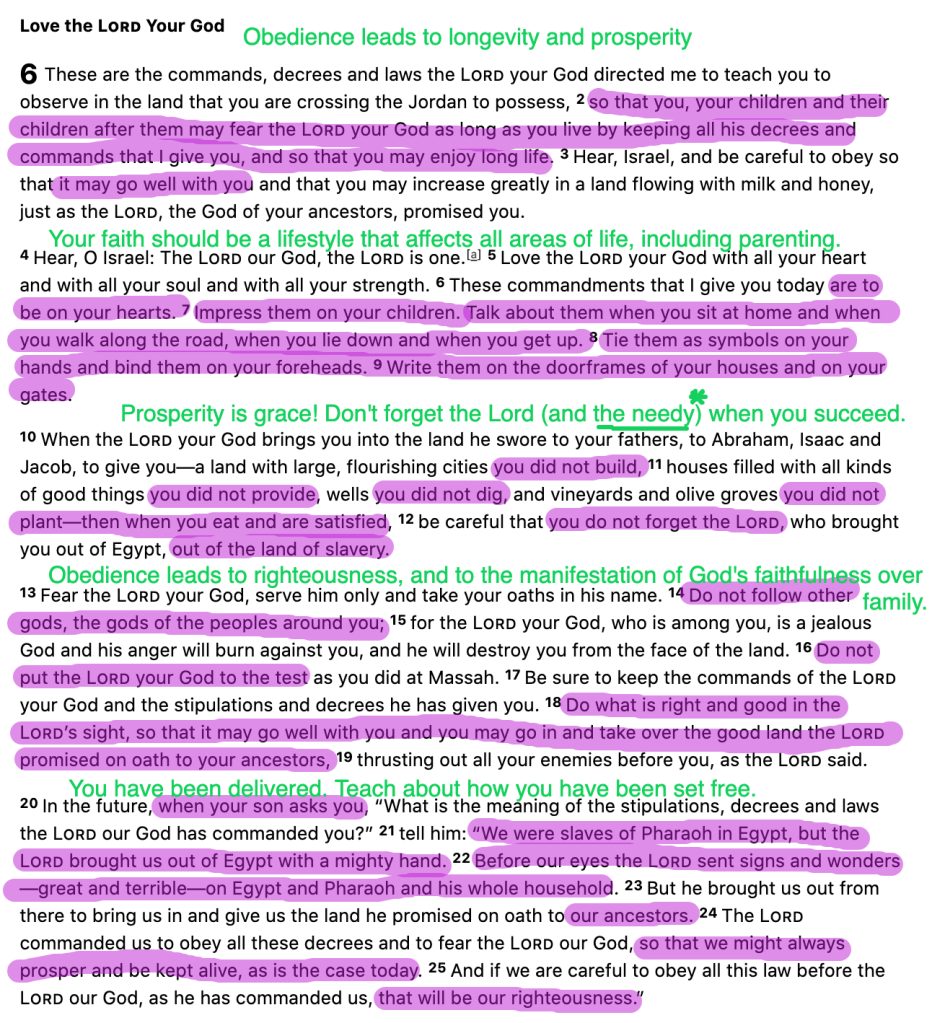
Before understanding how to support students, one must realize that student well-being is intrinsically linked to the well-being of their families. Deuteronomy 6 is a great place to see how parents actions affect future generations, and parents’ responsibilities in raising their children.
Check out this passage Deuteronomy 6 in other translations here.
Knowing and loving students’ families helps teachers understand which student traits and behaviors are familial patterns (for better or for worse). While many parents are healed of trauma and grounded enough to support their children’s holistic health, in a broken world, it is not reasonable to expect that all families will be. Many parents are still trying to process their own trauma, and are caught in cycles that they also need to be set free from.Helping students overcome the root causes of their negative behaviors much easier when family members are supportive, and are not committing the same errors themselves. However, students can still start the healing process even in an unstable environment with the support of caring adults.
While many resources and organizations already exist for counseling for both children and adults, that is not the lens of this post. Instead, this post is written from a lens of spiritual warfare.
What is Spiritual Warfare?
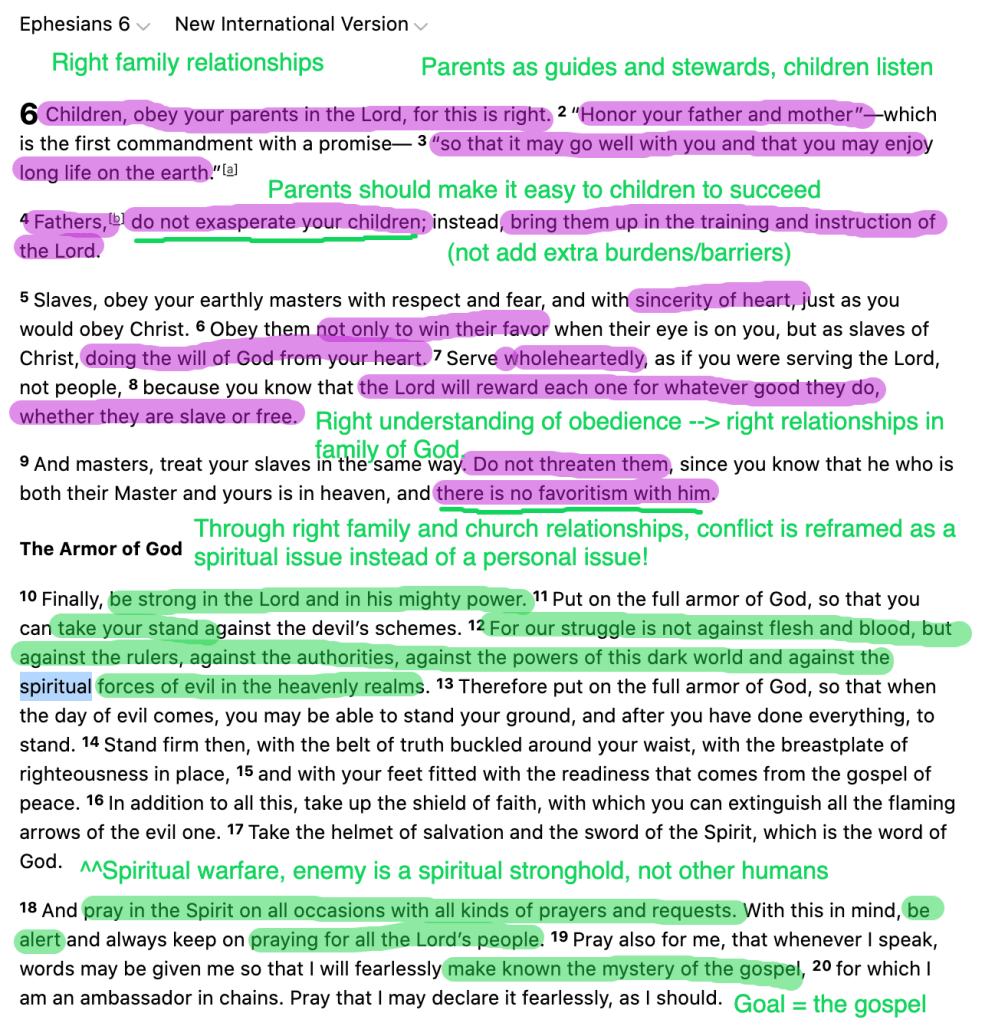
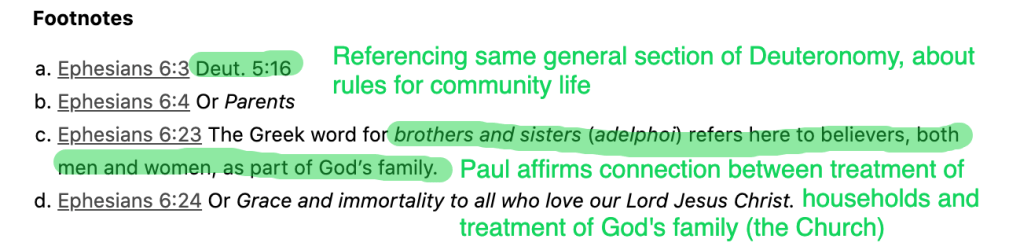
Spiritual warfare is based on belief within certain Christian groups that spiritual strongholds, and not people, are the root cause of most individual, regional, and systemic dysfunction. Therefore, Spiritual warfare is a set of practices whose goal is to address the spiritual root of an issue. One of the most commonly quoted verses on Spiritual Warfare is Ephesians 6, which says ” our wrestle is not against flesh and blood…but against the spiritual forces of evil in the heavenly realms” (Ephesians 6:12). It is important to note that these principles directly relate to right relationships between people. Before discussing spiritual warfare, Paul describes right relationships between those in authoritative roles and those who support them, whether in families or in the form of slavery practiced during Paul’s day (which resembled indentured servanthood more than modern chattel slavery). If we would see the world restored, we must start at home.
If this concept still seems a little vague or spooky, a practical example of this issue could be that of addiction. If someone was guilty of neglecting their children due to some form of addiction, it is clear that root cause isn’t necessarily that person’s hatred for their family, but their addiction that is manipulating their behavior. In general, problems must be addressed at their source at the spiritual level. If problems are resolved at the spiritual level, students will come into freedom to see God correctly in their situation, providing their lack. They will also be equipped to see themselves as God sees them (capable, smart, trustworthy, etc). That knowledge can set students free!
As a side note, Paul’s progression from having right family relationships to being capable of stewarding the Church relates seamlessly to the qualifications for elders and overseers in 1 Timothy 3. That is no coincidence! If people are not able to love their families well, how can they steward God’s family (the Church)? One must be shown how to love his or her own family before taking on greater responsibility for others.
But one must know how to pray effectively! In order to understand and address the spiritual side of student behavior issues, you have to practice discernment to understand the root cause of student misbehavior. Once you have named the root cause (remember: spiritual, not people), pray that God would 1) bind the specific spiritual stronghold/root and 2) pray to release the opposite.
2. Address the issue at the individual and communal level. Discern how the Holy Spirit wants to speak into the issue. Do what you see the Holy Spirit doing.
3. Allow change to affect your practice at a systemic level (changing YOUR OWN heart).
As communal restoration progresses, it is unlikely that your heart will be unchanged. Sometimes, the communal restoration process unearths the limits of our own love, our own patience, or own own grace. Luckily, we are created to be dependent on God, and he gives to all who ask him freely.
In the story of Jonah, Jonah had no intention of being used by God to bless his enemies. Once it became clear that God would not take Jonah’s no for an answer, Jonah obeyed begrudgingly, but in spite of his external actions, his heart was still unchanged. It took an encounter with God to expose the uncleanness of Jonah’s own heart, and reprove his hatred of the Ninevites. The story ends as a question with no recorded reply, with God asking, “And should I not have concern for the great city of Nineveh, in which there are more than a hundred and twenty thousand people who cannot tell their right hand from their left—and also many animals?” This cliffhanger ending is meant to prompt the listener into reflection about the hardness of their own heart.
It is very likely that this heart change will result in changes to classroom systems and procedures. For example, seeing one family who has struggled with isolation and hopelessness start to believe that God has a greater purpose for their liveswill probably help you to feel less annoyed in receiving untimely texts asking for passwords to digital learning platforms. Enough instances of transformation such as these will probably inspire you to prioritize making a connection with families earlier in the school year and to be less easily offended when individuals fall short. You will be equipped to genuinely rejoice with those who rejoice because God has given you genuine love for them. Much more effective than awkward and/or punitive parent teacher conferences.
Anecdotes
So how does this all look in practice? Here are some recent anecdotes that will hopefully shed some light. I’m intentionally including 3 anecdotes whose external behaviors were nearly identical in order to make the point that discernment is everything.
Unmotivated Student A: The root cause of this students’ apathy was rejection and isolation, but perhaps not for the reason you’d think. This student was the only high achieving male in his predominantly female classroom, and past teachers had failed to keep him adequately challenged. Combined with low impulse control and all-or-nothing explosive emotions at home, praying for this student meant declaring his high calling in the Lord, and binding anything that would attempt to derail him from his future (discouragement). This student needed to know that 1) his teachers saw his capacity, and would hold him accountable to it 2) that he is one of many highly capable young men (requires relationship/mentorship), 3) any classroom boundaries would be used as a tool to help him pursue things he is passionate about. While I’m still working on getting this student connected to mentors/highly motivated peers, I have seen a great shift in his willingness to be challenged and desire to emotionally engage. Based on our grade level structure, I will still have him in my class next year!
Unmotivated Student B: The root cause of this students’ apathy was a sense of rejection that he felt both from peers and also from his parents. Meanwhile, his parents felt increasingly isolated (even before the pandemic), and needed to deal with their own difficulties with low self-worth/fear of authenticity. Praying for this student meant reaffirming his chosenness and his value before God (binding an Orphan spirit). Working with this student meant communicating a deep sense of solidarity and persevering to show him grace when his limit testing behaviors did not openly invite it (think the Prodigal Son). Ultimately, this student needed the security that comes from knowing you won’t be abandoned in order to choose a better path. While he’s still working on his responsibility level, his work completion, social skills with peers, and interactions with teachers have improved tremendously as a result of feeling wanted. This is the type of student who seems really difficult at the beginning of the year, but holds a special place in your heart by the end of it. Ironically, this student has needed a sense of belonging and for people to make room in their hearts for him. It’s no coincidence. As a bonus, befriending this students’ parents has allowed them to have a greater tether to the school community, that they didn’t have before. I have watched a sense of loneliness and the corresponding burden lift, and watched as they have been increasingly transparent with me about their limits (and more willing to ask for help). Lucky for me, we have a very functional school support system, so it’s not up to me alone to reach out to them. Still, I enjoy our chats.
Unmotivated Student C: The root cause of this students’ misbehavior didn’t come from a lack of parental support, but too much of it (in this case, co-dependence). He is one of many codependent boys I’ve known raised by single moms, who often in spite of their best efforts, expect too little from their kids. Since this student is so bright, he’s managed to underperform on assignments because he knows that the less he does, the less seriously others will take him. As might be expected, social skills are a little tricky for him too. The most important factor in all of this is that he has few family members who have gone an explicitly academic route. In spite of this boy’s capacity, he would prefer others do things for him, and doesn’t identify himself as particularly scholarly. In praying for this student, I had to specifically declare that he was destined for sharpness (in academics) and not dullness, that he and his family were meant for more than just making ends meet, and that he would be held accountable because the Lord disciplines those whom he loves. In addressing these issues on a parent teacher conference with our grade level team, I made it very clear that because I know he is capable, I expect more from him. Since then, this student has begun to believe that he is truly capable, and has been optimistically giving me more when I ask, almost like he’s hoping I will. While he still is working to set his own goals and believe in himself without others’ support, the fact that he is looking forward to challenges is marvelous.
While each individual can choose how they want to parent their children OR support their students, I find spiritual warfare to be a useful lens and the most effective method to intercede for my students. While some of the aspects of these anecdotes may seem personal, in reality, most details are in plain sight for anyone who has the interest to observe. Knowing these details prompts me to protect my students’/families’ privacy, not expose their flaws or condemn them.
To any skeptics, I understand. I didn’t endorse this sort of thing for various years. However, I’ve seen God do tremendous things, and I feel confident that at the very least, my prayers are doing no net harm. Full disclosure: as someone who went to counseling for years but didn’t see any noticeable changes, my rationale for supporting this lens comes out of personal experience. However, I believe that God can use a variety of methods to address individuals’ holistic health, including counseling or medicine for those who need it. That being said, I am certainly suspicious of any methods that do not have the effect of helping those who are earnestly in search of help.
May we all see God clearly, love our students and their families from a pure heart, and be transformed by many glorious answers to prayer. Amen!




















































 Age of the Unexpected