In the month of January, my third and fourth grade students learned about the history of faithful men and women who joined Religious orders. We as a grade level decided that it would be much more exciting for students to see the ways that key church figures have shaped history INSTEAD of focusing primarily on the knitty-gritty roles and responsibilities of church structure. I am confident that my students will eventually be able to distinguish what makes certain roles like Bishop or Cardinal unique within the Catholic church, especially since students at our school have been able to host a conversation with the newly-elected Cardinal Gregory over Zoom. As students get used to seeing these church leaders as friendly faces, focusing on religious orders’ impact on the world allows students to appreciate the legacy of the community of saints they’ve been born into.
For better and worse, Religious orders were designed to respond to allow people to seek God as they responded to the unique challenges of their day. From the first first monastic communities in the deserts of Egypt (313-400 AD) to the evolution of the today’s universities from the monasteries of the Middle Ages, Religious orders have shaped Western culture in indelible ways. Throughout centuries, religious orders have developed schools, hospitals, guest houses, farms, and programs for the poor that eventually gave birth to the modern Nonprofit sector. Check out this timeline to see how religious orders have changed Western culture.
Check out this video for more information about Consecrated Life throughout the ages!
Prior to starting this project, I also spent time talking with students about Disability rights within the church, and the faith of my friends at L’Arche DC. We discussed how people can love and pursue God’s call on their lives regardless of their physical or cognitive ability. We loved learning about The Little Sisters Disciples of the Lamb Convent in LeBlanc, France, and how many religious sisters there with Down Syndrome are passionately following the Lord Jesus.
Challenge: Designing a Religious Order
My colleague took the lead on the facilitation of this project! Similar to our Holy Trinity Action Cards project, students studied and compared religious orders to understand their unique differences. THEN, students were challenged to design their own religious order, based on their own interests and pressing needs they see in our world.
For their religious order, 3rd and 4th grade students had to include and explain their orders’:
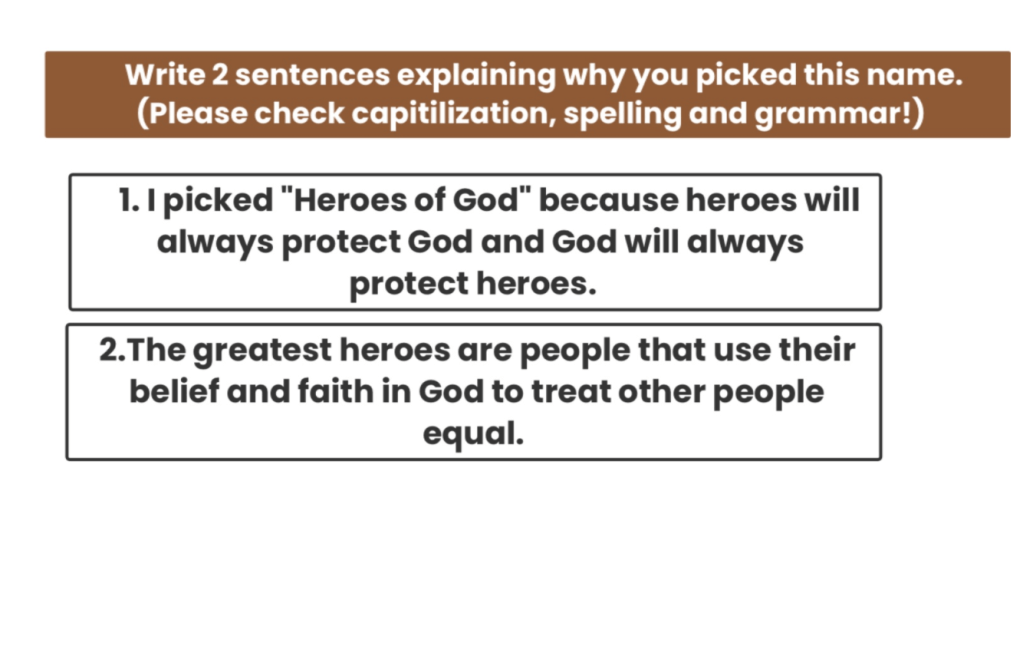
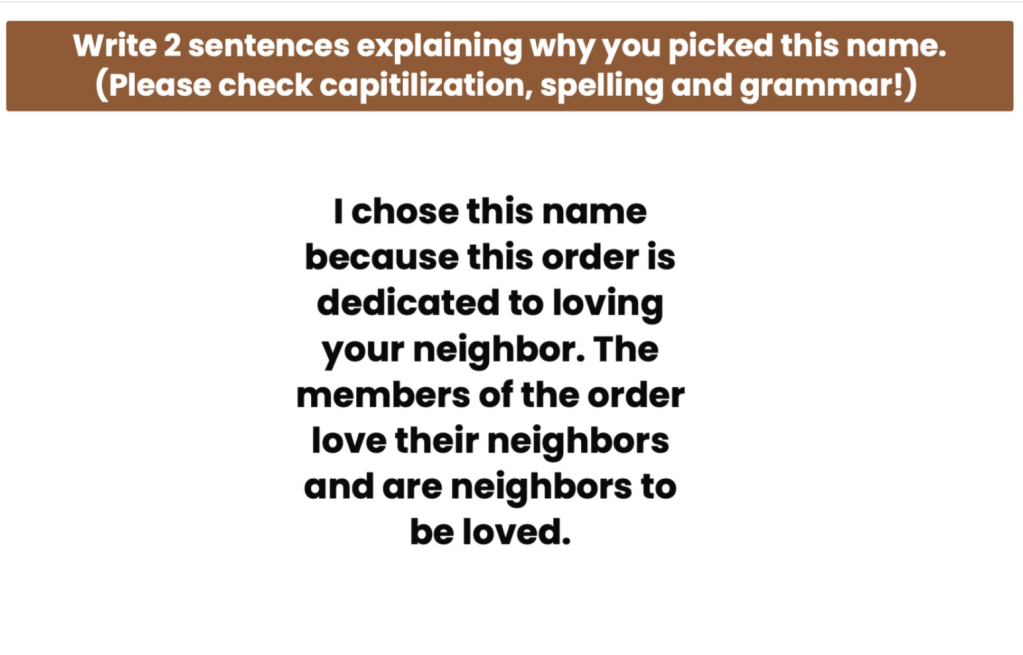
Name
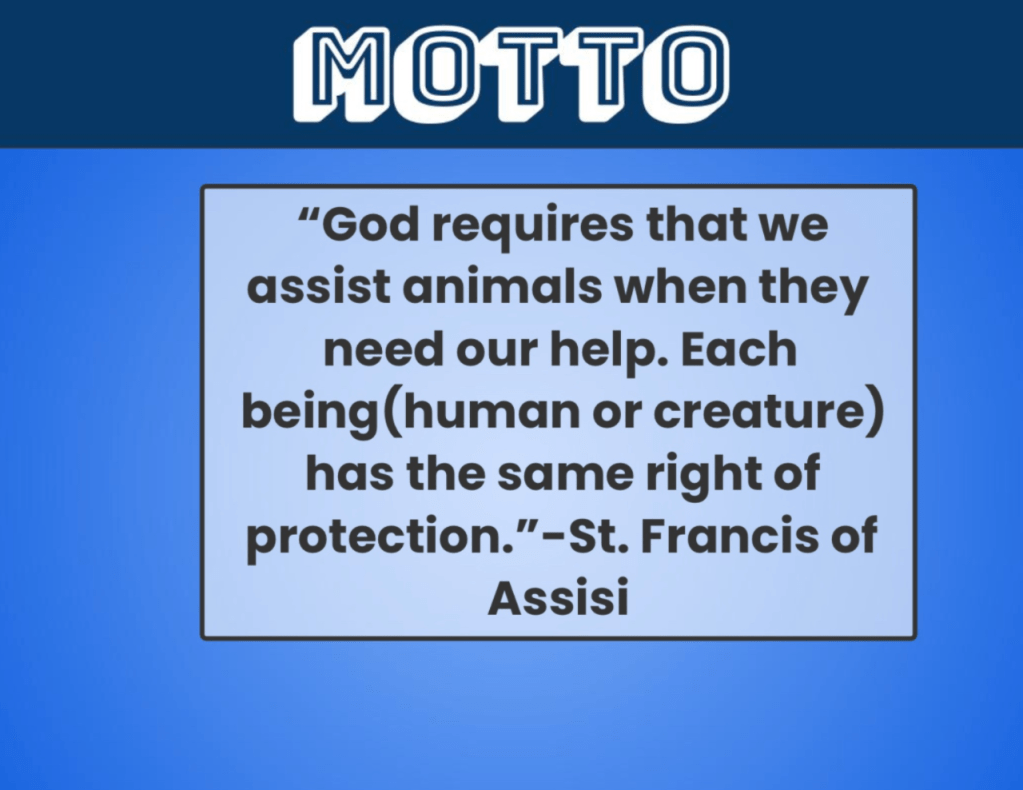
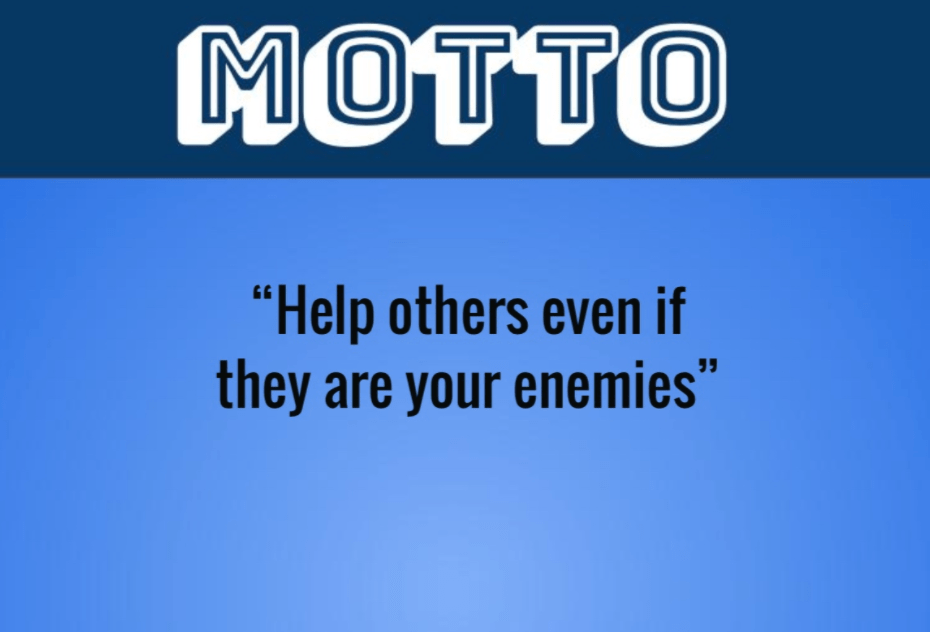
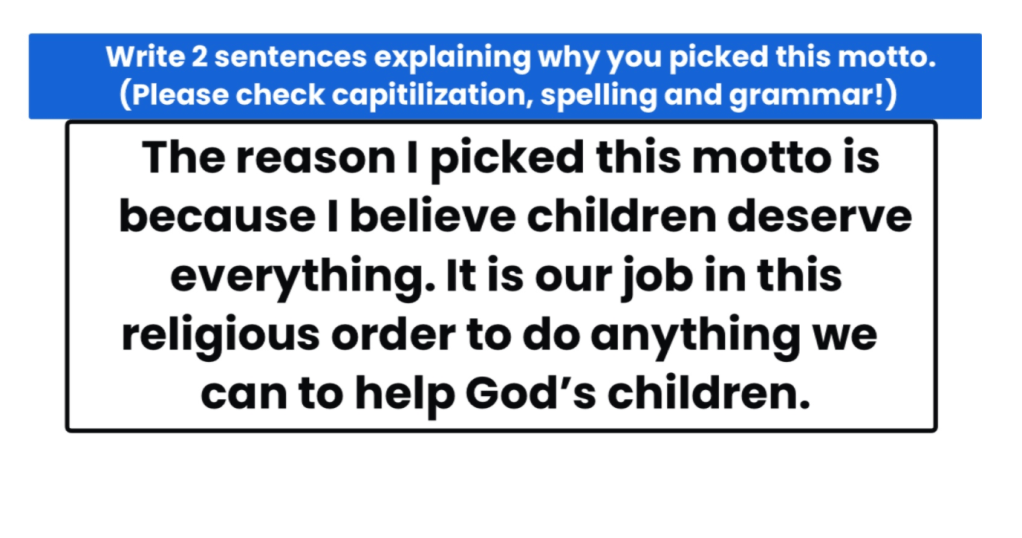
Motto
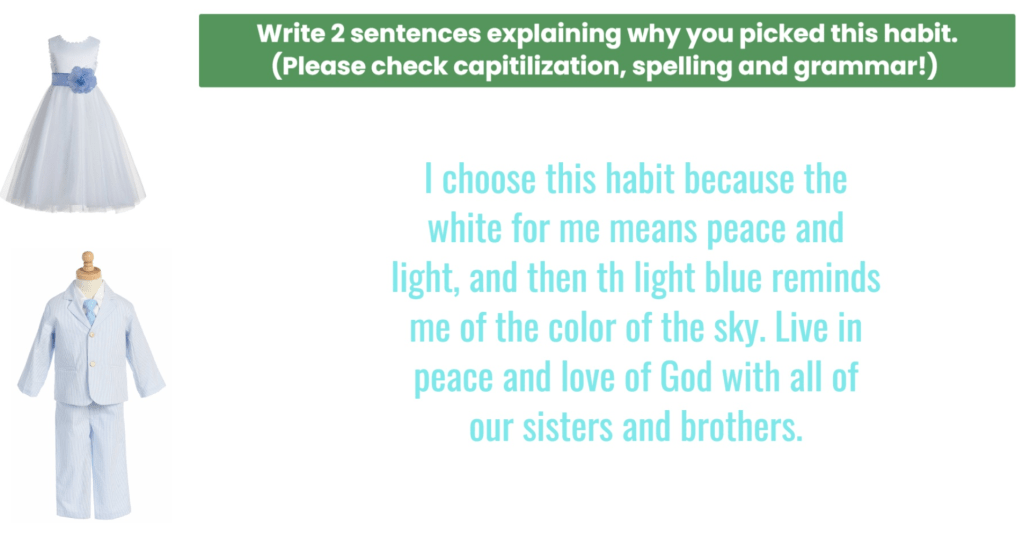
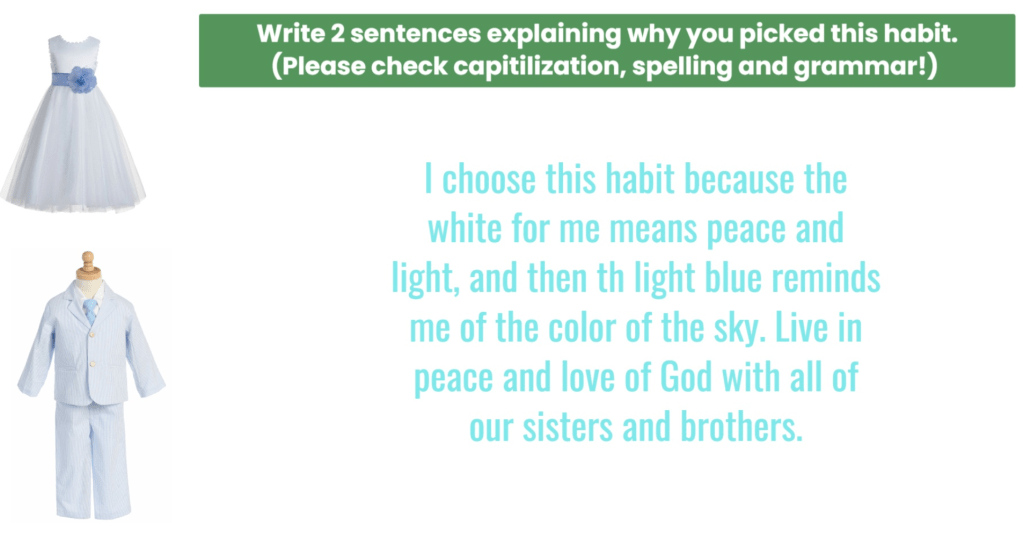
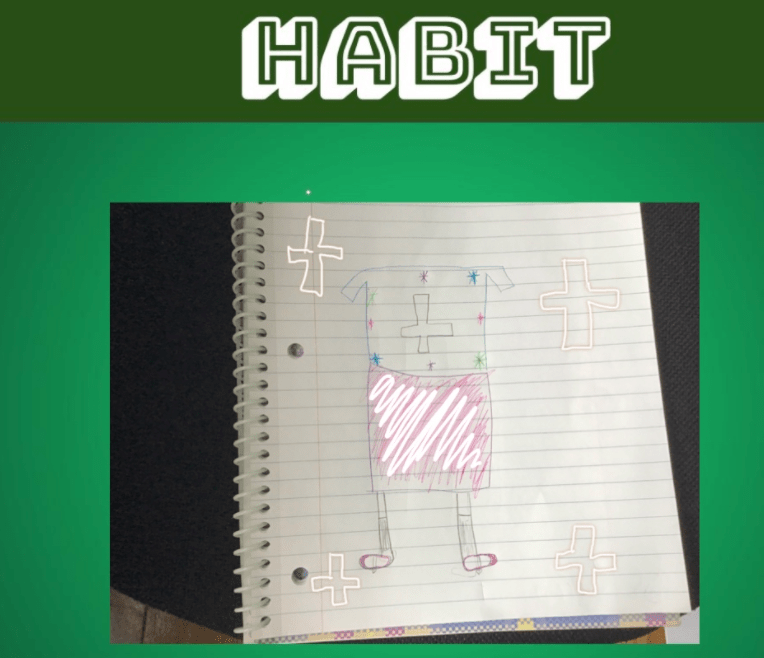
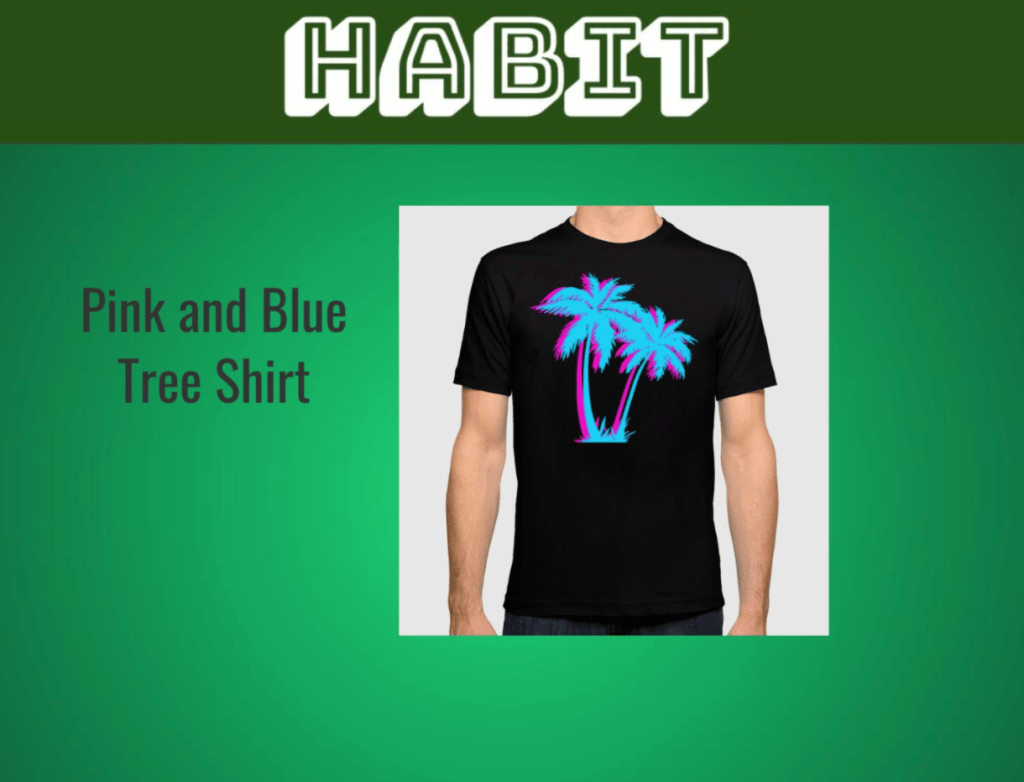
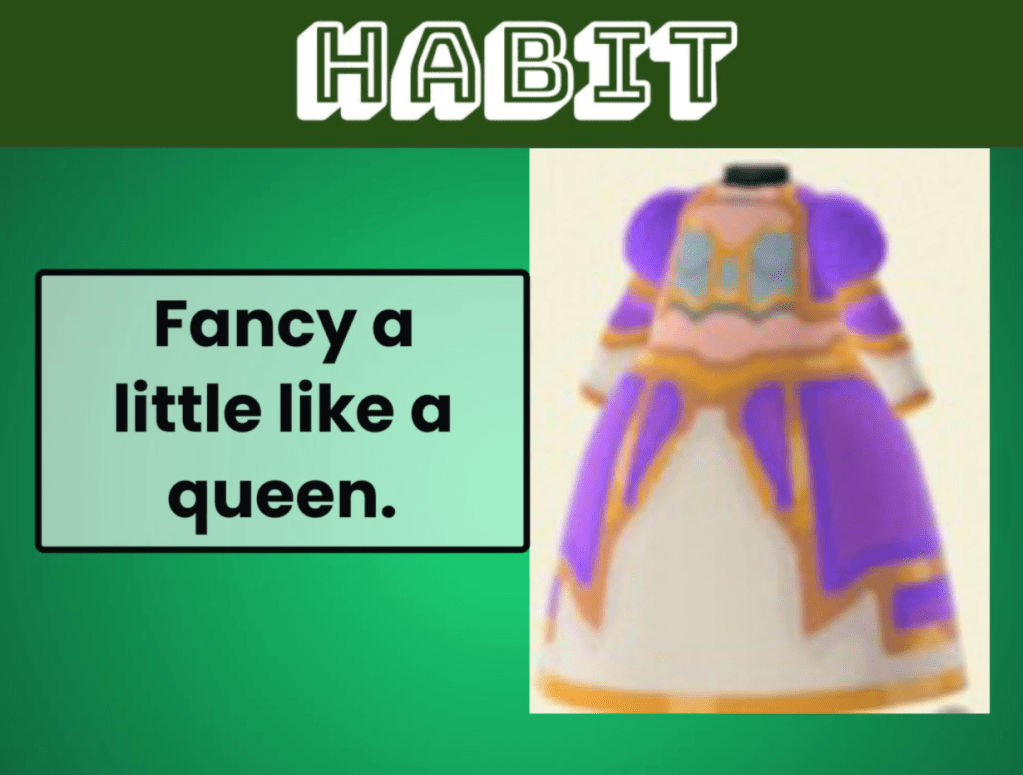
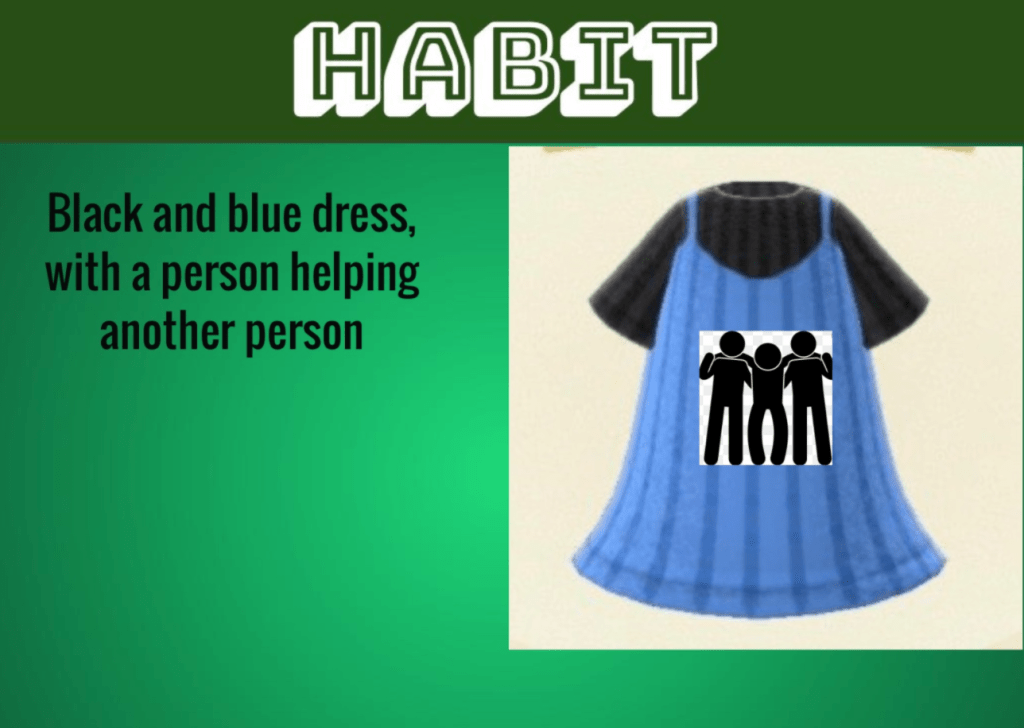
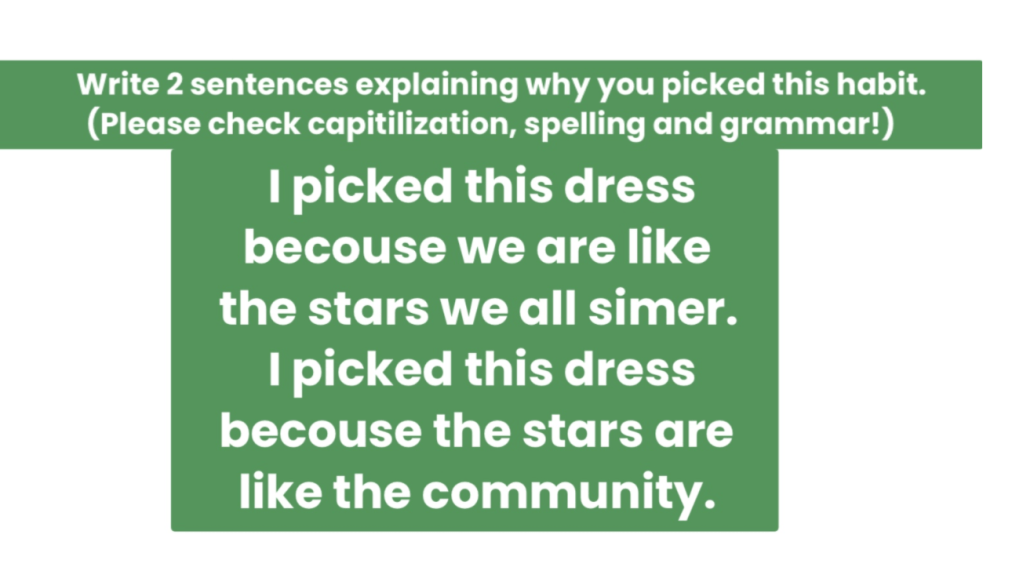
Habit (clothing)
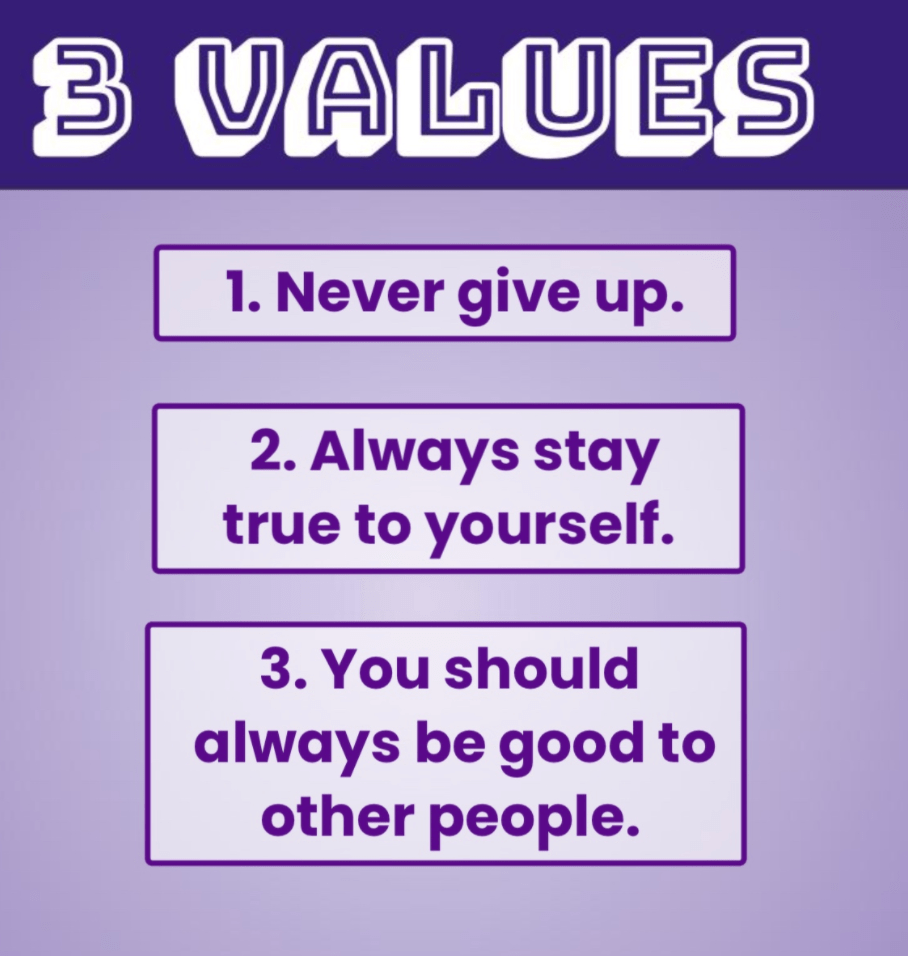
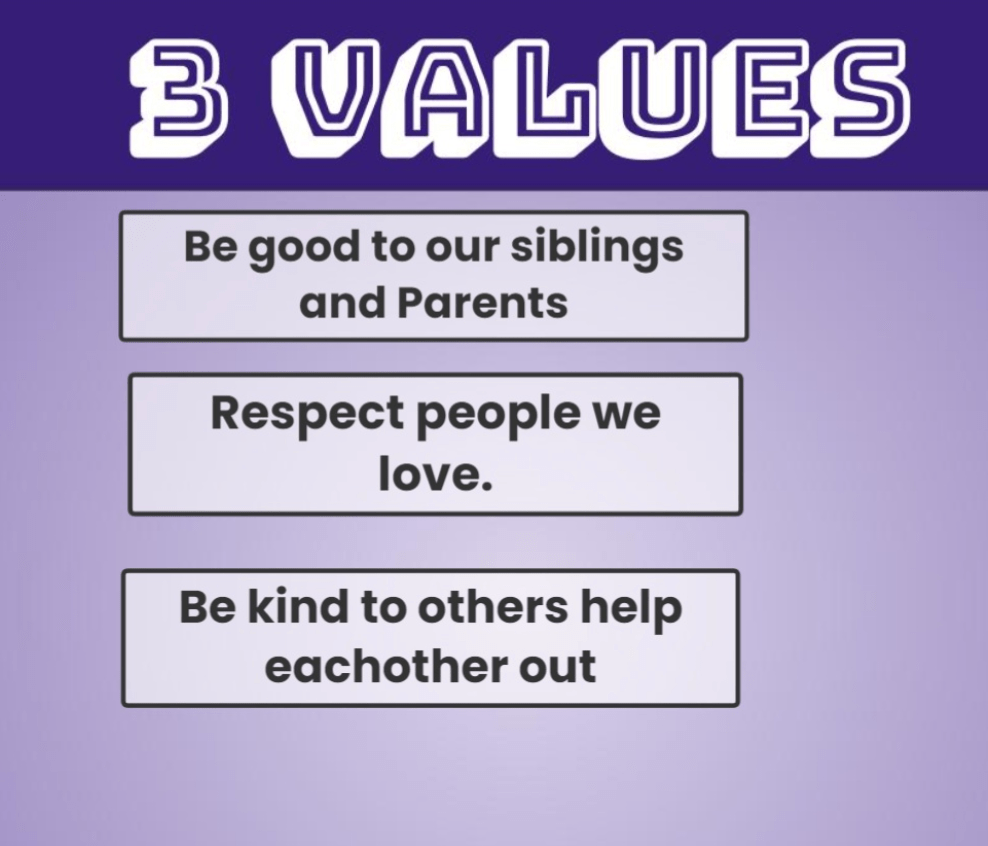
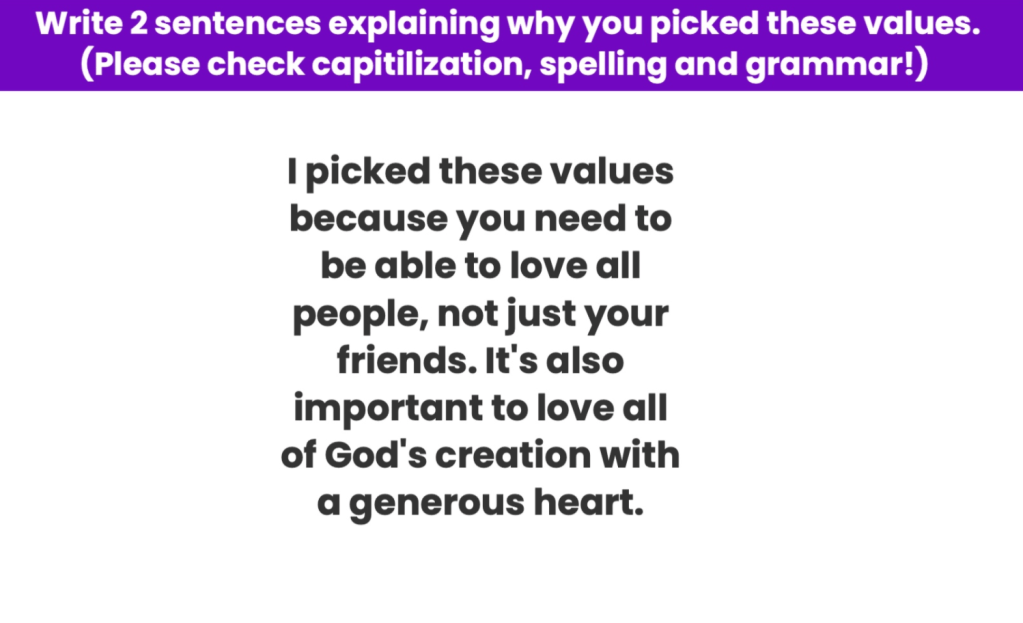
3 Values
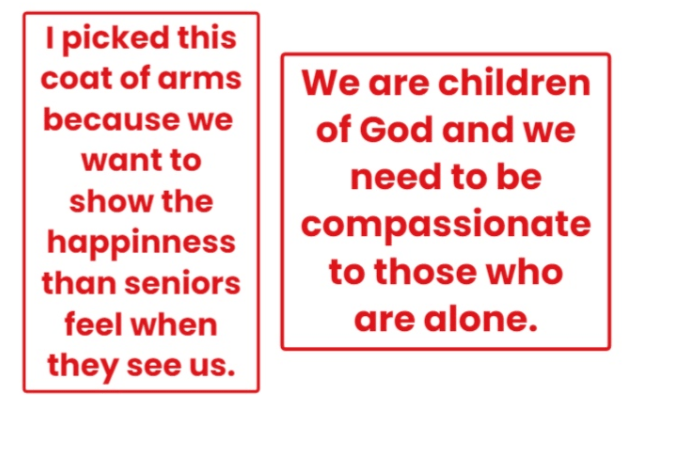
Coat of Arms
My colleague also designed this handy rubric for students to use to self-evaluate!
After students completed their projects, they spent about 45 minutes of class time presenting their projects to one another in Zoom Breakout rooms.
As a teacher, this project was especially meaningful to me, because it was a chance to see how the Holy Spirit was moving on students’ hearts to highlight particular concerns. I was impressed by how deeply the projects connected their personal values to their faith. While I was focusing elsewhere, the Holy Spirit had snuck in to teach them a variety of things about the topics already on their hearts.
Unsurprisingly, several common themes and values emerged. Check them out below!
Stewardship of Animals
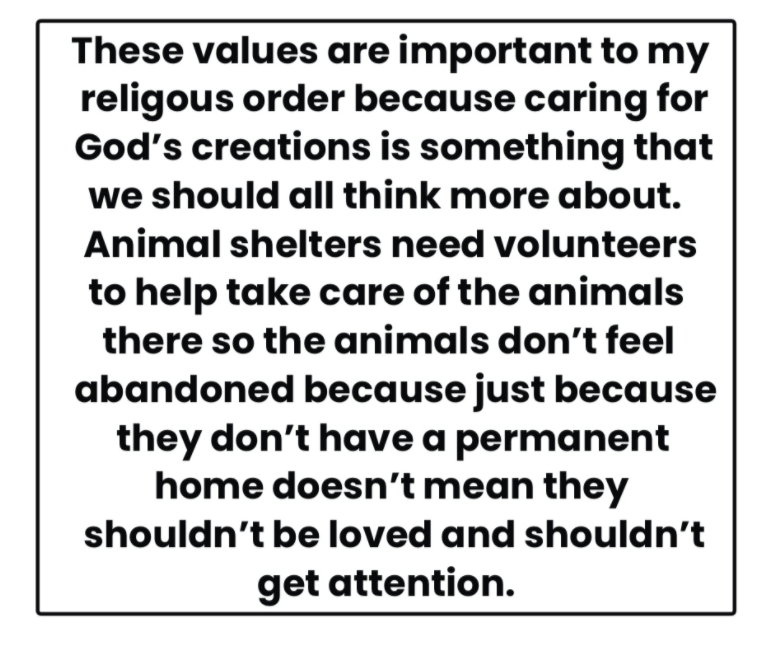
In projects related to the stewardship of animals, many students suggested members should do service at animal shelters.
Some students connected their passion to the teachings of Saint Francis:
Humorous and easily-washed Habits (clothing) were vital:
Students took our many conversations about human’s Genesis 1 mandate to steward the Earth very seriously:
Children United in Jesus
Kids’ Authority as Sons and Daughters of God
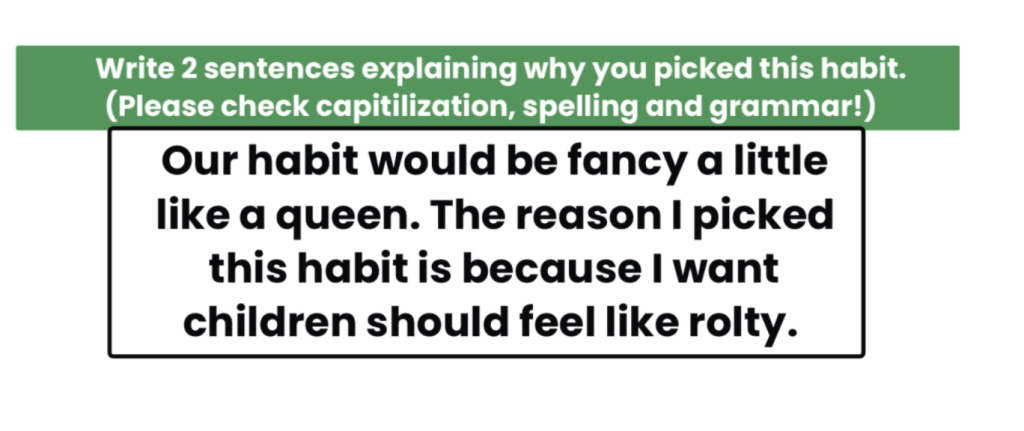
“Children should feel like Royalty”
The Importance of Community
Obedience and Love for Family
Love for our Enemies
Other specific Causes
Helping the sick!Advocacy for Children!Loving our Seniors!
Conclusion
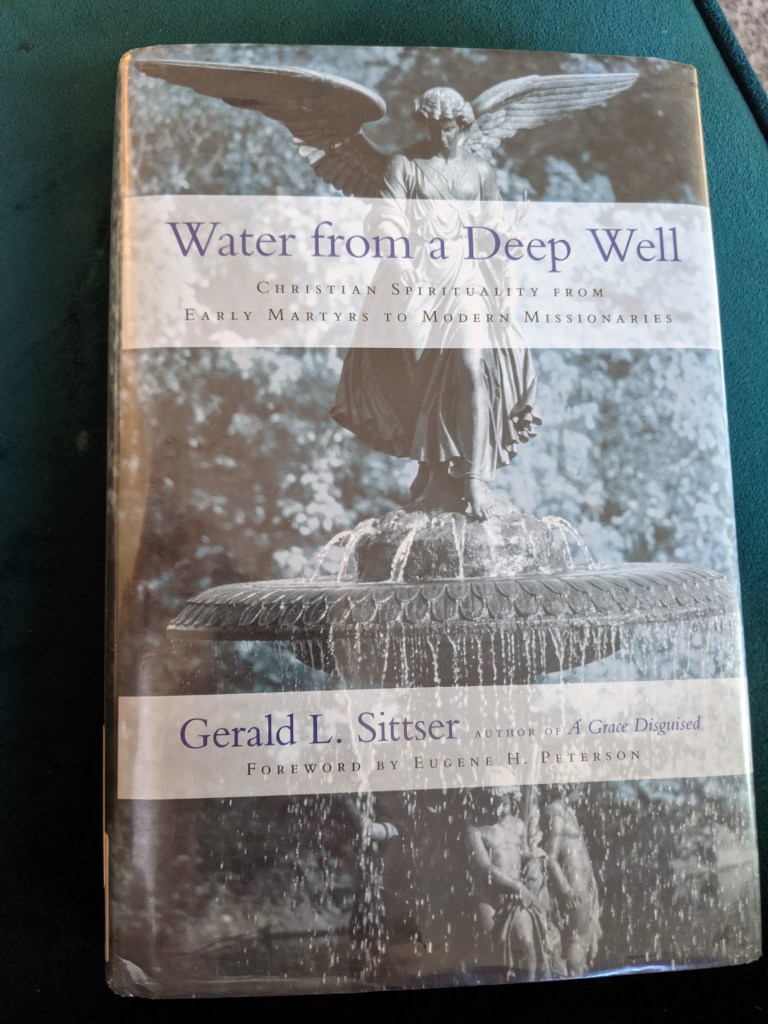
It was such a beautiful thing to see our 3rd and 4th graders connect their passions to the history of passionate believers of the past. I am excited to see how God will continue to guide students through their interests, and give them wisdom and courage to pursue their own callings. This month, I will be reading a book called, Water from a Deep Well by Gerald L. Sittser, to deepen my own understanding of the many ways Christians have shaped the world from Jesus to the present AND how religious life has changed over time. You are more than welcome to join me!
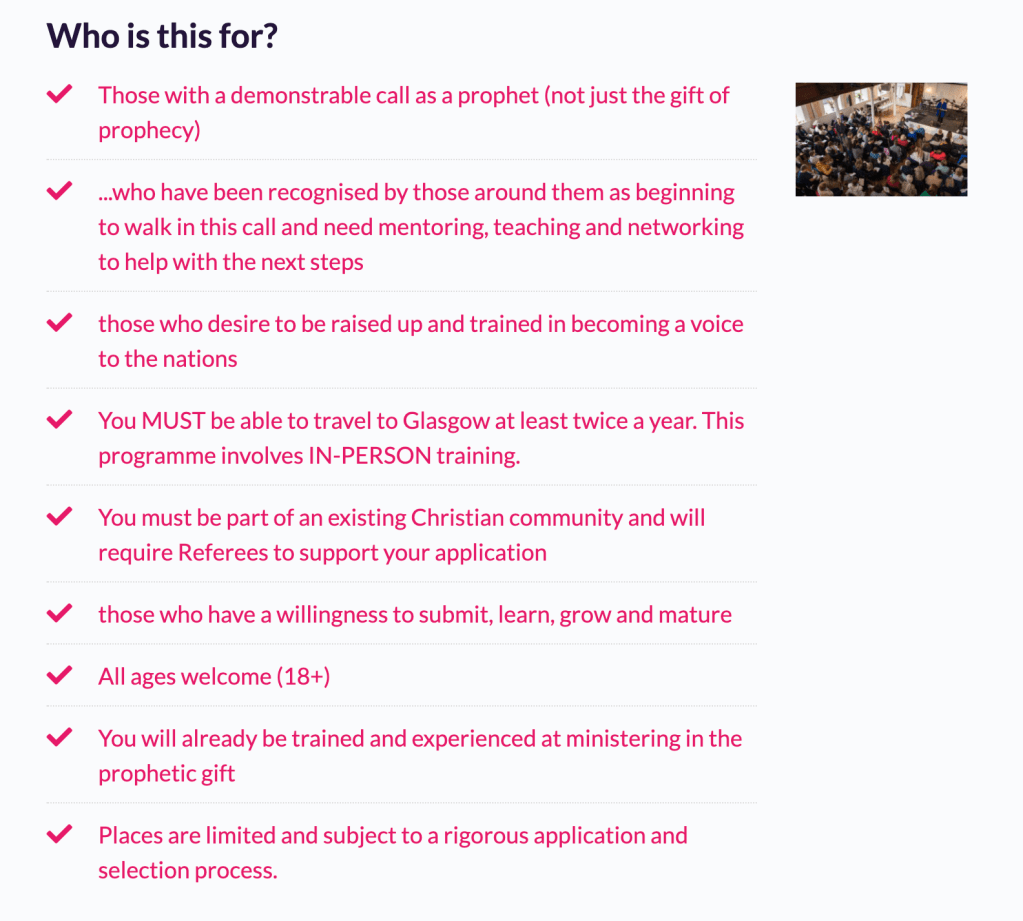
As part of 5-fold ministry, the office of a prophet is to discern what God is saying at the structural level to organizations, in order to bring them into alignment with his Kingdom purposes. Since my work is at the intersection of Christianity and the Field of Education, I have been looking for greater training in hearing God’s voice so that organizations in these fields can thrive. While many secular school reformers or entrepreneurs use secular strategies to reform organizations, individuals called to the office of a prophet practice discernment so that organizations can Holy-spirit-led structural reform. Done correctly, these reforms lead to regional and organizational healing and wholeness. Check out more on the office of a prophet here.
The requirements for this program are rigorous, and is specifically created for those who:
What now?
As part of this commitment, I will be learning through recorded sessions, live Zoom sessions with the Global Prophetic Alliance, and an in person trip to Glasgow, Scotland, currently scheduled for November 2021.
In December, I finished gathering the information for my Contextual Study, a 20-25 page research paper I’m writing for seminary on my (teaching job) school’s history. As of this month, I have begun to outline, organize, and condense the information I’ve found. I have various steps ahead in the writing process, but so far it’s been an encouraging and captivating labor of love.
Returning to the Classroom
Since doing middle of year testing this month, I’ve been surprised by how many students have managed to maintain their current levels of growth in spite of little in person instruction. While many students are breaking even as compared to their beginning of year scores in math and reading, about 25% have dipped and about 25% have grown dramatically. Unfortunately, these results loosely correspond to what students have sufficient supervision at home.
Starting next Monday, 2/3rds of my 3rd graders and 1/3rd of my 4th graders will come back to school on an every-other-day basis! I am confident that these students will remember the routines that we practiced in October, and with a few reminders, will be good to go. Based on testing data, my teammates and I are hoping to launch some socially distant book clubs, and I am hoping to develop some hands on learning opportunities students can do from the comfort of their desks. For me, this decision to pursue project-based learning is an effort to increase our collective joy and engagement at school!
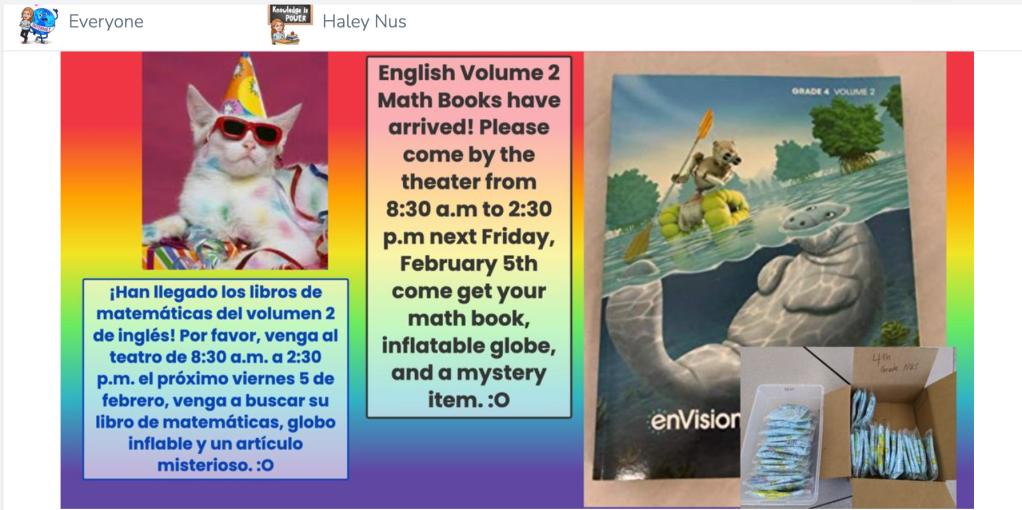
Here’s a picture of me trying to hype up my fourth graders to pick up new materials they will need for learning at home!
Simple Pleasures
Planning my Vegetable garden for Spring 2021
Vibing off the passion and fire others have for their field of ministry
Grocery shopping with friends
Open and honest conversations with my Dad
Starting a book club with 3 ENTHUSIASTIC second graders in my neighborhood (for tutoring $$)
Longing to read this new book
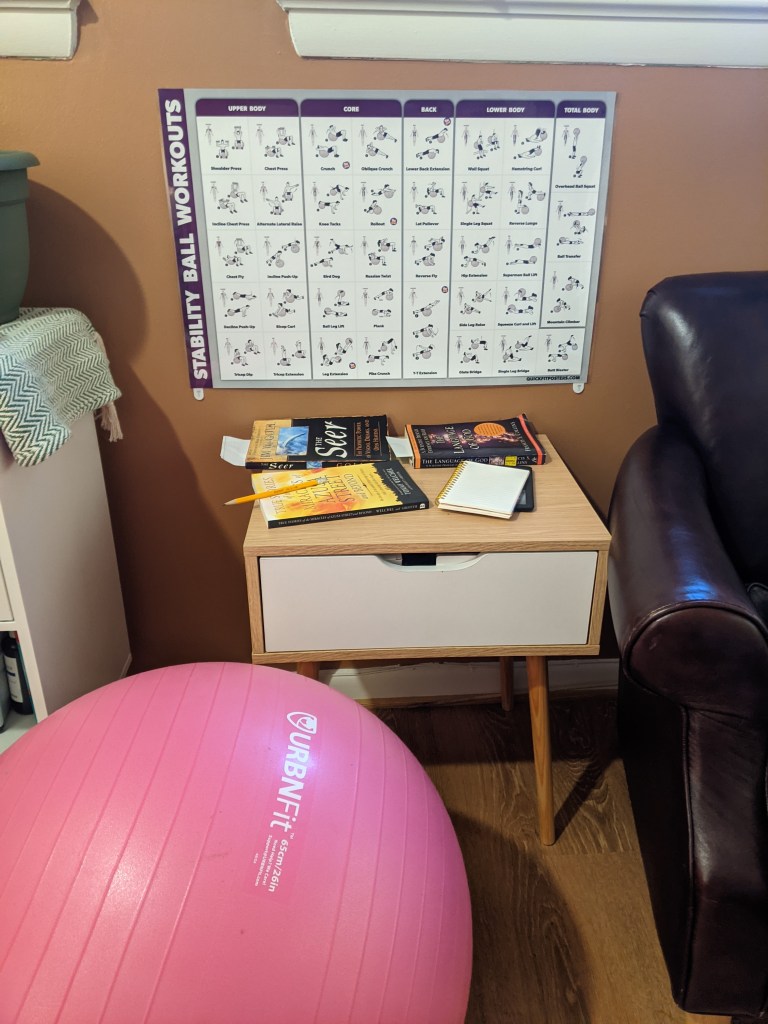
Simple new strategies for exercise
Celebrating my Students
This month, I witnessed many breakthroughs with my 4th graders and 3rd graders!
Fourth Grade
Overall, there were so many things to celebrate in Fourth grade this month!
My students have integrated their personal convictions about environmentalism (which were heavily cultivated before I became their teacher) with their faith. In whole class discussions as well as in individual students’ research, I frequently heard students drop the word “stewardship” this month as they passionately related their ecological concerns to God’s Genesis 1 mandate to steward the Earth.
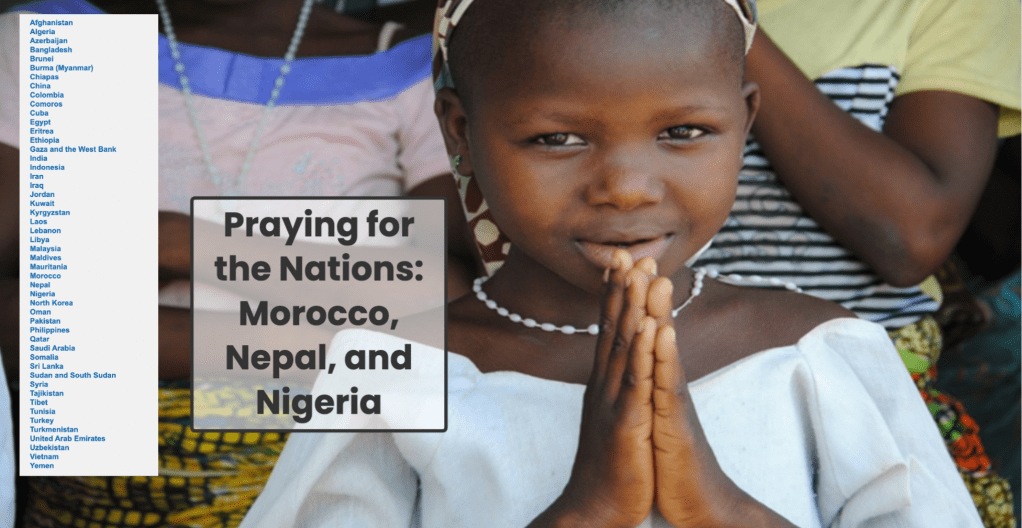
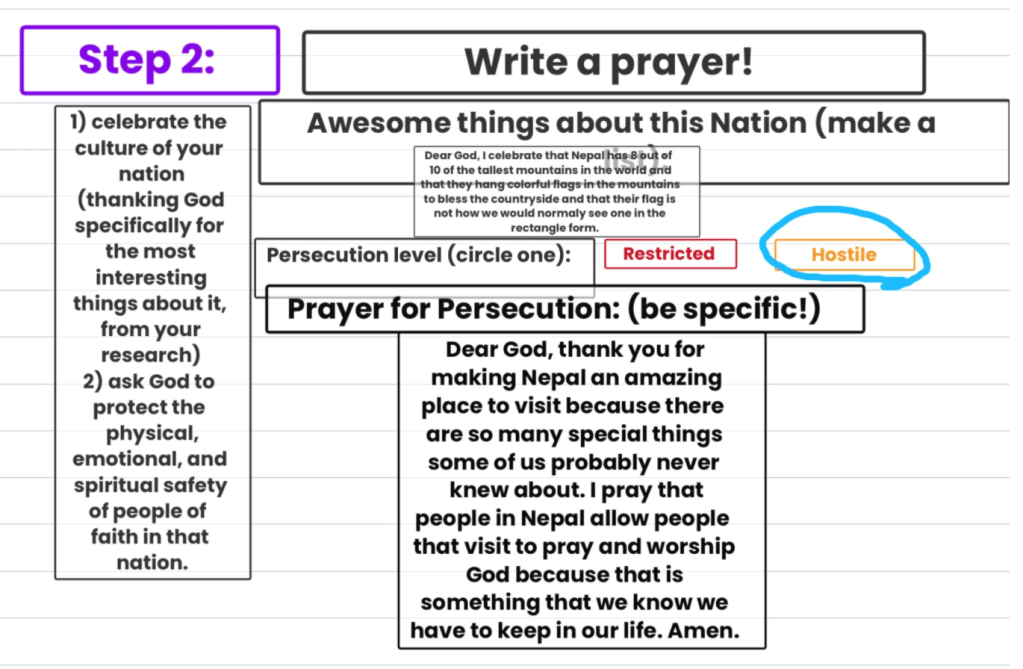
Among this group of 20, we’ve prayed for 12 different nations over the past month! I am beginning to see them develop a passion for learning about praying for the nations. I saw students who rarely speak or exert themselves during Zoom giving their all in prayer for other countries, and I can’t wait to see what God is teaches them next! Check out this post I wrote about the experience.
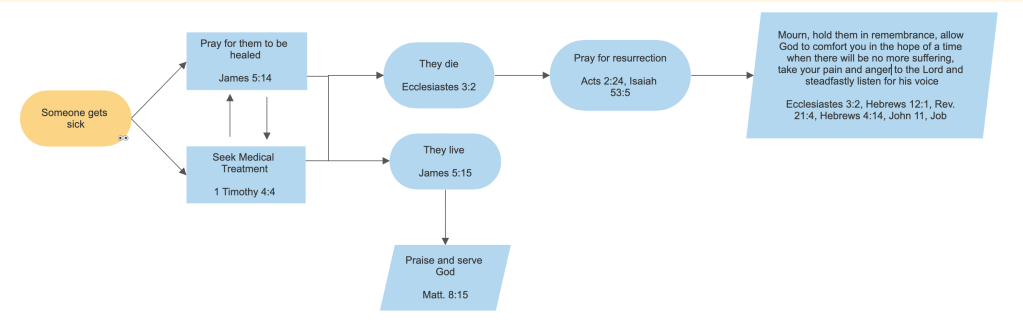
As some of my fourth graders have been grappling with deaths of loved ones, I’ve been functioning as both intercessor and pastor. We’ve had various conversations about mourning, celebrating the lives of those we have loved and lost, making sense of supernatural healing and how some individuals still die, and the hope of the resurrection. As we have these difficult conversations, I am praying to bind a spirit of Death and Suicide, and that students will find their strength in Jesus’ example of surrender. Check out this post I wrote about facilitating a conversation on faith, death, resurrection, and dying.
This weekend is the one year anniversary of the passing of one of my students’ mothers, who was a vibrant part of our school community. I enlisted the help of my teacher friends to put together a digital memorial for her, and will be sharing it tomorrow with my students’ family, as they hold their own memorial. If you are grieving the loss of a loved one or know someone who is, you are welcome to download this free, editable Google slides template to use as a resource I made as a copy. You can easily add text, images, and change the background pictures to customize the digital memorial for the person who has passed.
Students’ with Personal Breakthroughs:
I also saw some heart changes in students this month! For example,
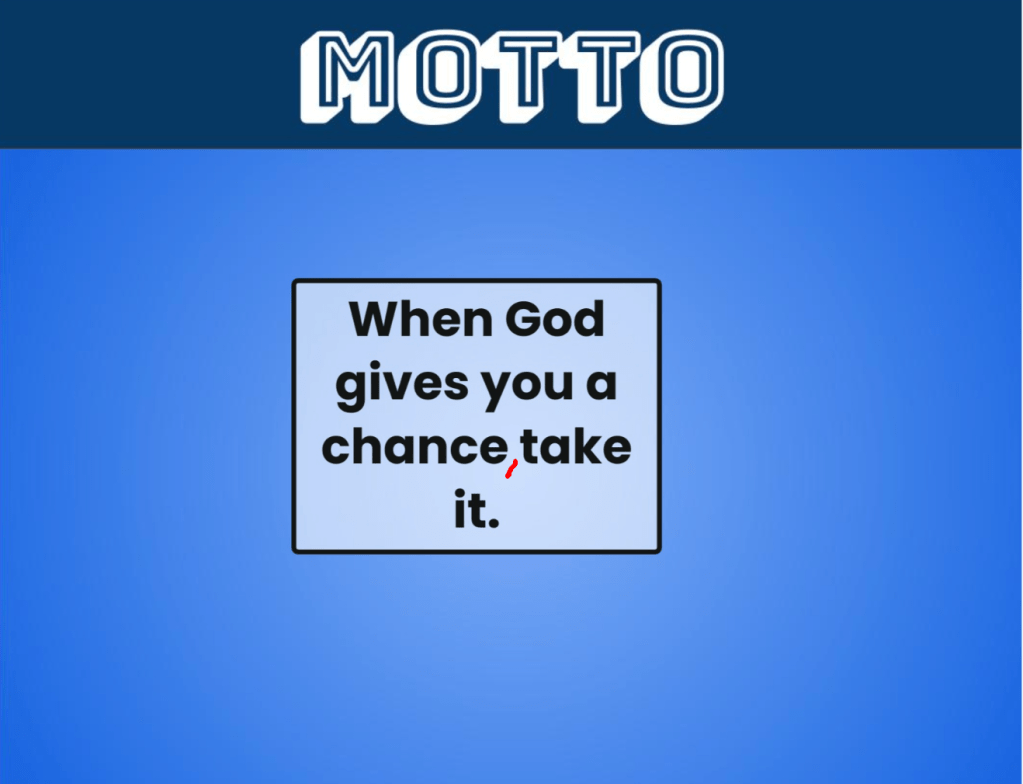
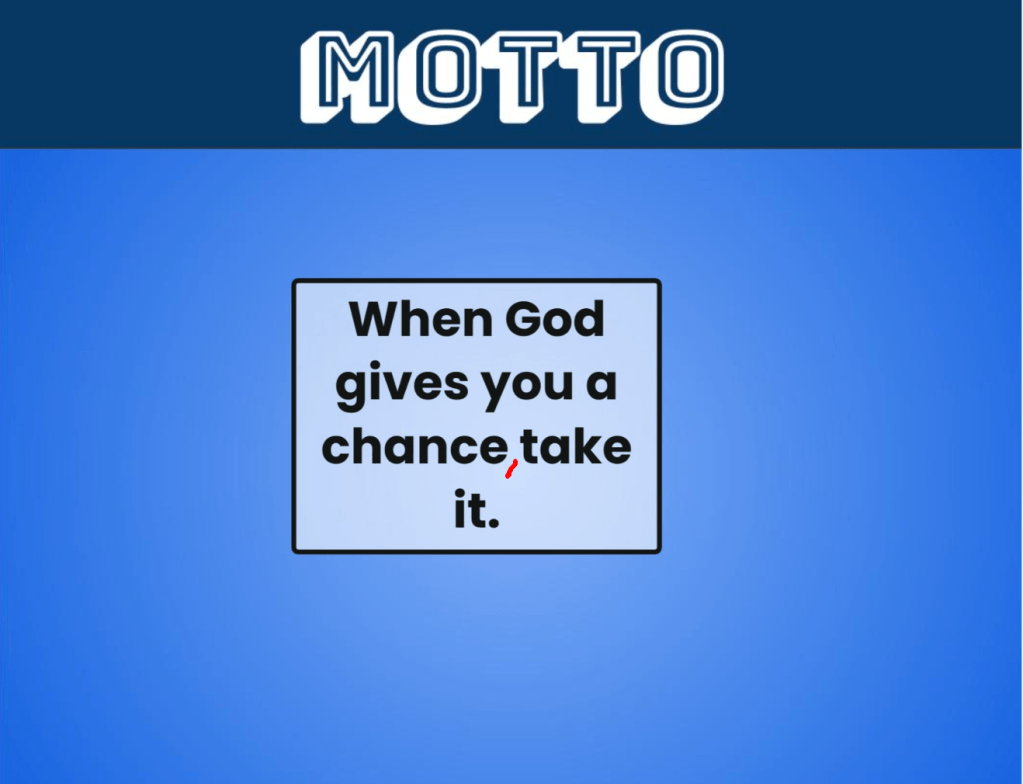
In a conversation about family conflict and arguments, one student privately admitted that he sometimes worries that his family will get rid of him. Earlier this year, God showed me just how greatly this student desires to belong, and how his desire for belonging was driving several unhealthy behaviors. Through prayer and several redemptive conversations we as a school have had with his family, this student is getting more attention and support from home with his assignments, doubling down on his work ethic, and demonstrating much greater maturity in peer to peer interactions. For his Religious Order project this month, the motto he created for his project demonstrates this shift: “When God gives you a chance, take it.”
I’m not crying, you’re crying… :’)
In another hard conversation with a student, I made it clear that I know he is capable of more. While this student scored at or above grade level in both math and reading at the beginning of the year, he has turned in barely any assignments since we’ve transitioned learning at home in November. He often gets overwhelmed and slumps into a victimized mindset at the slightest sign of difficulty, and has a tendency to make excuses to avoid exerting himself. In a conversation with our team and his mother, I explained that because I know he is capable, I am expecting more from him. There was a moment where I saw him take what I was saying to heart and understand. While I haven’t seen as much change in his habits since then as I would like, I’ve been praying that he would see and believe that God has created him for more.
Third Grade
This month, several third graders have drawn the connection between honoring their parents and a greater personal blessings. I’ve been praying that as students internalize the importance of obeying their parents, they will experience the benefits that come from obedience (prosperity, long life, happiness). While it’s important that parents do not strain their children, I am praying that as children learn the importance of obedience to their families, they will be more greatly equipped to obey God.
Theme: Right Pace and Focus
With just one month into 2021, things are speeding up! In 2020, God radically changed my life, bringing me to a new teaching job, new ministry training opportunities, starting seminary, new church, and a whole host of other opportunities. As I allow the Lord to move me at an incredible pace, it’s become more important lately for me to use discernment with friends, family, coworkers, and others to focus on what I am called to and allow them to fight their own battles. Often in conversation with individuals, I notice things that they are carrying. Many times, I’ve prayed and asked the Lord what is going on, and God has used these relationships to sharpen my own discernment and see what Jesus is doing in context. However, in order to move into this next season of life, I have to shrink! I have to become better at discerning what is others and is not mine to carry WITHOUT wasting time searching for details. I will need to practice asking, “Jesus, is this mine to take on?” Much of the time when I have brought what I’m noticing to the Lord, he responds with a quick, “Yep, they’re dealing with that. Say a quick prayer and let them deal from a distance.” In order to continue moving into the next season of my life with boldness, I need to continue reminding myself, “This isn’t mine”, and pivot more fluently.
I have sometimes compared the passion which I pursue different things I sense the Lord doing to running full speed up a hill. One stranger noticed this in a ministry training group recently, and even referred to the way God is leading me as “a Holy Spirit Tornado”. As a Midwesterner, that made me smile. But he wasn’t wrong. Over the last year, many people who are close to me have honestly not understood the unique pace of my life, and have been so afraid that I would fall apart or collapse from the many changes. This month, I had to discern whether one individual’s words came from a place of fear, or whether it was legitimate warning. From what I can tell, God isn’t calling me to slow down! If anything, he’s increasing my sensitivity, remain small, and digging deeper wells in my life for him to move.
Check out the many opportunities in my year ahead!
What I’m Praying For
That my students would have their own stirring experiences with the Lord! That he would ignite passions in them that would turn into callings.
How you can pray for me
Please pray:
Wisdom and grace to indulge in many project-based learning experiences from our desks in February
God to continue multiplying my time and energy
A greater awareness of Jesus as reflected in other people
Favor as I start the Emerging Prophets program trainings
Continued financial provision for all this and more
Increasing accuracy in recognizing what isn’t mine, a quick faster pivot and greater finesse (gentleness) in doing so
Please pray that I would remain small! Please pray that my sensitivity to the Holy Spirit would increase, that my focus would be dead-set on Jesus, and that I would become even better at pivoting from what is and isn’t mine to carry.
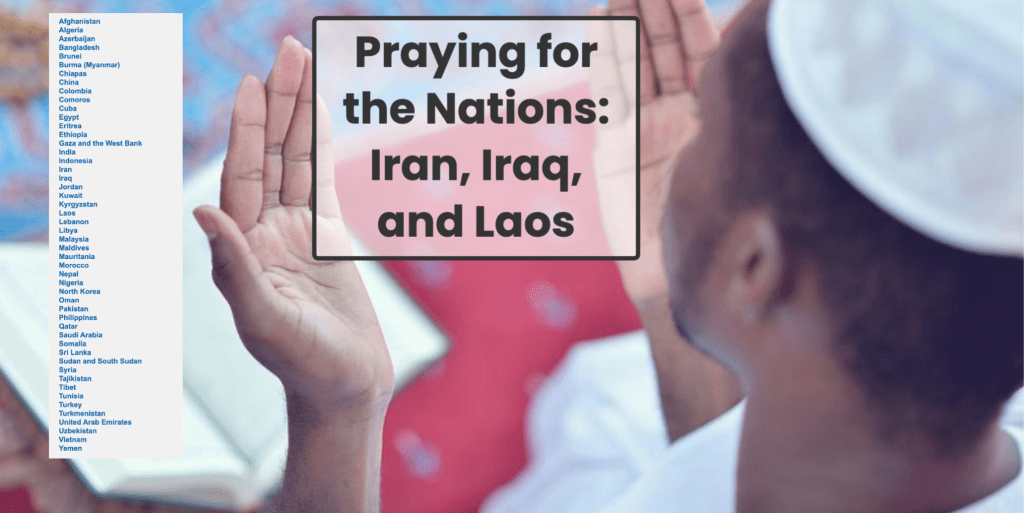
Throughout January and the end of December, I’ve treasured my Friday mornings with Fourth grade. Over the last month, students have studied 12 different nations in groups in Zoom breakout rooms, composing their own prayers and then praying as a group together. This year, yearning for the Nations has been one of our foundational classroom values (along with environmental stewardship and the importance of prayer and scripture). In many ways, this is something my students understand instinctively. As a whole, the majority of my students come from diverse backgrounds as immigrants or children of immigrants, and many students have strong ties to other nations already. At the same time, my monocultural students have inevitably experienced the effects of other nations by the nature of living in Washington, D.C.. Our city is one of many nations!
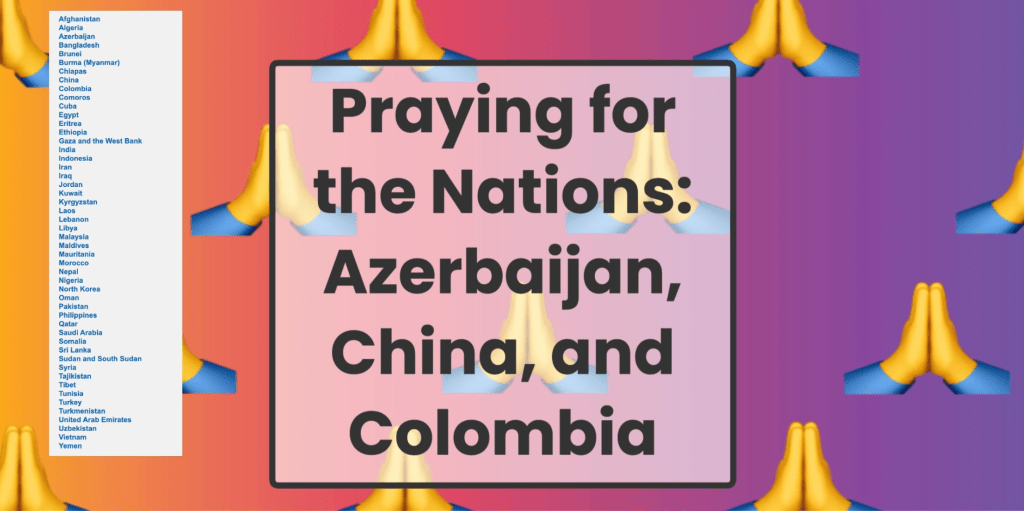
In late December, I introduced the reality of international religious persecution to students as we discussed the value of religious freedom. By knowing Jesus as our Prince of Peace through the Advent season, students were able to explore Jesus as represented in Diverse Madonna and Child portraits from many nations. Immediately, we set to work studying Afganistan and Afgani culture, celebrating Afgans use of aqueducts for farming, and the values of hospitality and scholarship related to Islam. In order to correct for some of the hostility and cultural insensitivity Christians have shown at times throughout the centuries, as well as recent intolerant behavior of some Christians towards Muslims, we began by celebrating a predominantly Muslim nation. As a class we also explicitly discussed the complicated role of the U.S. in the Middle East, acknowledged that many people have different and strong opinions about the topic. We prayed that Jesus would forgive the United States for the ways we’ve grieved people’s hearts in Afganistan and Iraq through the wars we’ve had with those nations, and asked God to restore the hurting individuals and societies in Jesus’ name.
For the four weeks, students continued to honor, study, and intercede for various nations in prayer. While students prayed for religious freedom in these countries, you might be surprised by the many inventive ways they ultimately prayed! It is my hope that by sharing this experience, others will see that international intercession in prayer, scholarship in nation study, and honoring the diversity of human beings are essentially intertwined.
Activity Design
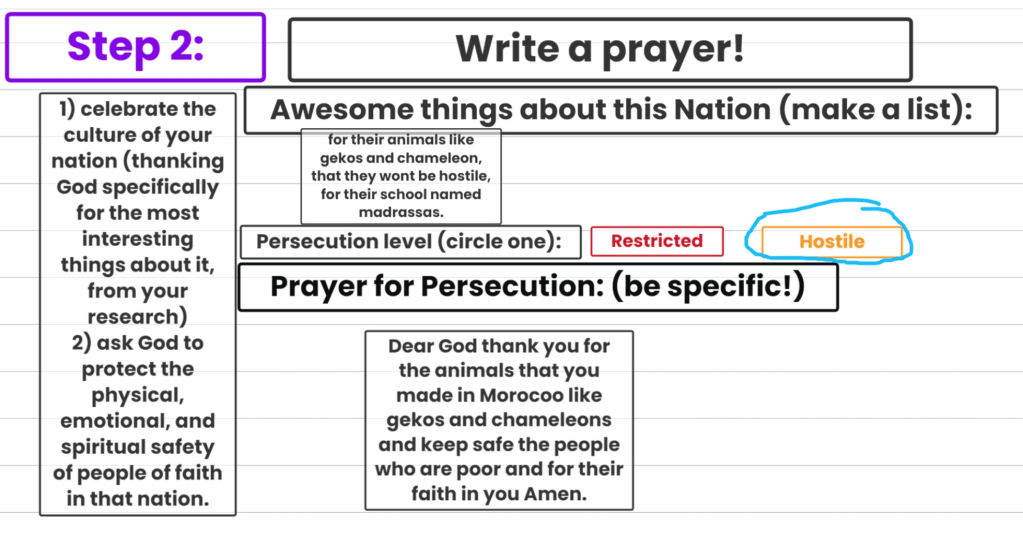
Each Friday morning, students gathered on Zoom at 10am for an hour devoted primarily to prayer. After giving announcements and updates, students have the choice of 3 nations to study. After selecting the nation they would like to study, I label Zoom breakout rooms with the names of each nation, and assign students accordingly. With a class of 20 students, we usually have 4 breakout rooms of about 5 each. Each week, there is a country that students find most fascinating, so we have two groups of that nation and just one group for the other nations. Students have done a tremendous amount of group work in past years and this year in Zoom Breakout rooms. Since they receive grades for collaboration already and I alternate pretty fluently (and sneakily) between groups monitoring their work, students are able to stay on task, remain reverent in prayer, and document their prayers thoroughly on Seesaw.
After students are put in breakout rooms, they have 4 main steps to complete:
Researching Religious Persecution
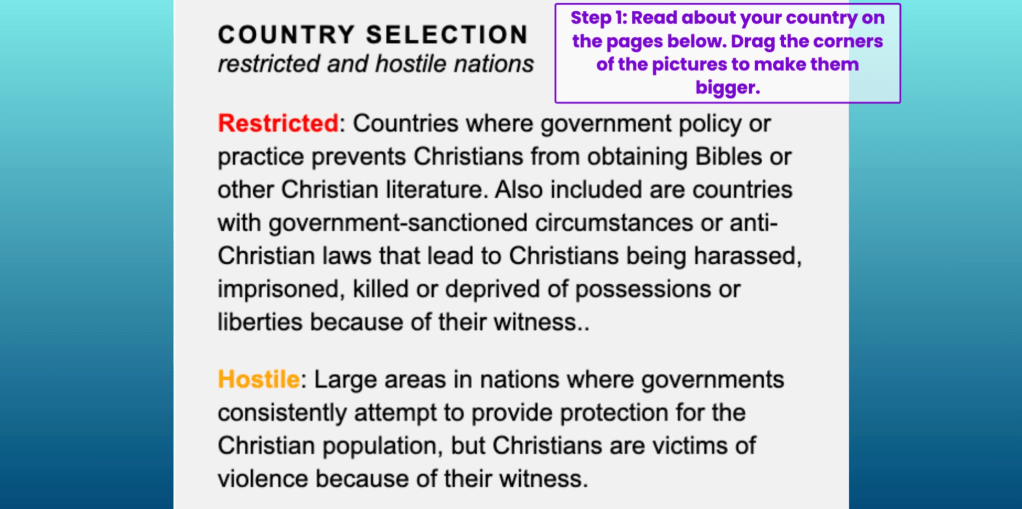
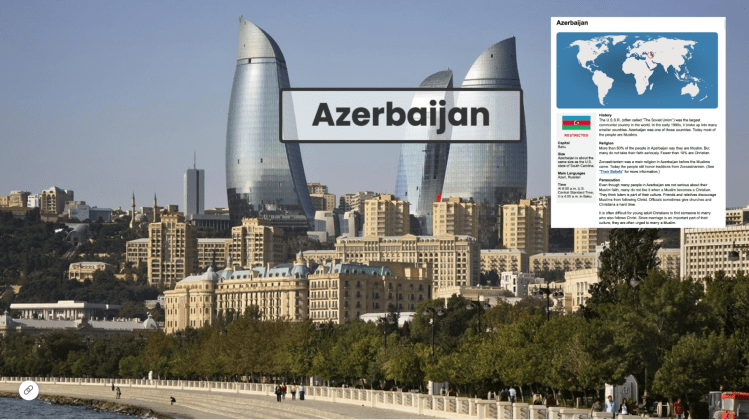
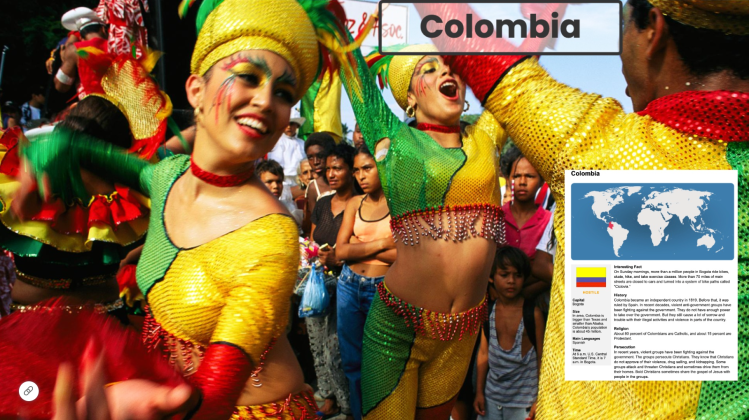
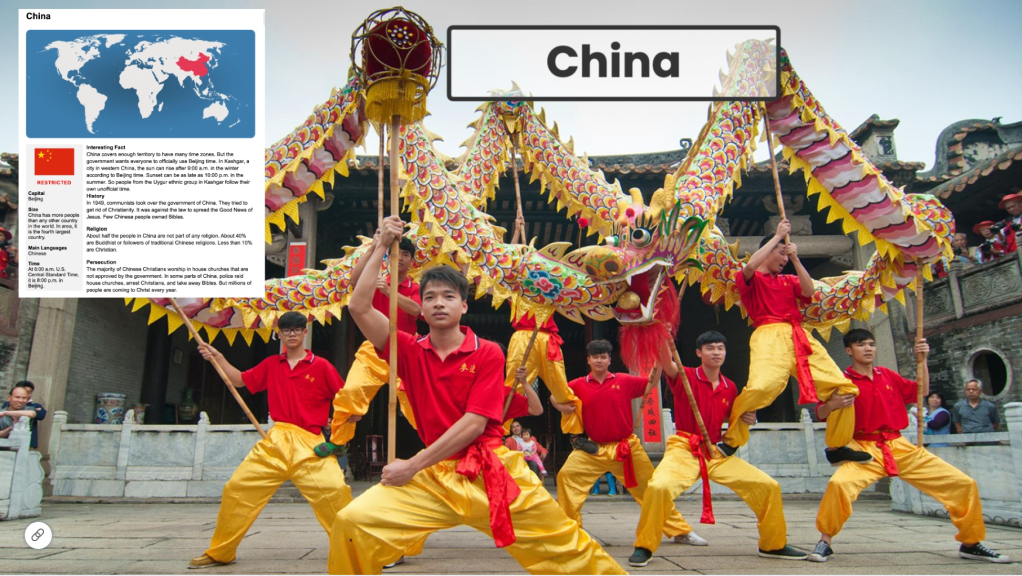
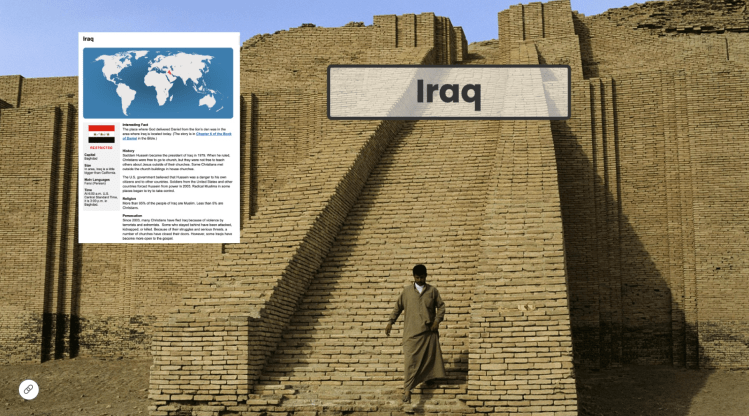
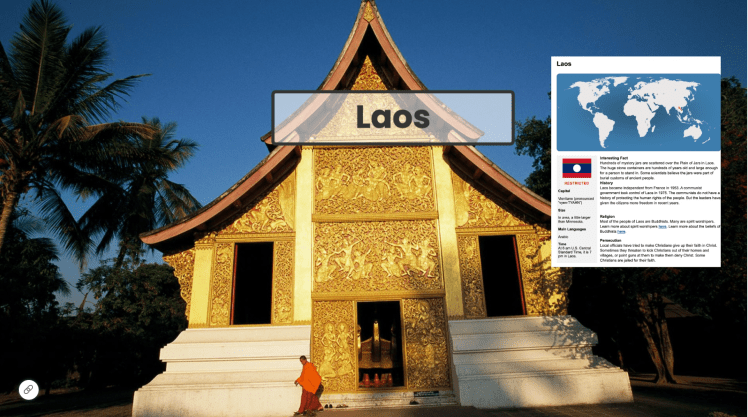
First, students have to read about their country’s level of religious persecution. Students navigate to the page labeled with their countries name, and expand the summary for religious freedom in that nation. I chose to highlight the issue of Religious Persecution for this assignment, so for each of the nations students’ studied, there is some level of Religious persecution. Students discovered that religious persecution can look differently across the world. While many individuals are legally imprisoned, beaten, plundered, physically attacked, discriminated against, and more, others face social ostracism for their faith, and faith in Jesus. For this assignment, students used the Kids’ of Courage (Voice of the Martyr’s) Country Summary pages. to study more about the level of religious persecution in these nations.
Kids of Courage Religious Persecution Levels
Researching Culture
Second, students had to read about each nation’s culture. The vibrant graphics on the National Geographic Kids Country Profile pages provided ample room for discussion and exploration approximately at students’ instructional levels.
National Geographic Kids Country Profiles
Composing Prayers
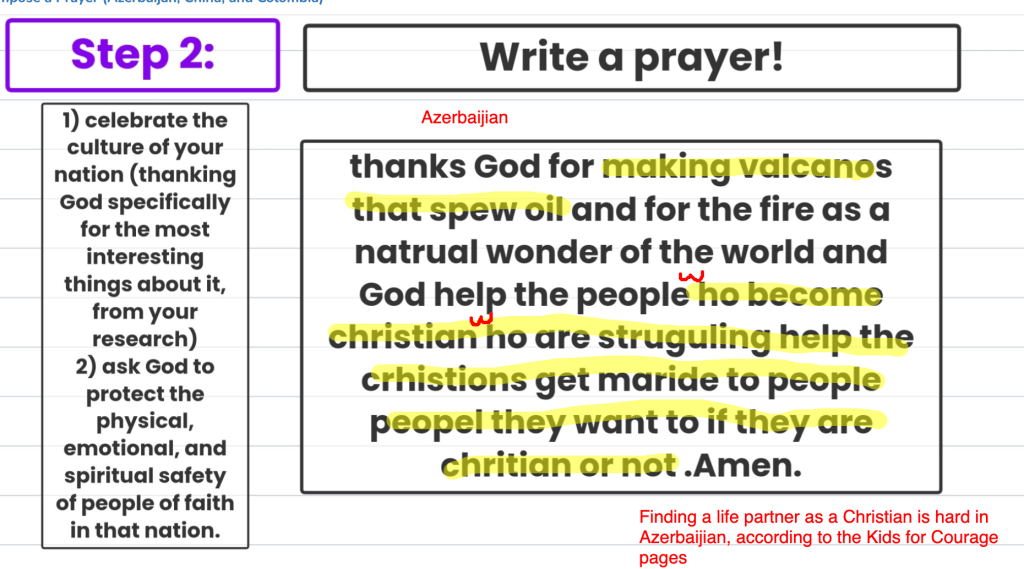
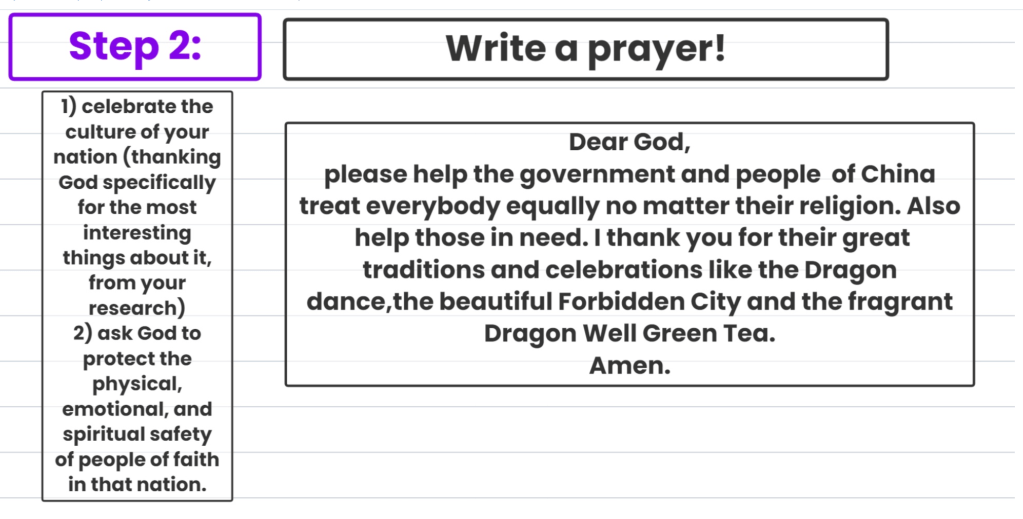
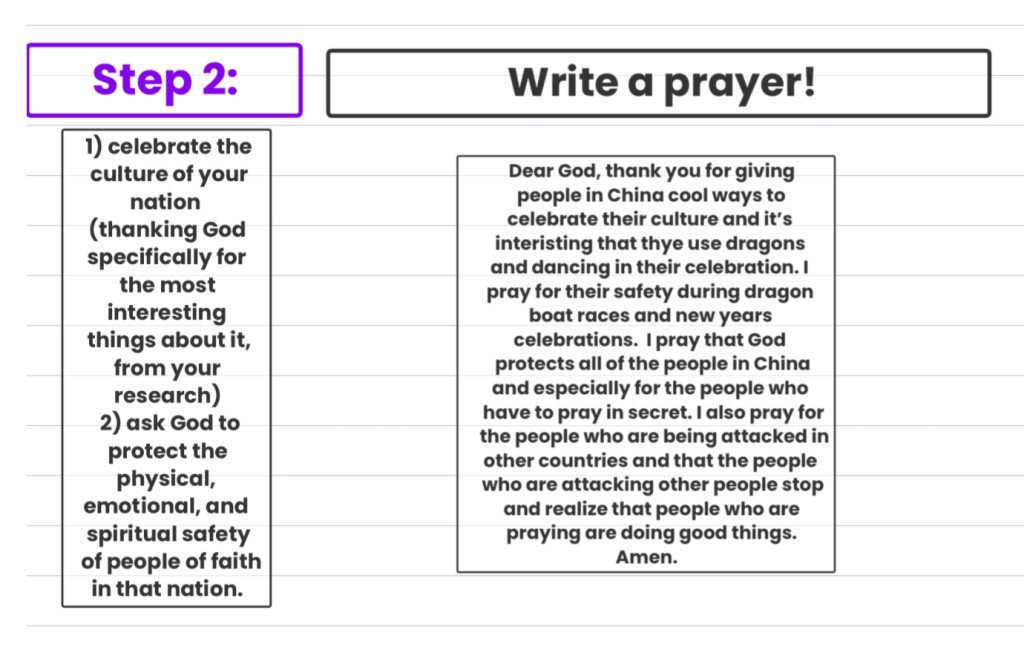
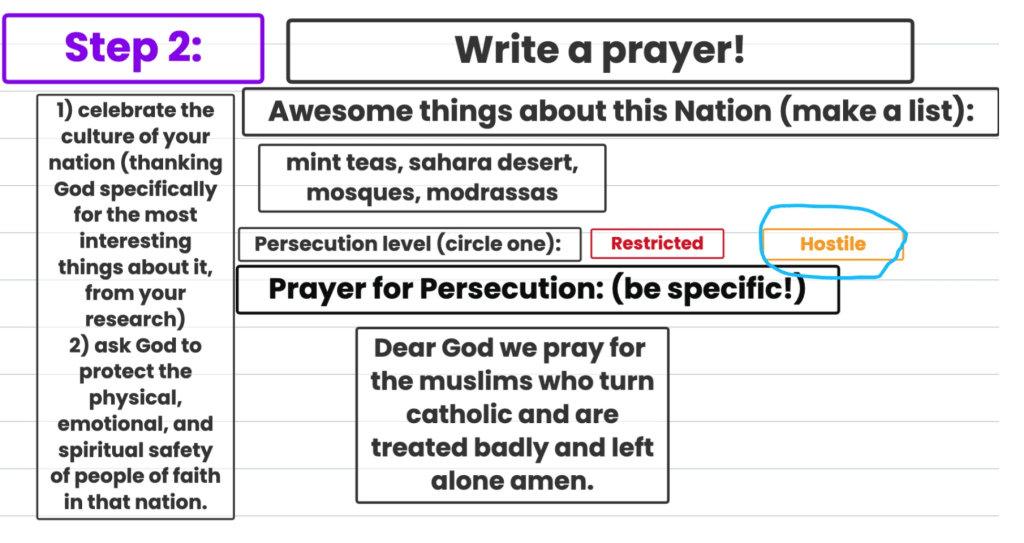
Next, students discuss the things they noticed and appreciated about each nation, as well as any questions they might have. Students alternate between composing their prayers independently, and composing a prayer as a group (which can be especially supportive for students’ reading or writing below grade level expectations). Students must name at least 3 things they found most interesting about their nation, and make a list to include in their prayer. Students must then consider how they would like to ask God to intervene in that nation based on the facts that they have read related to culture and local religious persecution.
Praying as a Group
Once all students in the group have finished composing their prayers, they click the “Ask for Help” button on the Zoom toolbar to call me back to their group. We decide the order of who will pray, to decrease confusion. Normally as we pray, I will hold up my fingers to remind them of the order so that they don’t get lost in the moment (which is reasonable, given the importance of the topic). I sometimes prompt students with their names, but at this point kids are comfortable enough with the structure that I don’t often need to. To reduce the confusion of praying in a group and provide a sense of rhythm, we use call and response. After each individual finishes praying, they say and we repeat the phrase, “Lord, hear our prayer” to signal that we are moving to the next person. I often summarize students prayers and relate them to the main topic as we close, with resounding amens. I then thank students, affirm that their prayers are making a difference, and dismiss each group individually.
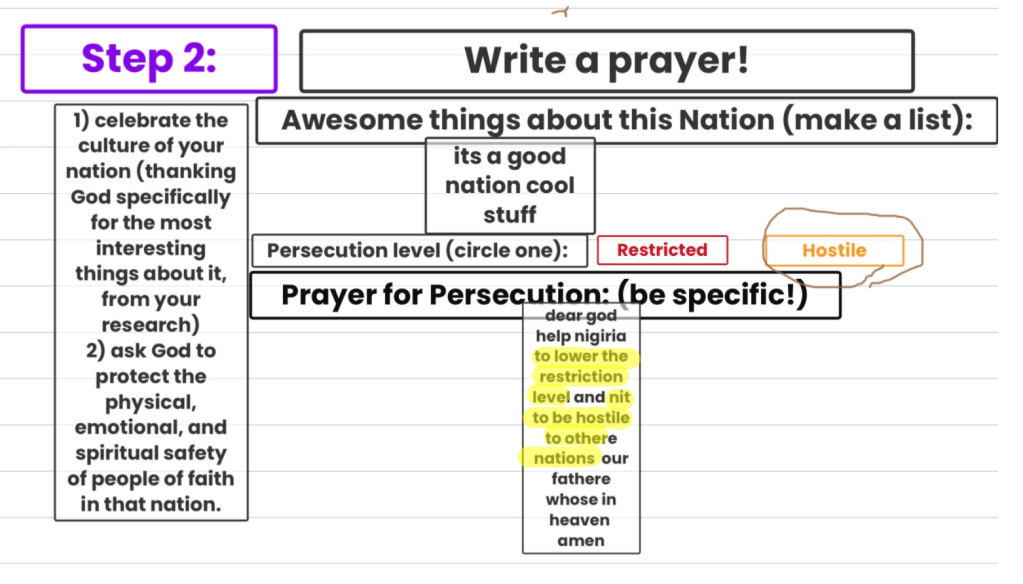
I was impressed that students were able to integrate their own traditions into our prayers. There were several instances where students added “Our Father” prayers either to their prayers. I made it very clear to students that they are more than welcome to incorporate the prayers they already know into our activity, to make it their own. One of my student who has a specific learning disability in literacy was able to participate through having others in his group read the text and substituting an “Our Father” prayer for his written component. This students’ comprehension was so high after our discussion that I knew anything he didn’t get a chance to say, the Lord was already hearing.
Like most Protestants, I am more experienced in praying extemporaneously. However, through seeing the composed prayers of my principal at this school and my professors in seminary, I’ve come to the conclusion that all prayer is good prayer. I’ve come to learn that my Catholic students who value the importance of structure and tend to feel more confident in prayer when it is present. I’ve seen students become much more comfortable with extemporaneous prayer and relating verses to their studies in greater depth than they were in the beginning of the year, so I don’t mind giving them a framework. While I think I would have assumed before this year that more structured prayer means less intimacy with God, I’ve seen so many individuals pray passionately in this style that I have changed my mind. Legalism and avoiding intimacy can happen in any style of prayer, and what God looks at is the heart.
Week by Week
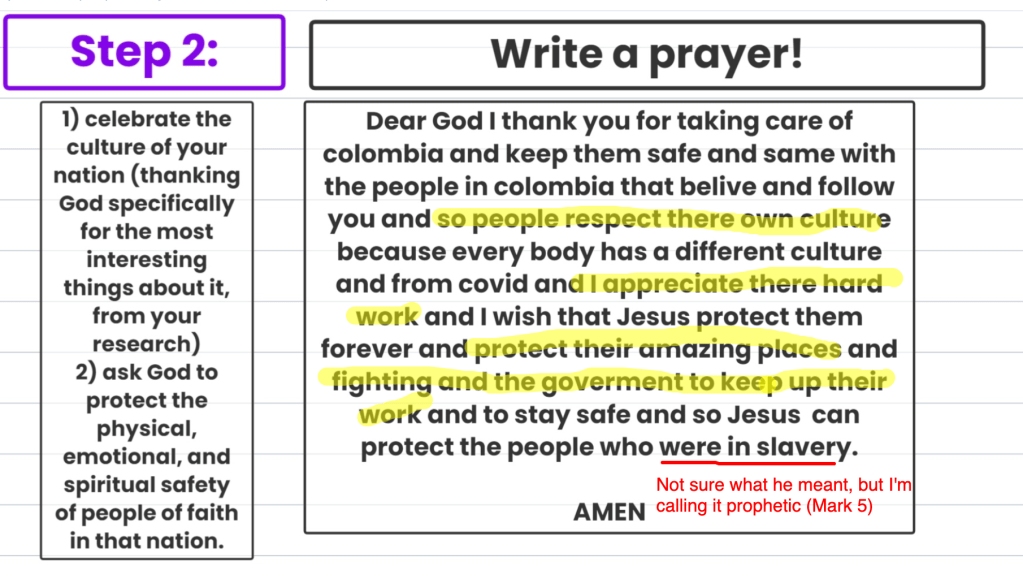
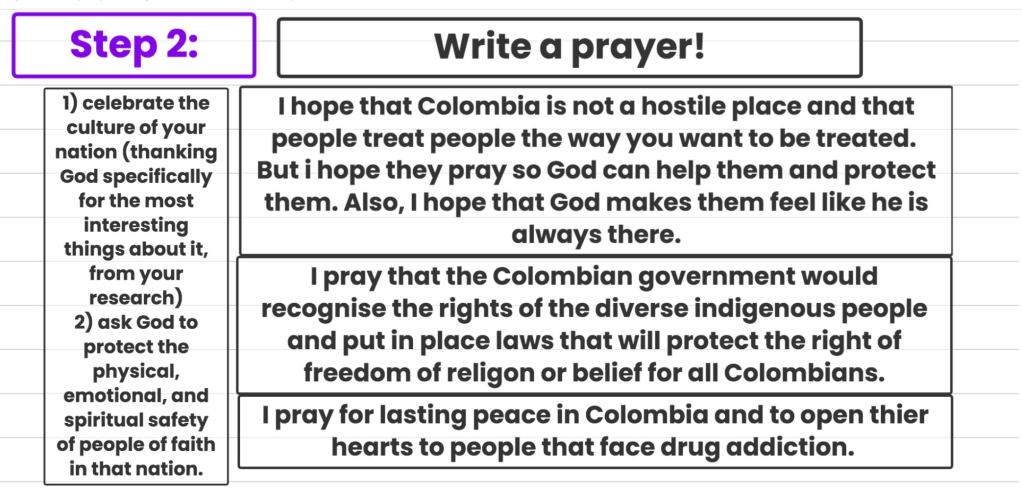
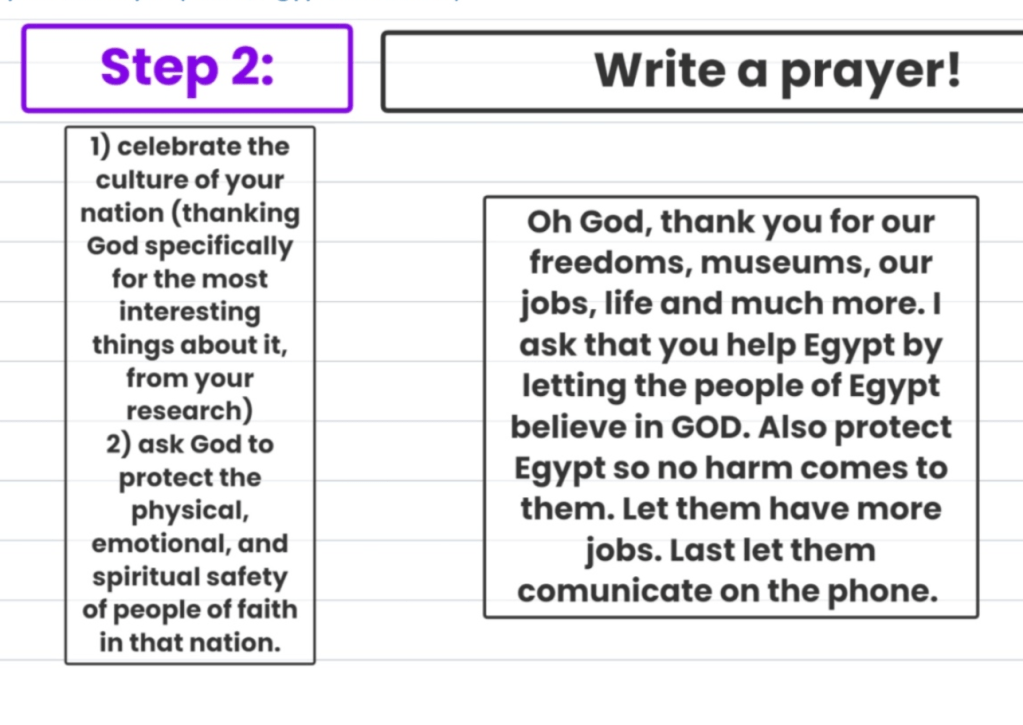
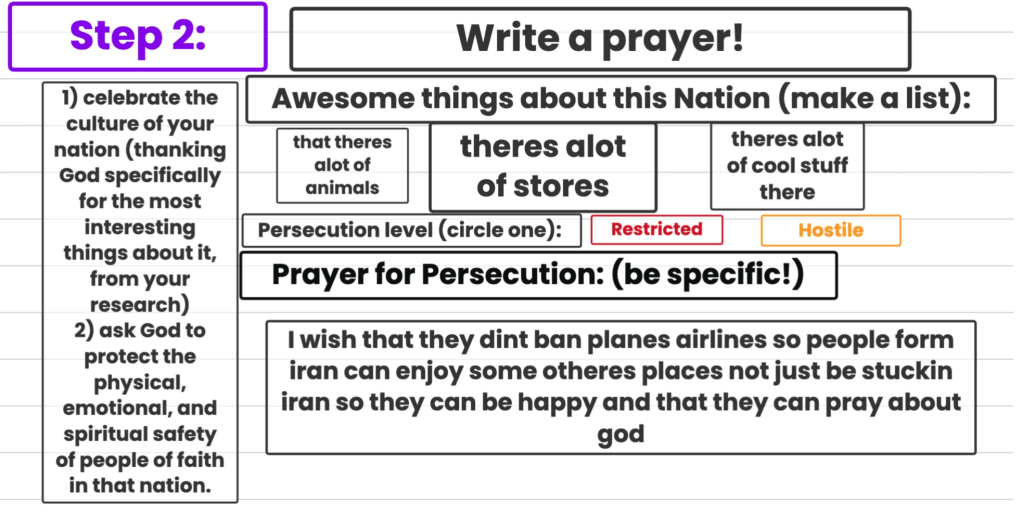
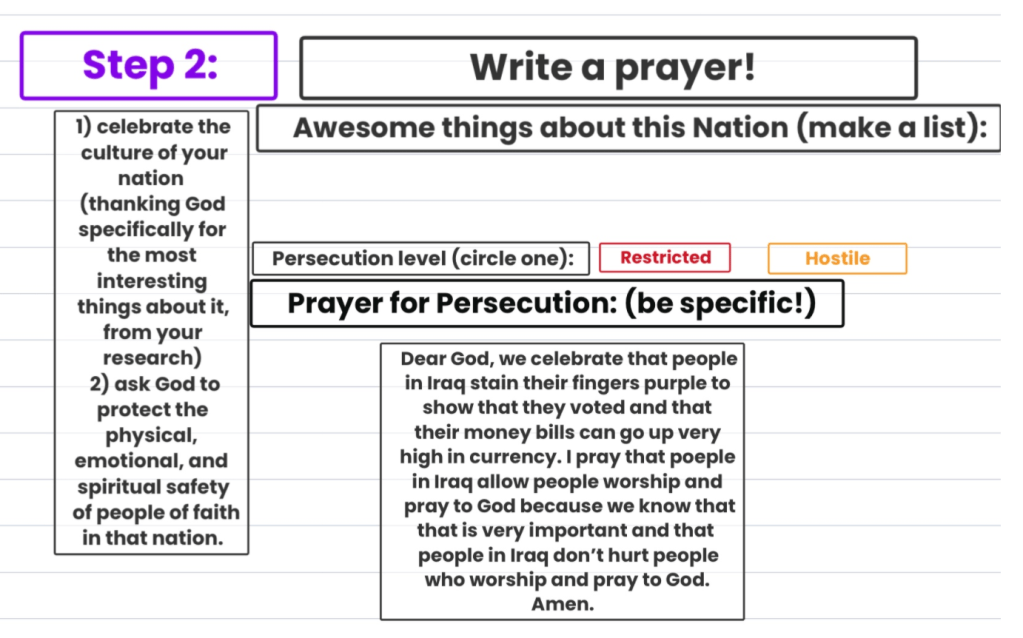
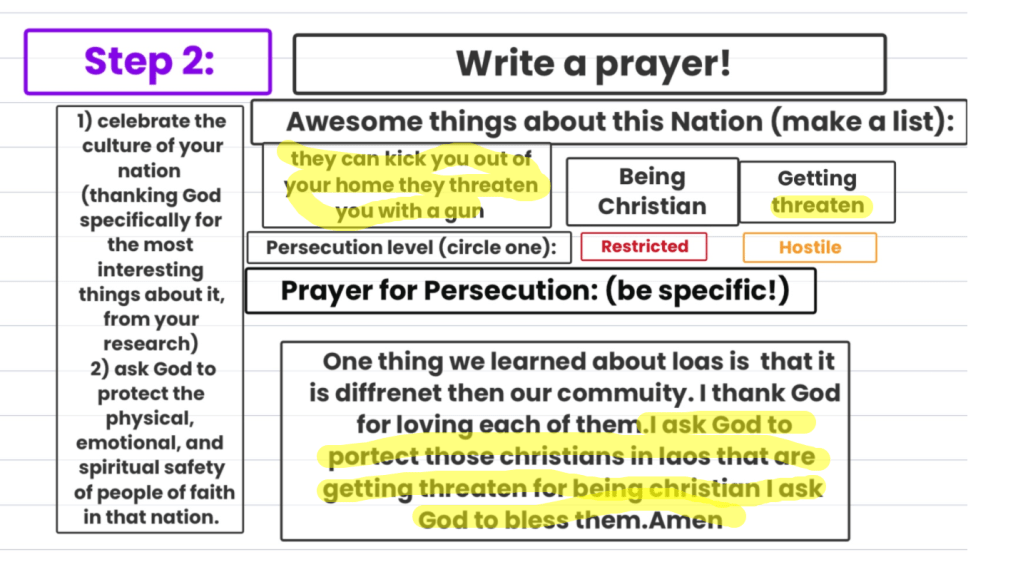
Here are examples of my students prayers this month! I’m very proud of them.
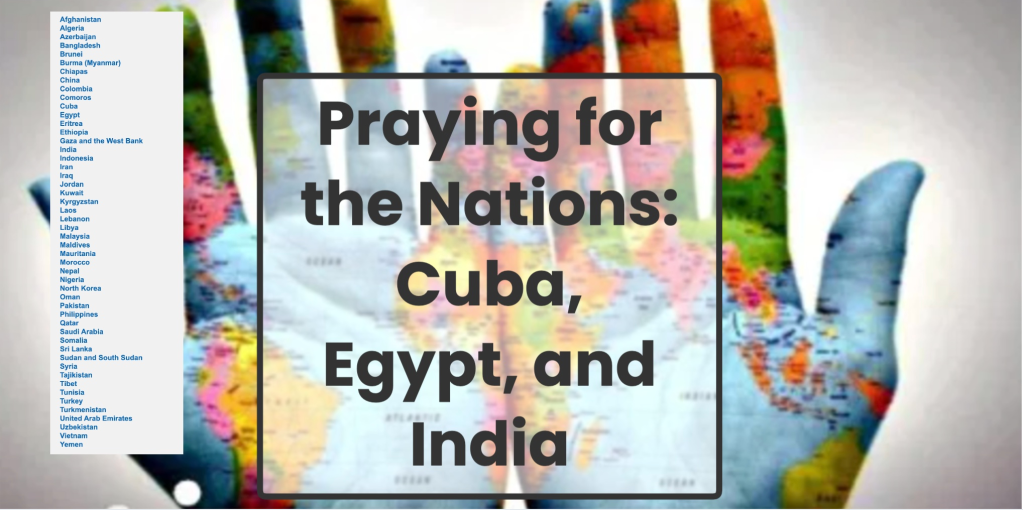
Our first day of student-led Prayer! I picked this background to relate to students’ love of emogees, but honestly, I didn’t need to try to make these assignments engaging. My students were very naturally curious about other countries’ cultures and levels of religious freedom abroad.
Goal of background: To have students explicitly consider the creative, nation-making and nation-building power of God.
Goal of Background: To explicitly honor Islam as a major world religion, to share anecdotes of Muslim friends’ I’ve grown up with, and celebrate Muslim cultural values of hospitality and literacy (academic achievement as a whole).
Goal of Background: That students will see themselves in the children of other nations, and that they can be children passionately praying for other children.
What’s on Students’ Hearts?
You learn a lot about what people believe about God by how they pray. With children, you learn a lot about what kids find captivating, what they personally long for, the styles in which their parents pray, and even the underlying questions they have about God.
I was pleasantly surprised by the topics students thought to pray about! I was moved by the fact that one of my students consistently prayed that God would protect things nations from the pressing dangers of COVID-19. Another student prayed each week that individuals these nations would feel the tangible presence of God by their side (the Peace of Christ).
Apart from people’s right to religious freedom, many themes emerged:
Against drug addiction
Towards governments recognizing the rights of indigenous peoples
Healing of racial trauma and history of enslavement
Healing of people’s hearts from the effects of war
Remembering the poor, freedom and provision
Economic security and stability
Celebrating the many animals God has created (ex: giant squirrels)
Zoological conservation of amazing animals internationally
A sense of awe in the world’s landforms
Ease and freedom for Christians to find life partners and marry
Freedom for all people to travel independently and direct their own lives
Protection from COVID-19
That the nations would treat one another as brothers and sisters
For people to know and put their faith in Jesus
A Globally Focused Year
It’s been my great joy to look back and realize just how much of this year’s discussion and design has focused on the Nations. In a year shaped by the pandemic and necessity, COVID-19 has only intensified students’ hunger for prayer. Before meeting my students either virtually or in person, students knew I was passionate about prayer and I’m happy to say that I’ve seen them develop this passion as well. This month I was surprised to see students who seldom contribute willingly to Zoom conversations nor submit most assignments pouring our their hearts to God in sincerity. It’s been my prayer since before creating this project that God would use it to impart a burden for particular countries to children. Whether they will become missionaries, work in international relations with governments, or indirectly support the wellbeing of others across the globe, I pray that God would honor their love for our international brothers and sisters.
I pray that God would continue to testify to students of his desire to shape the nations, and that the walls of their hearts would look more and more like our classroom.
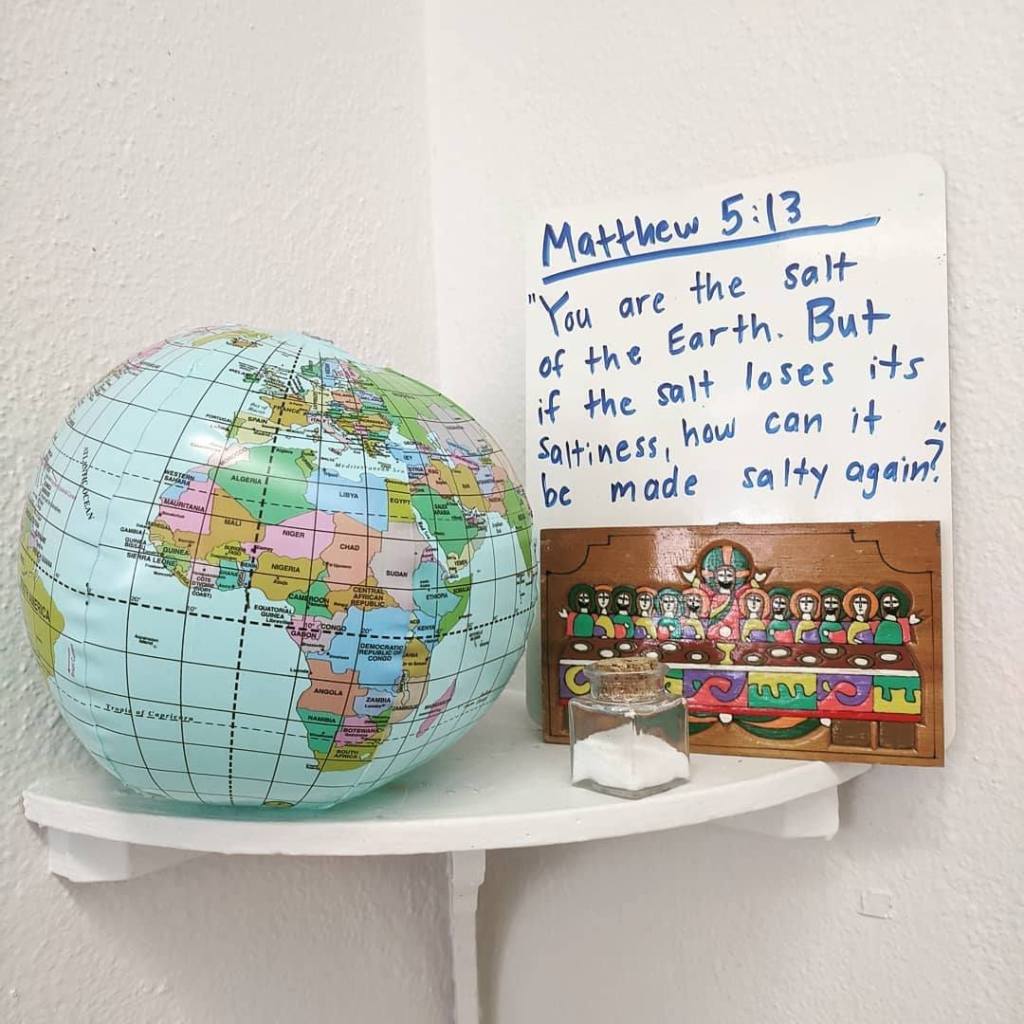
Essential decor for an essential mission (Matthew 28).I enlisted my coworkers and their kids in batches to help me construct this map. In unity as 3 children and 4 adults, we assembled this curbside find, and not one piece was missing!
Over Christmas, I realized that I wanted to give students another tool to learn about and pray for the nations. Through creating a fundraiser through my class’s
Adopt-a-Classroom page, I was able to purchase plastic inflatable globes for student use, enough for our third graders also! We will be using these globes from home as we continue to learn and pray. As I wrote each child’s name on their own globe, I prayed that God would use the students’ to empower each nation where the sharpie touch the plastic.
A bin of inflatable globes for 3rd grade, and a box for 4th. Giving them the world so they can give their hearts away to the nations.
She wasn’t wrong!
One student has impressed me by her understanding of these themes! In a recent assignment that challenged students to consider the strengths of their family and friends to design an ideal Presidential Cabinet, she nominated God as her Secretary of State, because he knows so much about geography and other countries. For her January Inquiry Project, this same student chose to study word religions, comparing the apparel, values, and core beliefs of Hinduism, Islam, and Christianity. As she studies, I am confident that her faith will grow deeper and that she will develop a greater awareness of individual’s diversity.
What’s Next?
After one month, this project isn’t yet over! In February, students will spend one more Friday studying the Phillipines, Turkey, and Vietnam in groups. Then, I’m hoping to assign each student a country of the many we haven’t studied as an independent research project.
Algeria
Bangladesh
Brunei
Myanmar
Chiapas Mexico
Comoros
Eritrea
Ethiopia
Gaza and the West Bank
Indonesia
Jordan
Kuwait
Kyrgyzstan
Libya
Malaysia
Maldives
Mauritania
Oman
Pakistan
Qatar
Somalia
Sri Lanka
Sudan
Syria
Tajikistan
Tibet
Tunisia
Turkmenistan
United Arab Emirates
Uzbekistan
Yemen
We will end with a deep dive into North Korea and do a reflection on what students’ have learned from this experience.
Reflection
As someone who was raised in a semi-diverse Midwestern setting, I have been blessed to encounter a great deal of diversity. As an elementary school student, my school hosted students from over 100 nations, and many of their parents attended the University of Kansas as students. Through genuine friendships with a classmate from Mexico and another classmate from North Korea in late elementary school, I developed an interest in foreign languages that eventually led me to Valparaiso, Chile on study abroad, and where I gave my life to Jesus. If not for the genuine love of these friends that planted a seed I later recognized in Christ, I would not be fluent in Spanish, Christian, or in Washington D.C., let alone teaching at a bilingual Catholic school. Within my own family I have a sibling in law and an uncle who are immigrants, and we are all the better for it. Before and after getting saved, I returned to work both at my original elementary school and as a student hourly in the Office of International Student Services at KU, where many of my peers parents once attended. I have also seen the difficulties students and their families face in immigrating to the U.S. in my own family (when my toddler nephew waited nearly nine months for his mother to be able to join him), in the fear of ICE officers (Immigrations and Customs Enforcement) I saw in the faces of even lawfully immigrated International Students, and in my former students. I once had a second grader hand me a ball of paper and tell me, “Ms. Nus, if ICE comes to the school, here are the names of my lawyers.” I wonder what Jesus would say about this fear and the paranoia that it adds to our nation.
Some of the words of violent protestors at recent events at the U.S. Capitol still ring in my ears. While I am grateful for my country and the blessings its given me, based on Revelation 7:9, I don’t believe Jesus endorses “United States first” brand of nationalism. I believe in fairness, but question whether our present laws acknowledge how hard so many immigrants are working to belong to the United States, and how hard they’ve worked to improve it. Instead of scaring people, I wonder what it would look like to create opportunities for them and honor their sacrifice. At the same time, I know that my perspective is just one person’s. In the coming years, we as a nation will have many opportunities to celebrate one another’s diversity and honor the nations already represented among us. I pray that we will be willing to listen to one another and create policies that are fair and benefit prospective immigrants, native citizens, and even individuals who immigrated illegally, offering them a path out of fear and towards redemption and belonging. In this great and spacious country, we need the redemption Christ offers to change our hearts so that we will make room for one another.
This year, it’s been my great honor and privilege to come alongside a group of insightful fourth graders as they grapple with important questions about the character of God. It has been bittersweet to see how they have coped with the pandemic, and the many instructional changes we’ve experienced this year. I’ve seen several students who have the blessing of greater parental supervision blossom in ways that to be honest, surprised us. I’ve seen other students who are not able to receive more supervision treading water. As of now, we are challenging them to internalize greater levels of responsibility that some aren’t yet ready to receive. At 10 years old, many of them have the skills to cope with basic technological challenges and self-care, but when it comes to emotional maturity, it can be easy to forget just how young they are. I know that many are longing for better days.
As students have coped with the loss of routine and social opportunities, violence in D.C., fear for themselves and family members due to the pandemic, and more, we’ve talked very openly about grief. For the time being, we continue to circle back to themes related to God’s loving-kindness, knowing him as our refuge, and trusting that even if we don’t see it yet, we will see the goodness of the Lord in the land of the living.
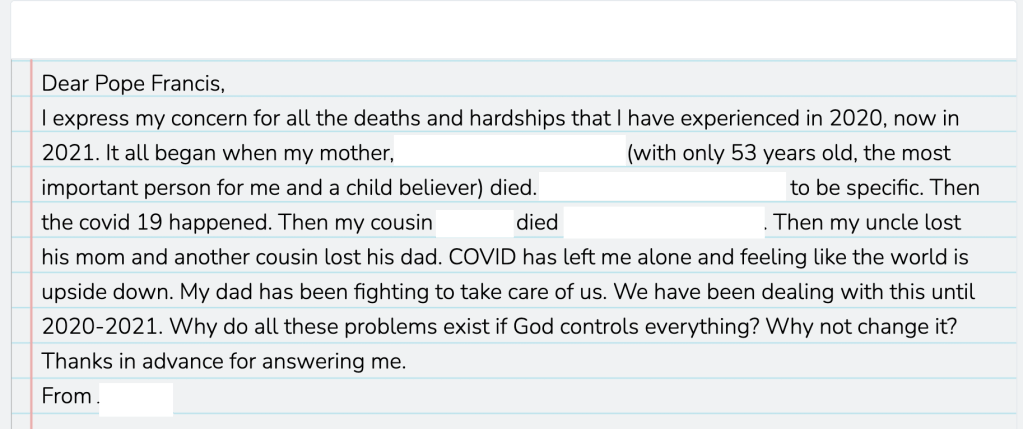
These conversations have been beyond necessary. Since the beginning of the year, we’ve needed to discuss grief, anger, and dying as a necessity. I have students who have recently lost grandparents to COVID, students whose parents are battling cancer, and another student who has been coping with the loss of his mother. In a recent letter-writing assignment, this same student articulated a sense of grief that many seem to share.
“How could you let this happen, God?”
Such relatable grief.
While our school community is fully united to support these precious fourth graders and this young man in particular, it seemed like another conversation was in order, specifically to address the hopelessness so many of them are facing. In ongoing reflection and prayer, I’ve held all these things loosely before the Lord. Without intentionally seeking, I sensed the Lord giving me an explicit structure for how to have this conversation, based on a controversial story my friend Abbie once shared. What students needed to be reminded of most was the goodness and joy of life and that life is worth living. Already this year, we’ve shared memories about lost loved ones and talked about how celebrating individuals’ lives can help us cope with their deaths. But beyond that, Jesus shows us that on the other side of death is celebration. Death does not have the final word.
Introductory Discussion
So at 10am on Friday, after giving reminders and updates and making sure most of us were awake, I asked them plainly,
“Does God want people to die? And if he can stop people from dying, why doesn’t he?”
Without much effort, they were hooked.
A said, “It’s inevitable that people die, and God can’t possibly stop everyone from dying.”
B, “If everyone lived forever and didn’t die, we’d run out of room.”
C said, “Maybe God decided to limit people’s life spans so that we wouldn’t completely ruin the Earth with pollution and other human habits (ex: limit the damage”).
Sensing their slightly negative opinions of humans as a whole, I asked,
“Do you think that any of the people would use their long lives to make the world a better place?”
C quickly told me that “Even if some people would make the world a better place, it might not be the majority. And that by God doing nothing, that still wouldn’t take care of the problem of evil.”
Pivoting slightly, I explained that I had a controversial story to share that I hoped would help us think more about these themes.
Story
“A few years ago, there was a couple in California who were about to have a baby. They did everything you are supposed to do to prepare. The mom and the dad both made sure the mom had enough healthy food to eat and was able to rest. They made that the baby had everything it needed to grow.
Eventually, it was time for the baby to come. The baby was born strong and healthy. But then something unexpected happened. For no clear reason, the baby died.”
More Discussion
“What do you think the couple probably did next?”, I asked them.
They probably cried, said D
Mourned, said E
Prayed, said F
More Story
“Believe it or not,” I said, “they actually prayed for God to resurrect the baby, and for her to come back to life. They asked for all of their friends and family and even their church to pray too. And they asked even people they didn’t know to pray.”
“In your opinion, is it okay to pray for that? Is praying for resurrection a good thing, or should they do something else?“
A bomb had been dropped.
CONTROVERSY
Ever the secular humanist, Z said: “Of course, parents want to feel better, it makes sense they prayed that.”
“Sure,” I said. “But is the purpose of their prayer to be comforted, to see the baby resurrect, or both?”
With a touch of bluntness and over-spiritualizing, P said “Maybe the baby would be better off in Heaven, since Heaven is better than Earth.”
“Maybe”, I said. But what if God still had things for the baby to do with her life? What if there were still things he wanted her to do or become?”
With an Ecclesiastes 3 kind of stoic balance, N said, “They shouldn’t pray that. Instead, they should accept that the baby died and celebrate the babies legacy” (10/10 for word choice)
“And they could,” I said. “But what if they aren’t ready to accept that yet?”
With a Job-like sense of discontent, H said, “They shouldn’t pray that, because if God wanted the baby to live, the baby would still be alive. Why would God let the baby die if he was going to resurrect her? Why make them suffer?”
“I don’t know,” I said. “But if there is no resurrection, then we have no reason to celebrate Jesus. And if you believe that he will resurrect you to bring you with him to Heaven, maybe he can do those things already today.”
Lastly, with a tone of punishment that sent a shiver down my spine, O said, “They should pray harder. They shouldn’t be asking other people to pray. If they really cared that the baby was dead, they’d pray more. Sometimes God takes your family members if you don’t pray enough.”
Trying to directly react without whiplash, I said, “I’m not sure about that. I’ve actually known friends about my age or even a little older who have had babies and lost them, and it really messed them up. Or even people I know who’ve lost family members or loved ones, and they struggle to pray. Sometimes you care so much, it messes you up in a way that makes prayer really difficult. Sometimes you need other people to pray with you when you can’t pray for yourself. The Holy Spirit does that for us all the time. He prays for us with “groanings deeper than words,” even when we think we know how to pray for ourselves.And I’m not sure that praying harder would’ve changed the outcome, unfortunately. Sometimes people just die and it’s no one’s fault.”
Summarizing
I debriefed with them, and ultimately said,
“The reason we talked about this today is because it is an important question that even adults struggle with. For questions like these, I believe that we only ever understand a little on this side of Heaven, they are mysteries so big that only God knows.
Not just that, but the answers aren’t always the same in each situation. The story I told you today was based on a true story. In that story from real life, the couple’s baby did die.At the same time, I know people who have died and come back to life. I know other people who prayed for healing and prayed for resurrection, and nothing happened.
{At this point, a student interjected to share a story of a miracle he had heard, with incredible sincerity}
” One thing that I do want you to know is that praying for healing is not a new thing. Anointing people with oil and praying for them to be healed is even a sacrament of the Catholic Church! We pray, and see doctors, and ask God to heal us. But there are sometimes where people die. And like {N} said, then we mourn and have to accept it. And it can take a long time to feel better. But you can take your anger and sadness to God, because he is so close to you. He will let you be angry at him because he can handle it. And eventually, things will get a little better, even if you keep missing them. Things usually do get better because life is worth living, and it’s both beautiful and sad.”
After a little more discussion, I reassured them that this isn’t necessarily the end of the conversation. We can always come back to these things if they want to talk about them. Or even if they want to talk about other stuff but just want company, that’s why we [as a school community] are here.
Resilience and Lightness
To me, the most important part of this conversation is the fact that students had an open forum to think about life, death, and the power of God. I was a little afraid before the conversation that these topics raised more questions that they gave answers, that my particular student whose parent passed would be further upset by any talk of supernatural healing/resurrection, and that it would be awkward or weird. However, I did not expect the ridiculous amount of student engagement that such a simple question could inspire. While I was happy to see so many of my quieter students talking, my goal was to help students feel comfortable talking about the important issues surrounding death, not solely stir up controversy.
To my surprise, in asking if they were ready to move onto another topic, students’ body language and tone of voice seemed strong and steady. They didn’t seem to have been traumatized by the conversation, but even seemed to be relieved. I asked them whether they felt weird talking about death, and was given a resounding “No, we’re okay,” from so many. We did eventually move on to lighter fare and they had some quality time with each other being goofy over Zoom that afternoon.
My Personal Thoughts
While I have never been one to shy away from a hard topic, this conversation pushed me to my limits. It seemed to have met a real need that students’ had to be heard and to ask questions, but I still conversations of this depth need to be done carefully, with plenty of thoughtful prayer and dialogue with God in advance if possible. I know that my students have a desire to be taken seriously based on their age, but I also want to make sure that I’m selecting my words thoughtfully to be relatable as possible while still relatively gentle. Conversations about life and death take up a special kind of holy ground that shouldn’t be trampled but carefully treaded. In these conversations, our words follow Jesus in his journey from the suffering of the cross into the hope of the resurrection and a time without pain. It is necessary to follow Jesus both to the cross and then towards the hope of Heaven (not necessarily needing to rush, but allowing the Lord to guide us). We should neither fixate on death nor over-spiritualize suffering to hide from it.
Personally, I believe in God’s power to heal the sick and even raise the dead. I believe that while many people would prefer to receive a miraculous healing, prayer and medical treatment can compliment one another to treat conditions, and are not mutually exclusive. Lastly, I believe that it’s important to allow Jesus to meet us in our suffering, even when we are in pain. The Lord truly is strong in our weakness.
These are the verses I’ve used to make sense of these concepts for myself. This image isn’t necessarily meant to be prescriptive, but is freely available to anyone who may find it helpful.
As an educator, my role is always shifting, based on the needs of my students. Following the January 6th, 2021 attacks on the Capitol Building in Washington, D.C., I spent the majority of my day re-assuring my 9 year olds that they were safe, praying with them for protection amidst the violence, and helping them process the fear that came from seeing the events at the Capitol. My students were most scared by pictures showing rioters attacking police officers, and pointed out that if the police are supposed to protect us, who will protect them? We also prayed that God would remove the hatred, bitterness, racism, and violence out of people’s hearts, heal and deliver them from these evils in the name of Jesus.
From my perspective, 2020 was an opportunity to confront our nation’s collective racism, resurrect bipartisanship in the face of an international crisis, and come to grips with decades of insufficient or half-hearted attempts to support working poor, rural, urban, or other vulnerable populations that just so happen to have been hit hardest by school closings. With so few churches speaking out decisively against the hatred, bloodshed, racism, and political idolatry present in the January 6th, 2021 attacks on the Capitol Building, it seems that many of us have failed this opportunity. I listened to many well meaning individuals pray for corruption to be exposed these past two weeks, hoping it would lead to some kind of miraculous reversal of the 2020 presidential election. Well, God did expose the corruption. He exposed pride, greed, blood-thirst for power, entitlement, horrifying spiritual blindness, idolatry, and a stark lack of love for Jesus.
It is true that the Church and individuals in it need to love one another, but we must also hate evil. Proverbs 8:13 says, “The fear of the Lord is hatred of evil.” Matthew 6:24 says, “No man can serve two masters”. If Christians foment our bitterness from thoughts into words and then actions, we are not following Jesus. Do not put the Lord to the test (Luke 4:12). Christians each need to condemn evil, examine our hearts, and turn back (repent) of any bad root we’ve allowed to grow there. The process of repentance requires sincerity. In repentance, we are expected to name our sins, ask or forgiveness, and walk back (Acts 3:19). There are occasions where our sinful words and actions lead to external consequences that we may also experience. But God frequently and faithfully restores the contrite (1 John 1:9). Indeed, all of us have a deep need for forgiveness and restoration which can only be satisfied in Jesus (Romans 3:23). So many of us have been able to receive the freedom Christ offers through our repentance and God’s forgiveness, and we have been gifted this ministry of reconciliation as a result (2 Corinthians 5).
Precipitating the attacks at the Capitol, there have been increasing debates in the United States about the role of censorship and freedom in speech in media. From my present understanding, persecution related to freedom of speech or freedom of religion in much of the world has to do with assault, murder, imprisonment, clear instances of slander, or other similar crimes. I’m wondering how these instances of persecution compare to the practice of accountability.
Given that “life and death are in the power of the tongue” (Proverbs 18:21), many Christians believe that our words (birthed from thoughts and into actions) have power to influence real events (James 1:15). Therefore, it stands to reason that we should be accountable for our words. Furthermore, Jesus seems to share this opinion in Matthew 12:36-37, saying “I tell you, on the day of judgment people will give account for every careless word they speak, for by your words you will be justified, and by your words you will be condemned.” If there is an element of verbal confession required in salvation (Romans 10:13), accountability for words should be of no great surprise.
In contrast to persecution, accountability is a category practices whose goal is the communal restoration of one or more individuals who are ensnared by sin through their own actions (Galatians 6:1-5, James 1:15). In holding people accountable, individuals are instructed to restore others “in a spirit of gentleness…lest [they] too be tempted [by sin].” We as individual Christians have often failed to put on this spirit of gentleness, having sought to merely expose wrongdoing without the purpose of restoration. We have not always uttered truth in a means (method) and with an ends (purpose) in accordance with the love of Christ (1 Corinthians 13:1). However, there are also instances where individuals caught in sin fail to take accountability for their actions (Romans 1:24, 2 Timothy 4:10), claiming that the social consequences related to accountability are a personal attack related to freedom of speech OR religious persecution.
We as Christians must hold accountability and gentleness in the same hand. We must learn to distinguish between the consequences of being held accountable for our actions and instances of true persecution (whether related to freedom of speech OR religion). To ignore accountability shows contempt for God’s mercy, which should lead us to repentance (Romans 2:4). To ignore religious persecution or persecution related to freedom of speech is to be apathetic towards the lived experiences of many individuals (including some individuals in the United States).
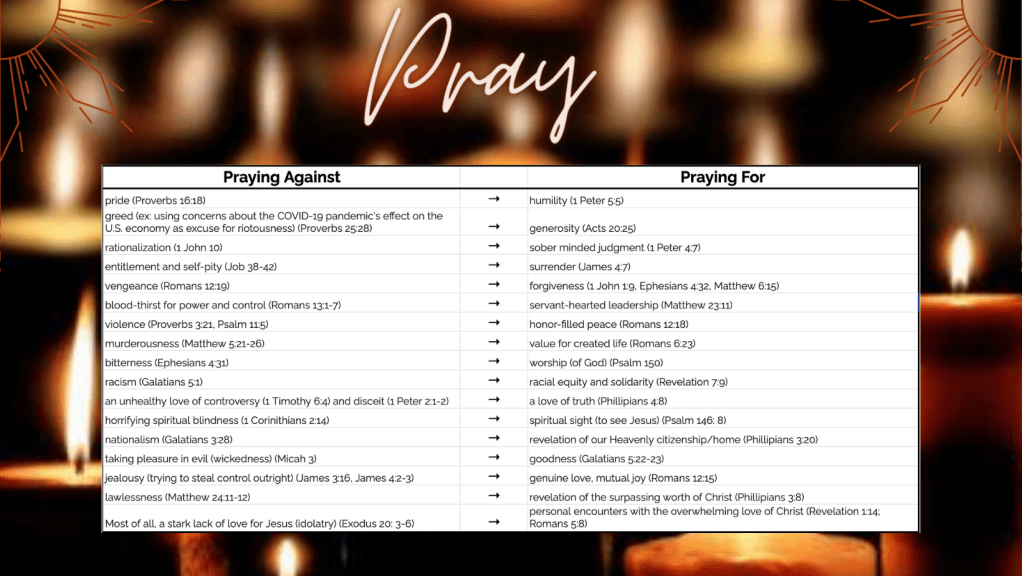
I believe that these events should be addressed from a spiritual point of view (Ephesians 6:12). From my perspective, the rhetoric and spiritual tenor of the January 6th, 2021 attacks on the D.C. Capitol building demonstrated:
pride
greed (ex: using concerns about the COVID-19 pandemic’s effect on the U.S. economy as excuse for riotousness)
rationalization
entitlement and self-pity
vengeance
blood-thirst for power and control
violence
murderousness
bitterness
racism (use of the confederate flag)
an unhealthy love of controversy (1 Timothy 6:4) and conspiracy (deceit)
horrifying spiritual blindness
nationalism
taking pleasure in evil (wickedness)
jealousy (trying to steal control outright)
lawlessness
Most of all, a stark lack of love for Jesus (idolatry)
While some of the terminology I’ve used here may seem extreme, I believe that explicitly naming what spiritual influences are operating within events gives the collective Church power to bind and render them ineffective (Matthew 16:19).
I am praying that God would bind and render these strongholds ineffective. I am also praying that God would loose (in order):
humility
generosity
sober minded judgment
surrender
forgiveness
servant-hearted leadership
honor-filled peace
blessing
worship (of God)
racial equity and solidarity
a love of truth
spiritual sight (to see Jesus)
revelation of our Heavenly citizenship/home
goodness
genuine love, mutual joy
revelation of the surpassing worth of Christ
personal encounters with the overwhelming love of Christ
I invite you to join me in prayer, knowing that we serve an inexpressibly great God. In a similar vein, I leave you with the prayers of my fourth grade students, in response to the Capitol Attacks. As we celebrate and honor God for the many things we love about our Nation, we also are praying for God’s direct intervention in addressing the evils we have allowed to grow here unchecked. We are humbling ourselves in repentance, examining our own hearts, and praying that God will heal our nation (2 Chronicles 7:14). Will you join us?