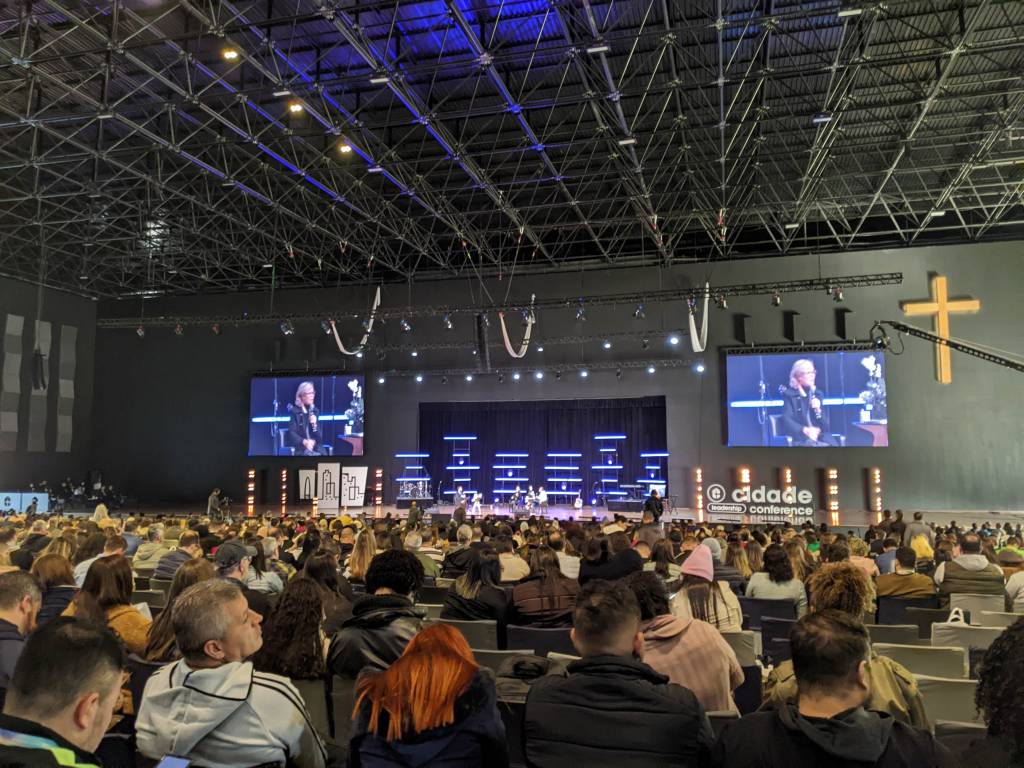
Coming out of Babylon: Learning from the Pre-Exilic, Exilic, and Post-Exilic Periods of Israel’s History to Partner with God in an Age of Reformation

One of the most common biblical precepts from the life of Daniel through Jesus is, “You have got to know your history to know your inheritance.”

Before the coming of Jesus, John the Baptist reminded Israel of their history as part of his ministry to “turn the hearts of the children to their fathers” (Malachi 4:5-6). When new generations learn the history of people of faith, they receive an inheritance which “makes straight the way for the Lord” to do even more on the Earth (Isaiah 40:3).

Transition: From Captivity into Reformation

Corporately right now, spirit-led Christians around the world are crossing over from a historical period of captivity into reformation. In order to have wisdom to navigate this radical shift in the Body of Christ, Christians must learn from the biblical history of the Babylonian exile and reconstruction of Jerusalem.

Just as the city of Jerusalem translates to “City of Peace”, God is equipping his servants today with innovative ideas to establish the righteousness and justice of Jesus’ Kingdom on Earth. This New Jerusalem isn’t related to a specific territory or ethnic group, but it relates to an invitation to all willing individuals to serve King Jesus, as led by the Spirit of God to see Jesus’ Kingdom established.

There are various lessons that Israel’s pre-exile, exile, and post-exile periods can teach contemporary Christians about how to partner with God at this time.

Neglect that Causes Exile: Learning from Hezekiah’s Failure Pre-Exile

In addition to the idolatry of Israel’s Kings (2 Kings 17), one of the greatest sins of Israel was the failure to steward the inheritance of their children. While this sin arguably started with David’s infidelity and unwillingness to set his house in order, his descendent Hezekiah suffers from the same error of judgment 12 generations later.

Like David, Hezekiah is a King who starts his reign well but finishes badly. The first King after Ahaz, Hezekiah dismantles statues and sites of idol worship. He reinstates the Levitical priesthood and religious festivals that reminded the people of their history. Because of Hezekiah’s faithfulness, God delivered Jerusalem from an attempted attack by the Assyrians, never allowing them to even enter the city.

After this period, Hezekiah falls sick, and Isaiah informs him that his illness will cause him to die. He appeals to God’s mercy, and the Lord adds 15 years to his life. In his prayer of Thanksgiving to God, he declares:

“The living, the living — they praise you, as I am doing today; parents tell their children about your faithfulness.”

Isaiah 38:19

Like David’s repentance and worship of God after the stillborn death of his illegitimate son with Bathsheba, Hezekiah is grateful to have a second chance. But sadly like David, his following actions fail to prioritize the wellbeing of the same children mentioned in his praises.

Not long after social success, military victory, and personal deliverance does Hezekiah stumble. Success causes Hezekiah to fall asleep at a time when he should have been most alert. Instead of discretely hiding the strength of his Kingdom, he leads visiting Babylonian emissaries on a grand tour of his stored riches. In both pride and naïveté, he flaunts the inheritance that should have been guarded and stored up for his children.

In light of this colossal failure of judgement, Isaiah tells him that in the days of his predecessors, his indiscretion would cause disaster.

“Behold, the days are coming, when all that is in your house, and that which your fathers have stored up till this day, shall be carried to Babylon. Nothing shall be left, says the Lord.”

Beyond just material wealth, Babylon would even steal his most important gift: his offspring.

And some of your own sons, who will come from you, whom you will father, shall be taken away, and they shall be eunuchs in the palace of the king of Babylon.”

Isaiah 39:7

In moments like these, most parents would beg God for forgiveness. But in shocking disregard, Hezekiah focuses merely on himself.

 Then Hezekiah said to Isaiah, “The word of the Lord that you have spoken is good.” For he thought, “There will be peace and security in my days.”

Isaiah 39:8

As a prophet, Isaiah’s response is much more attuned to God’s emotions. In Isaiah 40-45, he prophesies comfort to children of Israel that would be taken captive.
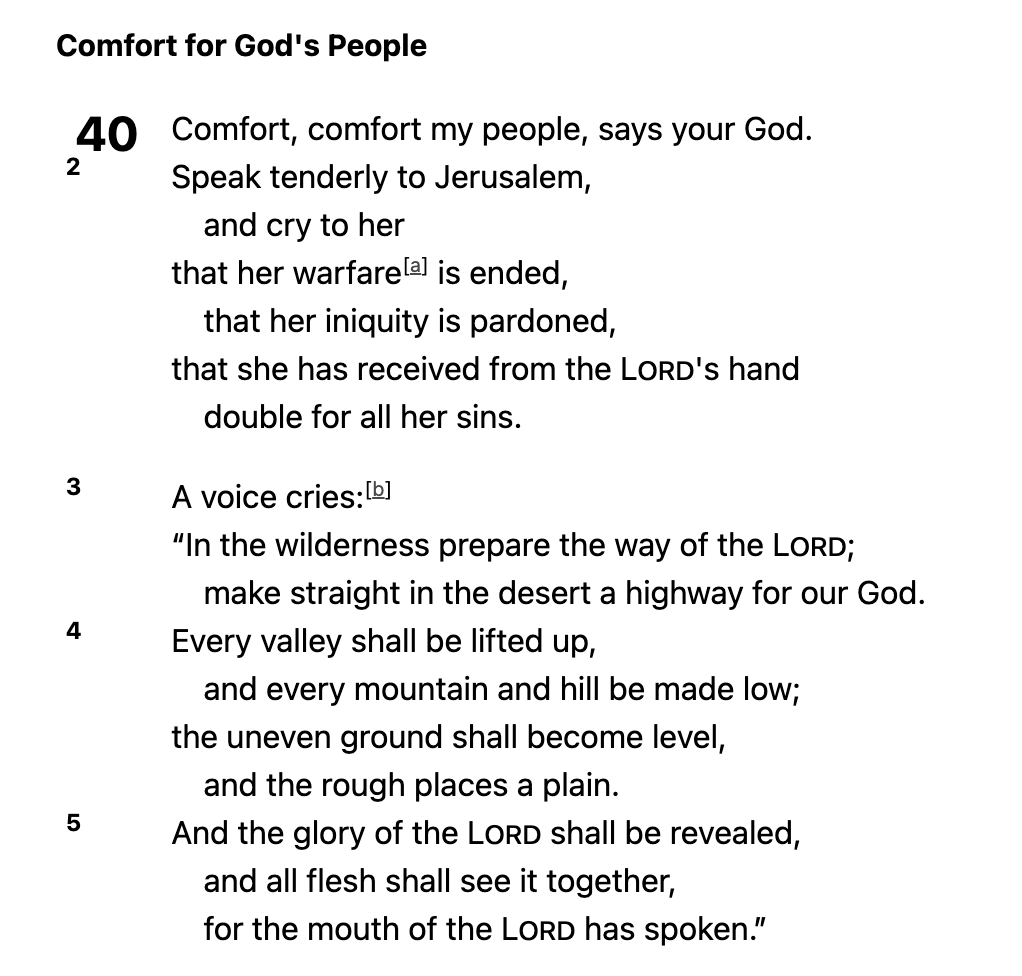
Later on, John the Baptist would reveal the same highway of repentance that Isaiah prophesies (Isaiah 40:3, John 1:23). Ultimately, God would overcome the sins of David, Hezekiah, and all of Israel’s leaders through his own King, Jesus. Ultimately, Jesus’ faithfulness to the Church would restore and create a highway for all people to become Godly offspring.

Has not the one God made you? You belong to him in body and spirit. And what does the one God seek? Godly offspring. So be on your guard, and do not be unfaithful to the wife of your youth.

Malachi 2:15

I will proclaim the Lord’s decree:

He said to me, “You are my son;
    today I have become your father.
Ask me,
    and I will make the nations your inheritance,
    the ends of the earth your possession.

Psalm 2:7-8

During the Exile: Learning from Babylon’s Mis-example

By the time God brings people out of Babylon, they have learned what makes Babylon problematic.

In the composition of the books of Esther and Daniel, the biblical writers insert tongue-in-cheek mockery of Babylon’s pride and sense of permanence.

In both Daniel and Esther, the royal advisors and Kings claim that their law is perfect and “cannot be repealed” by even the king’s decrees.

“Now, Your Majesty, issue the decree and put it in writing so that it cannot be altered—in accordance with the law of the Medes and Persians, which cannot be repealed.” 

Daniel 6:8

“Now write another decree in the king’s name in behalf of the Jews as seems best to you, and seal it with the king’s signet ring—for no document written in the king’s name and sealed with his ring can be revoked.”

Esther 8:8

God upstages the laws of Babylon through his authority to command the Lion’s mouths to remain shut (natural law), and through causing Xerxes to issue an entirely separate (contradictory) law in defense of the Jews. Ultimately, only Yahweh’s law is eternal.

From a historical perspective, the Babylonian Archaemenid Dynasty’s double mindedness, instability, and excess resulted in a constant stream of usurpers and coups. For example, Xerxes’ pride caused him to display the entire wealth of his Kingdom, treat his guests to a full 6 months of fasting before deposing Queen Vashti in a fit of anger. Through constant upheaval and violence, the Babylonians failed to value life and were marked by injustice. The story of Daniel in the lion’s den, the fiery furnace, and Haman’s pre-mediated murder of Mordecai demonstrate God’s anger at the Babylonian’s lack of justice.

Another way that the biblical writers’ mock Babylon is through the linguistic similarity of King Belshazzar’s name (“God protect the King”) and Daniel’s Babylonian name, Belteshazzar (“God protects him”). In Daniel 4-5, the writer’s refer to Daniel by his Babylonian name to inspire the question:

Who does God really protect? Is it his servants, or proud rulers?

God’s protection of his servants over the unjust rulers of the earth becomes the running theme of the book of Daniel.

One of the ways God chooses to humble Babylon is by driving King Nebuchadnezzar II insane. Similarly, when King Nebuchadnezzar’s son Belshazzar fails to learn from the sins of his father, he is assassinated.

As a symbol of all nations whose pride, materialism, and injustice would ultimately inspire God’s wrath, God ultimately defeats Babylon through Jesus’ triumph on the cross.

A second angel followed and said, “’Fallen! Fallen is Babylon the Great,’ which made all the nations drink the maddening wine of her adulteries.”

Revelation 14:8

God blames Babylon for the spirit of Whoredom that turns the nations hearts away from him, increases injustices like slavery, and allows human lives to be made worthless.

The merchants of the earth will weep and mourn over her because no one buys their cargoes anymore— 12 cargoes of gold, silver, precious stones and pearls; fine linen, purple, silk and scarlet cloth; every sort of citron wood, and articles of every kind made of ivory, costly wood, bronze, iron and marble; 13 cargoes of cinnamon and spice, of incense, myrrh and frankincense, of wine and olive oil, of fine flour and wheat; cattle and sheep; horses and carriages; and human beings sold as slaves.

Revelation 18:11-13

“‘Woe! Woe to you, great city,
    dressed in fine linen, purple and scarlet,
    and glittering with gold, precious stones and pearls!
17 In one hour such great wealth has been brought to ruin!’

Revelation 18:17

Like Daniel, God’s people are warned to not assimilate to Babylon but instead to value the humility, service, generosity, and justice of Jesus’ Kingdom.

The certain defeat of Babylon carries a strong warning for national leaders and nationalist churches today: Proclaiming your own national greatness will result in ruin.

Pride may be the rule of the earth, but Christians serve a different King and Kingdom. Judging from the life of Jesus, no one is qualified to rule within the Kingdom of God without first becoming a servant (Matthew 23:11, Isaiah 49).

Coming out of Exile: Each One has a Part to Play

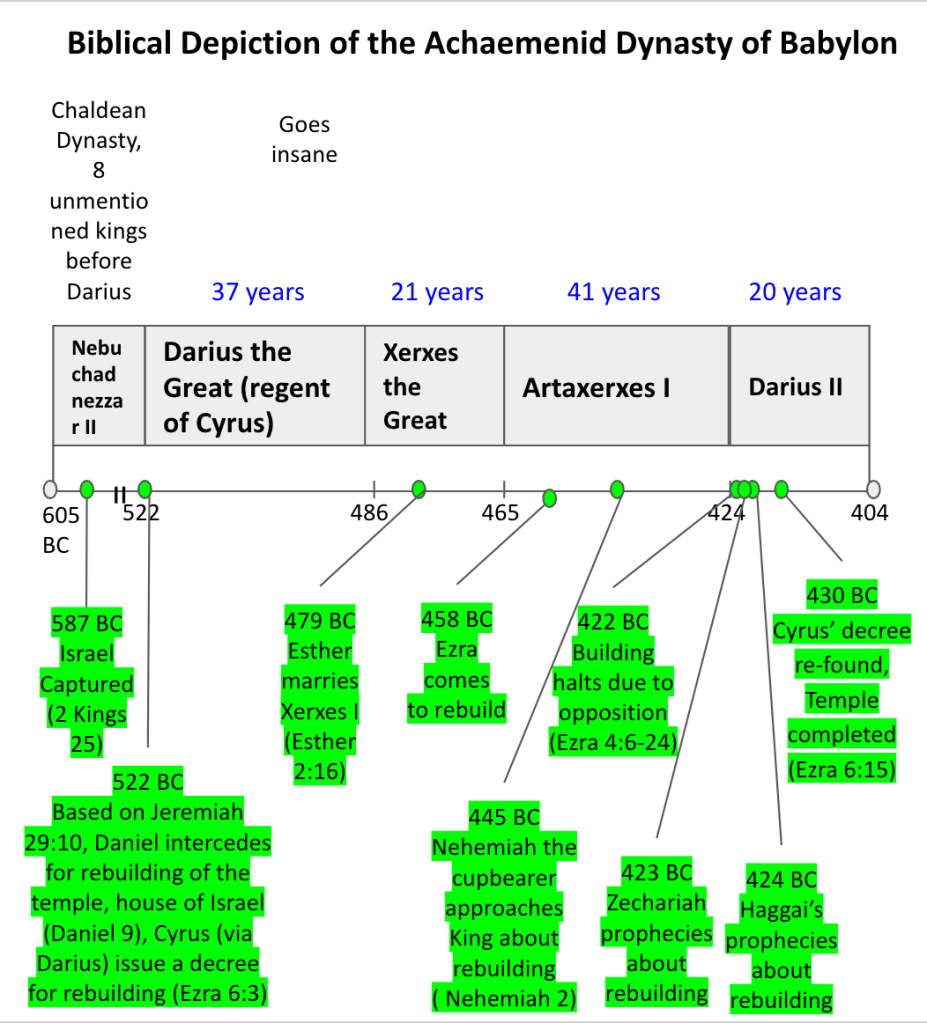
About 100 years after Isaiah, as King Nebuchadnezzar II of Babylon approached, Jeremiah would also offer hope of restoration to Jerusalem’s offspring (Jeremiah 30:18-24). Only the poorest people would remain in the land while the descendants of Israel’s kings were taken captive. In order to come out of captivity, each of the children of Israel would need to play their part in seeing God’s promises fulfilled.
The Role of the Scribe

Stewardship

Daniel did not just understand the importance of remaining ethically distinct from the Babylonians or interpret dreams; he stewarded his history. In addition to being a Seer and Watchman prophet, Daniel was also a prophetic scribe, or someone who records and seals revelation in writing. Daniel tracked the amount of time that had passed between the Jeremiah’s 70 year prophesy (Jeremiah 25:11) and current events. He cried out to God after the appropriate amount of time had passed in intercession for the house of Israel to be re-established. (Daniel 9). As a result of his prayers, the angel Gabriel explains to him that there would be a set time for the captives to return to Jerusalem, and then for God to continue restoring his house through Jesus Christ. The remainder of the book of Daniel (Daniel 10-12) focuses on prophesies that relate to Jesus’ end times rule and triumph over evil. Daniel doesn’t full understand, but faithfully seals up the words of the prophesies for a people who would later understand them. It isn’t explicitly discussed in the book of Daniel, but he also manages to get King Cyrus to issue a decree for the rebuilding of the temple (Ezra 6:3). Isaiah foretold that Cyrus would help re-establish the temple, saying:

“I will raise up Cyrus in my righteousness: I will make all his ways straight. He will rebuild my city and set my exiles free, but not for a price or reward, says the LORD Almighty.”

Isaiah 45:13

Daniel’s stewardship of God’s word ultimately sets both the process of rebuilding the temple and rebuilding God’s house through Christ in motion.

Stewardship’s Effects on Human History

Similarly to the revelation released, sealed, and rediscovered after Daniel, God sends scribes at the beginning of all major social reformations. For that reason, the Church will and already is seeing a rise of prophetic scribes and written prophesy. These scribed words and scribes will provide a rudder for decades and centuries into the reformation process God is currently initiating.

This pattern is well-documented in biblical history. For example, in 2 Chronicles 34 under King Josiah’s reforms, priests re-discovered lost books of the law (2 Chronicles 34:14-33). In response to Josiah’s heart posture of worship, the Lord allowed these books to be found so that the people would have guidelines to eliminate the idol worship that had become common.

Within modern history, God also allows individuals to re-discovering scribed prophesy or learning to advance social reform. In 1947, the discovery of the Dead Sea Scrolls prompted the examination of extra-biblical cultures which led to the field of modern biblical scholarship in the 20th century. In the 1200s to 1400s, Italian scholars discovered Roman and Greek artifacts and writings that prompted the Italian Renaissance. Over time, the pursuit of truth via Renaissance technology and art had ripple effects on the Protestant Reformation. Via Martin Luther, the Lord brought the effect of the Italian Renaissance ironically full circle to reform Italy’s Roman papacy. Martin Luther’s 1510 visit to Rome, Italy solidified his discontent over papal abuses. Some of Italy’s own renaissance-era mechanical technology would form the basis of the printing press used to circulate his ideas. Later on, Dietrich Bonhoeffer embodied Luther’s same German desire for purity and truth in his resistance to Nazis, however in marked opposition to Luther’s infamous anti-semitism. Through the generational faithfulness of his people, God sends reformers who build on the works of their predecessors with increasing purity.

In general, God is not mocked. He waits until appointed times to share things he has intentionally hidden, and moves through individuals to see his reformation purposes established. Can you imagine what would happen if all of us were that intentional as Daniel in our personal and public lives, to hide things entirely until their appointed times?

The Role of the Deliverer

As stated earlier, Babylon’s empire used excessive violence as a way of saving face domestically and promoting military strength abroad.

Gentleness and Humility

Esther’s role as Deliverer would have been different than Deborah’s role as Judge. While both women served as leaders for their people, Esther’s priority was to preserve the people’s lives long enough to see the day of deliverance. Therefore, Esther had to find a style of leadership for a foreign context where in spite of her title, she held no true authority. While Deborah’s purpose was to directly lead people into victory to deal with crises within Israel’s borders, Esther had to serve as a symbol of her people, modeling Christlike humility and gentleness in order to avoid becoming a target. While humility and gentleness in conduct are the responsibility of all Christians, the humility of Christians in high risk and hostile ministry contexts today saves lives.

A gentle answer turns away wrath, but a harsh word stirs up anger.

Proverbs 15:1

A king’s wrath is a messenger of death, but the wise will appease it.

Proverbs 16:14

Discretion

Esther also models an outstanding degree of discretion. At the request of her uncle, she sees the wisdom in keeping her Jewish identity private. She obediently conceals aspects of herself so that she can reveal these traits at a time when it would serve her community. Unlike (Western) cultures that focus excessively on individuals’ rights to self-expression, there are specific situations where a high degree of discretion makes individuals and their communities safe.

Discretion will guard you,
Understanding will watch over you.

Proverbs 2:11

As a ring of gold in a swine’s snout
So is a beautiful woman who lacks discretion.

Proverbs 11:22

Obedience

Lastly, Esther’s obedience in the face of tangible danger preserved the lives of herself and her family.

Esther passed the test of hiddenness, but she needed to pass the test of action in order to not die.

“Do not think that because you are in the king’s house you alone of all the Jews will escape. For if you remain silent at this time, relief and deliverance for the Jews will arise from another place, but you and your father’s family will perish. And who knows but that you have come to your royal position for such a time as this?”

Esther 4:13-14

Today, Christians sometimes believe that because of their privilege or position, they will be able to remain in hiding and avoid opposition. Sadly, conditional prophesy demonstrates that hiding when God has called you into action can have catastrophic consequences. In conditional prophetic words, God attaches specific conditions that his people are called to align with and action. If Esther would have stayed at a theoretical level of knowing God’s promises and remained hidden, at minimum her life, her family’s lives, and their future generations would have been eliminated.

Esther’s humility, discretion, and obedience allowed her to adopt a leadership style that would keep her and her community safe in the midst of chaos. She demonstrated that when intentionally chosen, meekness can be its own form of strength.

Role of the Shepherd

Vulnerability

Several decades after Esther marries the King, Nehemiah has a position of influence as Artaxerxes I’s cupbearer. Similar to Esther’s role in proximity to the King, Nehemiah has to choose to risk. However, unlike Esther, who has to remain calm in presenting her requests to the King, Nehemiah must own his emotions.

Like men and women today who would prefer to remain composed but may instead need to be transparent about the sin’s emotional toll on their lives, Nehemiah actually has to lead with vulnerability.

And the king said to me, “Why is your face sad, seeing you are not sick? This is nothing but sadness of the heart.” Then I was very much afraid. I said to the king, “Let the king live forever! Why should not my face be sad, when the city, the place of my fathers’ graves, lies in ruins, and its gates have been destroyed by fire?” Then the king said to me, “What are you requesting?” So I prayed to the God of heaven.

Nehemiah 2:2-4

It isn’t surprising that some of God’s early adapters are those who are most in touch with his heart to see the new thing established. Nehemiah demonstrates that without emotional engagement, the people of God are next to useless to the world.

Justice and Mercy

The King’s solidarity with Nehemiah gives Nehemiah favor to travel and lead the rebuilding effort in Jerusalem. Throughout the book of Nehemiah, for many decades, and likely the majority of his life, Nehemiah continues to enlist the people, delegate responsibility, and persevere until the temple is established.

However, in order to build a new temple, Nehemiah would have to correct the abuses of the Old temple. Specifically, God was looking for Nehemiah to address the injustices against Israel’s poorest citizens, who had long been taken advantage of by the ruling class prior to the ruler’s exile. Like all Reformations, Nehemiah knew that justice for the oppressed must be part of the rebuilding process.

In Nehemiah 4, listens to the people and discovers that some of the poor who remained in Jerusalem are have made themselves a new ruling class. These leaders have extorted the poor for money so severely that the poor have had to sell their children into slavery.

Still others were saying, “We have had to borrow money to pay the king’s tax on our fields and vineyards. Although we are of the same flesh and blood as our fellow Jews and though our children are as good as theirs, yet we have to subject our sons and daughters to slavery. Some of our daughters have already been enslaved, but we are powerless, because our fields and our vineyards belong to others.”

Nehemiah 4:4-5

Once again, the depravity of the house of Israel can be measured by the treatment of its’ children. In mercy, Nehemiah confronts and rebukes the leaders and gives them an opportunity to make things right. Through a prophetic act, he warns them that if they return to injustice, they and their children would be defrauded.

Then I summoned the priests and made the nobles and officials take an oath to do what they had promised. 13 I also shook out the folds of my robe and said, “In this way may God shake out of their house and possessions anyone who does not keep this promise. So may such a person be shaken out and emptied!”

Nehemiah 4:12-13

Since God’s warnings against extortion date back to the Exodus, Nehemiah demonstrates tremendous mercy.

Take no interest from him or profit, but fear your God, that your brother may live beside you.

Leviticus 25:36

Woe to those who enact evil statutes
And to those who constantly record unjust decisions,
So as to deprive the needy of justice
And rob the poor of My people of their rights,
So that widows may be their spoil
And that they may plunder the orphans.

Isaiah 10;1-2

Ultimately, mercy and justice were the sacrifices that God wanted all along.

For I desire mercy, not sacrifice, and acknowledgment of God rather than burnt offerings.

Hosea 6:6

Beyond just rebuking leaders, Nehemiah’s authority to establish justice comes from the mercy he demonstrated to the poor as their leader. Just as Christ gave himself away, When Nehemiah recognized the extent of the suffering of the poor, he surrenders his own rights in order for them to flourish.

 In spite of all this, I never demanded the food allotted to the governor, because the demands were heavy on these people.

19 Remember me with favor, my God, for all I have done for these people.

Nehemiah 4:18-19

Later in the New Testament, Paul also surrenders his right to be supported by the people’s income when he sees their need.

 But I have made no use of any of these rights, nor am I writing these things to secure any such provision. For I would rather die than have anyone deprive me of my ground for boasting. 16 For if I preach the gospel, that gives me no ground for boasting. For necessity is laid upon me. Woe to me if I do not preach the gospel! 17 For if I do this of my own will, I have a reward, but if not of my own will, I am still entrusted with a stewardship. 18 What then is my reward? That in my preaching I may present the gospel free of charge, so as not to make full use of my right in the gospel.

1 Corinthians 9:15-18

Today like Nehemiah, Jesus challenges Christians to give away their rights in service of vulnerable people who could not receive good news without sacrificial giving. Through vulnerable leadership, justice, and mercy, Nehemiah demonstrates capacity as a Good Shepherd.

And he answered them, “Whoever has two tunics is to share with him who has none, and whoever has food is to do likewise.”

Luke 3:11

Before the people can re-inhabit the new Jeru-shalem (“City of Peace”) true peace must come from Christlike justice.

Righteousness and justice are the foundation of your throne; love and faithfulness go before you.

Psalm 89:14

The Role of the Prophets

Strategic, Timely National Words

After Nehemiah starts rebuilding and before Ezra comes to consecrate the temple, prophets Haggai and Zechariah shared the Lord’s sense of urgency for the work to be completed. The effect of these strategic prophesies was that both the future governor of Israel (Zerubbabel) and Israel’s future High Priest (Jeshua) supported the rebuilding process.

 Now the prophets, Haggai and Zechariah the son of Iddo, prophesied to the Jews who were in Judah and Jerusalem, in the name of the God of Israel who was over them. Then Zerubbabel the son of Shealtiel and Jeshua the son of Jozadak arose and began to rebuild the house of God that is in Jerusalem, and the prophets of God were with them, supporting them.

Ezra 5:1-2

Now, even though Haggai and Zechariah gave similar prophetic words within a year of one another, they were very different as prophets. Haggai 1:1 identifies Haggai as a nabi prophet or someone who receives mostly internal auditory revelation. Another clue that Haggai is a nabi prophet is that most of his prophesies start with the address, “This is what the Lord says“, as though he is repeating God’s articulated words secondhand (ex: Haggai 1:5). The book of Haggai is relatively short compared with the narrative style of the book of Zechariah, it almost serves as a ledger of the specific words Haggai delivers and their effects.

While Zechariah is also described in Zechariah 1:1 as a Seer prophet, the book of Zechariah contains so much visual revelation that it is likely he functioned in some ways as a Seer prophet also. While Haggai’s prophecies focus mostly on the current day issues facing leaders and the God’s promise to re-purify the people, Zechariah’s prophesies stretch from current events, Messianic hope, even until the Day of the Lord (ie, Judgement Day).

Knowing Your Identity as a Prophet: Comparing Haggai and Zechariah

Another reason Haggai and Zechariah’s prophesies were effective is that each owned their own specific assignment as a prophet without needing to assimilate or compete with one another. Immature prophets are not very useful to the Kingdom of God for various reasons, but with maturity and a clear sense of identity comes the capacity to collaborate as part of a prophetic team.

HaggaiZechariah
Year that prophecies are first recorded~424 BC~423 BC
Types of RevelationAuditoryVisual
Length2 chapters12 chapters
Major ThemesExposing leaders’ excuses to delay rebuilding the Temple, God’s promise to re-purify the people, God endorsing Zerubabbel to finish the work

Haggai more focused on the qualitative difference between the first and second temples/houses of Israel/covenants.
Testing and Gathering, Gathering, Purification of the Priesthood from False Prophesy, Jesus as New High Priest, Justice and Mercy, Promise to Bless Jerusalem again, Judgment on God’s enemies, Re-unification of Israel, Jesus as the Better Shepherd

More specifically, Zechariah underscores the importance of justice to define and usher in Jesus’ Kingdom (Zechariah 7), the redemption of Judah (Southern Kingdom) (Zechariah 10), the people’s repentance after murdering Christ (Zechariah 12:10-14), cleansing from false prophesy (Zechariah 13), and the Day of the Lord (Zechariah 14).
StyleLedger of verbal prophesies and their effectsNarrative
Length of Time ProphesiedCurrent eventsCurrent events – Judgment Day

Regardless of their distinctions, as National Prophets, both Haggai and Zechariah specifically name and address Israel’s leaders:

  • To Rulers: Zerubbabel, son of the Shealtiel the Governor of Judah
  • To Priests: Joshua, son of Zodak the High Priest

Furthermore, both prophets give personal prophesy as an element of their effective national prophetic words.

  • Haggai prophesies to Zerubbabel that God has chosen him as an instrument to finish the rebuilding (Haggai 2:20-23).
  • Zechariah prophesies to Jeshua about purifying his conduct (Zechariah 3:6-7) and then uses him to prefigure Jesus (3:8), since Joshua and Yeshua mean the same thing (Deliverer).

Hope

Lastly, in each personal prophesy and the arch of their national prophetic words, both Haggai and Zechariah ground their prophesies in hope.

“The glory of this present house will be greater than the glory of the former house,” says the Lord Almighty. “And in this place I will grant peace.”

Haggai 2:9

Without hope, it is impossible for people to receive words effectively.

Without these strategic, well-timed national words, Israel would not have had the formal support and internal alignment they needed to overcome spiritual and physical opposition to the temple’s rebuilding.

The Role of the Teacher

Finally, Ezra is a Priestly Teacher who comes to oversee the rebuilding of the Temple in the reign of Artaxerxes. While Ezra travels to Jerusalem over 10 years in advance of Nehemiah, he ultimately oversees not just the construction but the future of the temple.

Similar to the differences between Haggai and Zechariah, Nehemiah and Ezra were wildly different builders. While the book of Nehemiah is written as a narrative, the historical sections of the book of Ezra demonstrate Ezra’s training as a priest. The first six chapters of the book focus on the history of the rebuilding effort from Cyrus (time of Daniel) to Artaxerxes (Ezra’s day).

The book of Ezra contains genealogies, details about the reconstruction of the altar, and specifically addresses the people’s failure of morality through intermarriage. Each of these details are relevant to the Priest’s responsibility to uphold God’s standards.

Ezra needed to help the people understand their community’s sacred history so that they could embody its future. During Reformation, the Priest Teacher’s primary focus is to build the new thing in a way that honors the past. Just as Jesus’s new covenant build on the foundation of the Old Covenant, so the new temple would have to mimic and expand the responsibility of the first temple. Today, believers know that the body of each believer in Christ has become a new temple of the Holy Spirit.

While Nehemiah led the people in mercy and justice, Ezra led the people in repentance.

Under Ezra, the people acknowledged the specific sins that led to the temple’s destruction (Ezra 9).

Nevertheless, they were disobedient and rebelled against you and cast your law behind their back and killed your prophets, who had warned them in order to turn them back to you, and they committed great blasphemies.

Nehemiah 9:26

Under Ezra, they took responsibility for obeying God’s covenant (Nehemiah 10:28-39).

 We will not give our daughters to the peoples of the land or take their daughters for our sons. 31 And if the peoples of the land bring in goods or any grain on the Sabbath day to sell, we will not buy from them on the Sabbath or on a holy day. And we will forego the crops of the seventh year and the exaction of every debt.

Nehemiah 10:30-31

Just like the New Covenant under Jesus, Ezra’s leadership demonstrates that there is no salvation and restoration without repentance.

Just as a person seeks God because they have faith that he exists (even if only at the level of a nudge)…

And without faith it is impossible to please God, because anyone who comes to him must believe that he exists and that he rewards those who earnestly seek him.

Hebrews 11:6

So salvation requires you to be personally aware that you need a Savior.

For all have sinned and fall short of the glory of God,

Romans 3:23

Peter replied, “Repent and be baptized, every one of you, in the name of Jesus Christ for the forgiveness of your sins. And you will receive the gift of the Holy Spirit.

Acts 2:38

Reformation under Ezra caused the Israelites to not merely blame their ancestors for the sins’ of the community. They recognized that they had a responsibility before God to be part of the solution and set a new standard.

Purity and alignment with the righteousness of Christ causes qualifies Priestly Teachers to teach. When Priestly Teachers lead in Reformation, the people respond by being teachable.

Over time, a community’s teachability produces wisdom that they can pass on to the generations. In term, wisdom prevents exile by preventing the conditions for sin.

The beginning of wisdom is this: Get wisdom. Though it cost all you have, get understanding.

Proverbs 4:7

Fear of the LORD is the foundation of wisdom. Knowledge of the Holy One results in good judgment.

Proverbs 9:10

Who is wise and understanding among you? Let them show it by their good life, by deeds done in the humility that comes from wisdom.

James 3:13

This Era: Choose to Engage

Just like Daniel, today’s Christians have various ancestors of faith who “longed to see the day of Christ” but were unable to (Matthew 13:17, Luke 10:24).

After thousands of years of history waiting on the full revelation of Jesus, the Church is at the precipice of a new Apostolic Era of Reformation. The era of isolation and standing in judgment of secular society is over. Right now, Jesus is challenging his church to enter into the Era of Engagement to see his Kingdom be fully established on the earth.

For those who are willing to hear, the lives of the Israel’s exiles reveal key truths for how to come out of exile:

  • Daniel: Be diligent with every word of God and hold him to his promises. Intercede with leaders and seal up the revelation.
  • Esther: Lead with meekness, discretion, and obedience to preserve the people’s lives. Let the gentleness of your approach set you apart.
  • Haggai and Zechariah: Prophesy strategically and in season to enlist key leaders and organize the people.
  • Nehemiah: Lead with vulnerability and solidarity with the oppressed. Lay justice as your foundation.
  • Ezra: Respect the past as you establish the new. Lead the people in repentance so that wisdom can flourish and preserve what God has established.
Prayer

Jesus, give us the grace to perceive how you are calling us to partner with you at this time in history.

Help us to draw on the history of your faithful people as our inheritance, to enrich and establish the generations.

Deliver us from being too comfortable or too distracted political or economic crises to be any earthly good.

Help us to be doers (James 1:22) and not spectators of the world, remaining in Babylon while others are out building.

Make clear the roles that we are meant to play so that we can establish your Kingdom on Earth as it is in Heaven.

Teaching the Psalms through History: God’s Faithfulness to the Generations

Each person is a living story.

Your eyes saw my unformed body; all the days ordained for me were written in your book before one of them came to be.

Psalm 139:16

Through faithful obedience, God ordains and establishes our lives. We have the great pleasure of being living scrolls!

There is no greater joy than living into the fullness of the story God has written for you.

Your words were found and I ate them,
And Your words became for me a joy and the delight of my heart;
For I have been called by Your name,
O Lord God of hosts.

Jeremiah 15:16

Some people are called as scribes to consciously live as a living story (the reason I write monthly summaries). And yet, irrespective of calling, God calls all people to play their part in his story.

Ultimately, it isn’t about us.

The stories our lives tell have generational ripple effects. This dynamic can be seen in the way that Jesus embodied the words of his forefather, David.

“Here I am, I have come—

it is written about me in the scroll:

8I delight to do Your will, O my God;c

Your law is within my heart.”

Psalm 40:7-8

Through Jesus’ blamelessness, he was able to completely embody the most challenging life story ever written for one human being.

And I saw a mighty angel proclaiming in a loud voice, “Who is worthy to break the seals and open the scroll?”

Revelation 5:2

Video: Gathering the Great Cloud of Witnesses

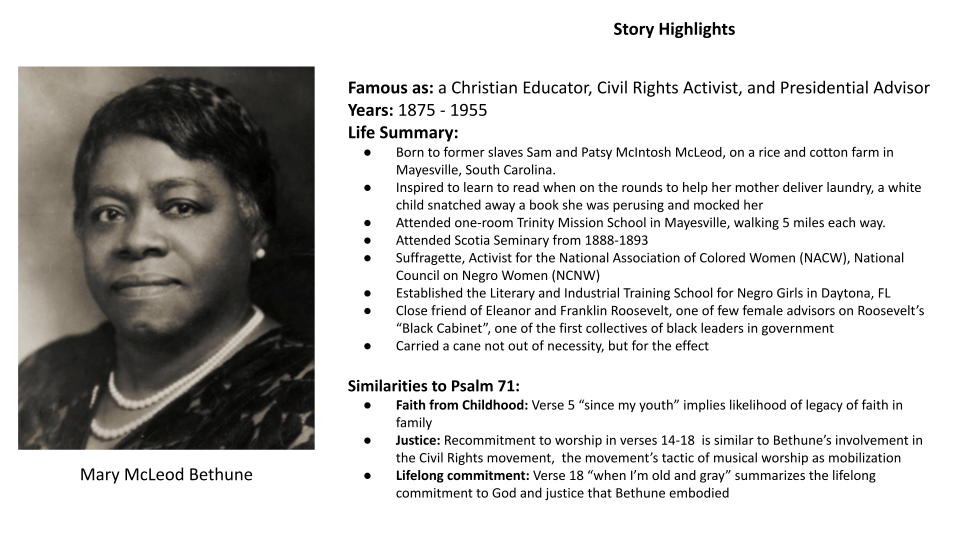
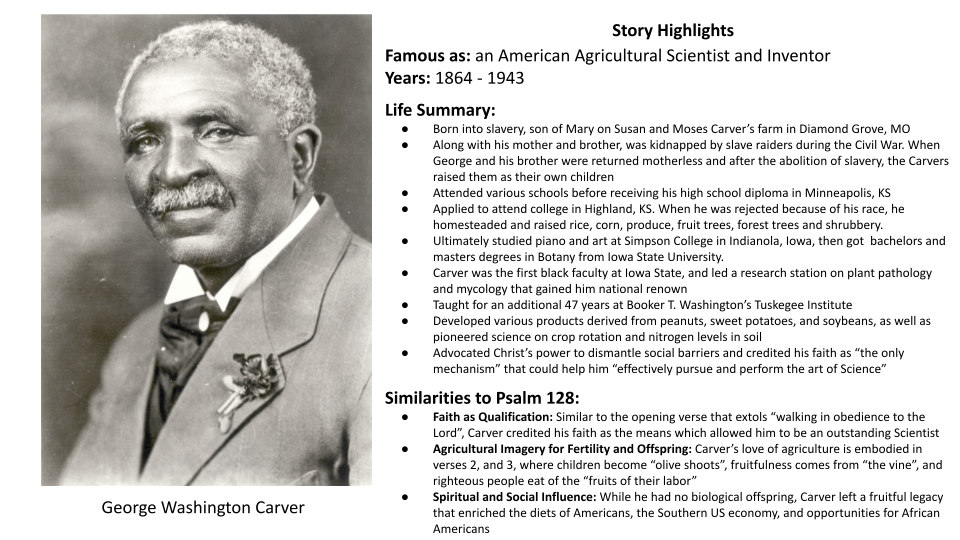
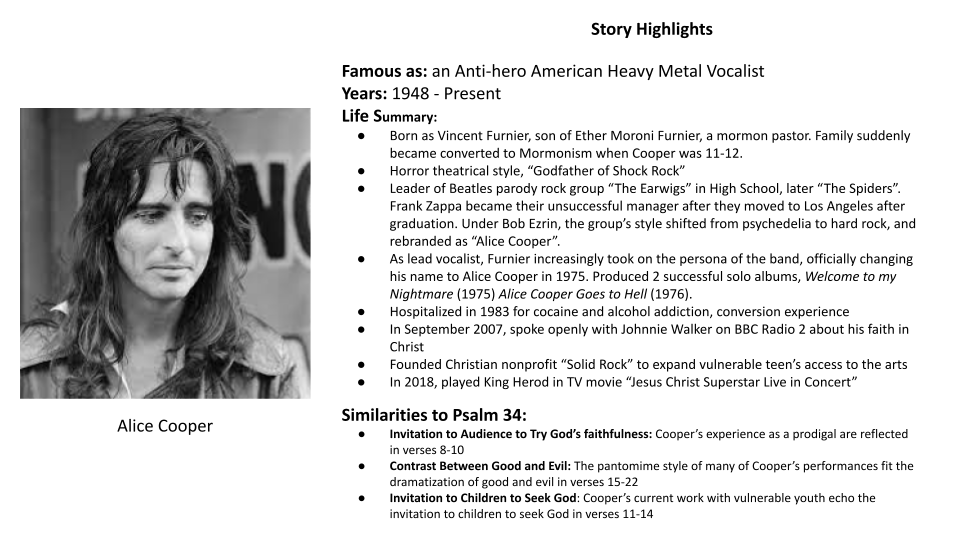
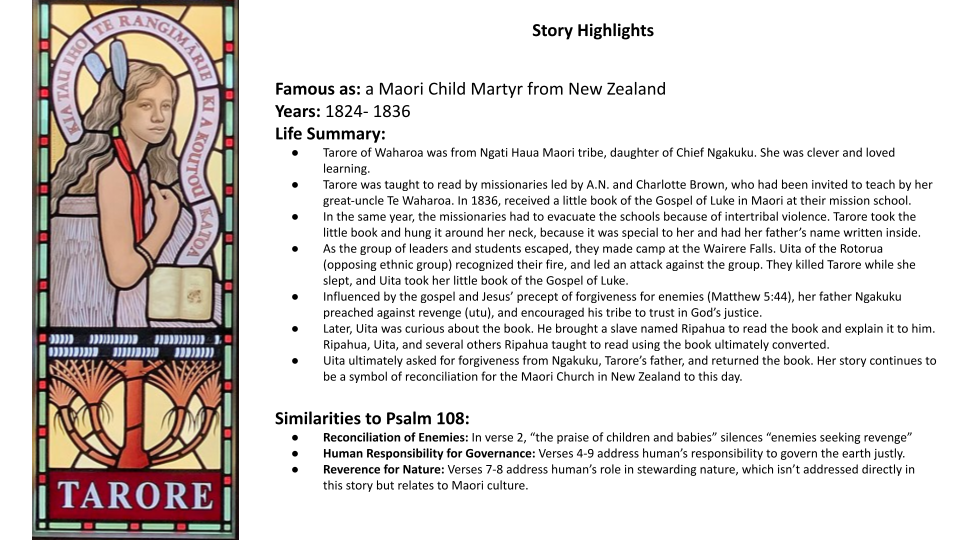
This summer for seminary, I gathered Psalms of promises that God makes to children. For my project, I selected Christian historical figures whose lives (past and present) embodied Psalm 108, 34, 71, 103, and 128. Then, I asked friends to narrate the Psalm as each of the characters. Arranged from youngest to oldest, these 5 witnesses’ lives declare God’s faithfulness in various ways.

Check out this video to learn more about how their lives embodied the Psalms. How might God be calling you to live as an embodied story?

Introducing the Saints

These are the 5 Christian historical figures I chose.

  • Tarore of Waharoa
  • Alice Cooper
  • Mary McLeod Bethune
  • Johann Sebastian Bach
  • George Washington Carver

As you listen to the video, you will find out how each of their lives fit the Psalms.

A Bonus Detail I didn’t share in the Video

One of my favorite aspects of this project were the unexpected artistic connections that emerged. As I compared the relative ages of each of the saints and the number of verses their Psalm contained, I realized that the progression created a mountain shape. Given the connection of praise Psalms with the Psalms of Ascents (and pilgrimage worship to high, holy places), I really enjoyed this connection.
I also noticed that the Psalm I associated with children (Psalm 8) has just 9 verses while the Psalm I associated with very old age/grandparents (Psalm 103) has 6 verses. Given that 6 is a visual inversion of the number 9, and 9 is written with the bubble towards the ground, it reminded me of the concept of mortality and being brought low to the ground (Genesis 3:19). This visual shape implies that during middle age (at the peak of the mountain), individuals have their greatest amount of capacity, resources, and strength. At either end of their lives (the beginning or end of the mountain/lifespan), that strength is limited. 

Father, help us to fully embody the stories that you have written us! Help us learn from members of the Great Cloud of Witnesses you have assembled throughout history to joyfully personify your plans.

July 2022 Monthly Summary

Rapid Redirection for Family Reconciliation

This month as I finished my summer classes at seminary, God sent me one of my biggest answers to prayer yet. All at once, the Lord answered prayers I have been praying for family reconciliation for over a decade.

Believe it or not, the events that led up to this breakthrough started about a year ago. In August of last summer, I made a trip to the Pacific Northwest and Denver to spend time with family. On my trip, I made it clear that I sensed God drawing me to a season of travel that would likely take me overseas for several months. While my family didn’t pay much attention to my words then, I continued to try to get them comfortable with things like video-chatting through Whatsapp and set boundaries on how much I would initiate communication so that they would have to come up some levels. At the time, I needed to come out of over-functioning and have permission to be merely human. I also set boundaries to help them brace for the possibility that I will likely be living significant portions of my life overseas.

For up to a year before leaving the classroom, I kept getting dreams about a season of travel followed by a season of rest, and then a season of receiving inheritance in ministry. These dreams intensified in the Winter. Due to the communication issues, I seriously wondered whether details (like resting in my mother’s house) were abstract (motherhood in a metaphorical sense?) or concrete. I did not understand how it could be concrete, given the deterioration of the situation.

In the Spring, an established prophet gave me a word about family restoration. At that time, I still needed to keep boundaries, and I saw such little change that the situation that it was very personally challenging. On the flight from Singapore to Brazil, I was really crying out to God in travail, and I was grieving. Due to my calling to Latin America and the grace for family that is on Brazil, the Lord exceeded my expectations by setting me in a family homestay and healing me up *fast* from past family trauma. Then unexpectedly while I was in my last week of seminary, my mom reached out unprompted. Over the next 48 hours, the friend who I was planning to visit and I separately decided that we needed to work on family restoration instead of reconnecting in Toronto. So within just 72 hours, I was on my way to Seattle.

The following week, I checked in with friends in Brazil again. Just as I sensed, God confirmed to us both separately that the time wasn’t right for me to return. Realistically, I need to rest, and they need to focus on long term planning related to negotiating space and potentially buying a building. It was the most peaceful, “Not yet, but soon” conversation I’ve ever had, and I’m really excited to maintain in touch. My friend’s goals to see Holy Spirit move within the Educational sector are so similar, and as family, he made it very clear that the door is open in an ongoing sense for the future.

Relating to Family as a Prophet

My family is just starting to figure out how to relate to me as a prophet. Within days of me landing, there were several specific incidents that were eye-opening for them related to the outworking of my call. The most notable event was probably when my sister was choking at a restaurant and I had to do the Heimlich maneuver to save her life (she’s fine now). As a prophet called to deliverance, I wasn’t fully surprised but I definitely needed to lie down after.

It’s dark, but I got to try Lemon Lavender creme brûlée as a free dessert from the restaurant after. Haha. Hopefully another time I’ll get to order that under different circumstances…

Another pretty wild incident was when my mom was out of town over a weekend and I prevented my dog from going into a diabetic coma and dying. At 13 years old, taking care of Teddy (Teddy Bear) is like taking care of vulnerability itself. He’s blind and diabetic, but he still has the most beautiful long eyelashes and likes to be held like a baby.

I cant help but look at him and remember the days when he was little enough to wash in the kitchen sink.

While my mom was gone, I ended up having to force feed him some apple juice when he wouldn’t eat and was delirious. I was relatively familiar with diabetes as a condition because my dad was diabetic growing up. Either way, through prayer and close supervision, Teddy is just fine and sleeping next to me right now on the couch. This experience made me think of Psalm 71, and how the Lord doesn’t just care for us when we are young but well into older age (71:18).

Apparently, the favor God has put on my life is good for more than just free parking spots, free desserts, and discounts. Speaking of diabetes, I got off the phone with my dad a few days ago, and according to the doctor, he is no longer diabetic. I did not know it was possible for the pancreas to heal itself, but suddenly his A1C levels are at the level of a normal, fully healthy person. As someone who always was a little afraid of my dad dying young because of lifestyle and health issues, this news was a wonderful surprise. I didn’t know to pray for it, but God did. I’m praying that this healing would help my Dad receive God’s kindness and remove shame related to unbelief.

Things are still a work in progress, but it’s already more than I would have known how to pray for. As a kid, I often struggled with seeing or sensing things and didn’t have tools to communicate it to them. This photo was taken when my sister an I were 18 months old. For me, this photo represents some of that tension of sensing and seeing but not being able to explain. I am the one in pink, and to this day I wonder what I was sensing when the photo was taken. This month, I’ve been able to help put words to some of those experiences and how they affect my current life. This time of reconciliation is answering their prayers for a second chance and more time before I move abroad in the future. It’s also healing things in way that is necessary before I move into the next season of life and ministry.

Unconditional Love

This month, I encountered God’s love most powerfully through Emerging Prophets friends. On a training Zoom call, I was unexpected placed in a Zoom room with two friends who are full of the innocence and genuine love of Jesus. After we had finished collaborating on the assignment and without anyone’s permission, they love bombed me by praying for me and telling me that I absolutely have to come visit this fall.

This experience was probably the most tangible experience of unconditional love I’ve experienced since I was 11 (and that experience changed my life completely).

Through these friends, I realized at a really deep level that if I utterly failed at everything, they would still choose me. It made me aware of a deeper level of security I didn’t realize was already available, and began the sudden death of my perfectionism.

Multi-Month Process of Burning

So in this time of internal reformation, what apart from perfectionism needs to die?

False responsibility.

Idealization / wrong expectations too.

So…maybe a lot?

He will sit as a refiner and purifier of silver, and he will purify the sons of Levi and refine them like gold and silver, and they will bring offerings in righteousness to the Lord.

Malachi 3:3

The crucible is for silver, and the furnace is for gold, and the Lord tests hearts.

Proverbs 17:3

And after you have suffered a little while, the God of all grace, who has called you to his eternal glory in Christ, will himself restore, confirm, strengthen, and establish you.

1 Peter 5:10

God’s refining fire prepares us for new life and is full of necessary discomfort. In the Flint Hills of Kansas where I’m from, there is a practice of controlled burning the prairie in order to restore the ground for the new season. Since my name meaning roughly translates to “pasture land” or “fruitful field”, this imagery for transformation has always stuck with me.

During a recent Zoom call with friends, I not only felt but saw part of this burning process as the light made it seem like my hair was on fire. I love God’s sense of humor.

Finding my Lower Limit: Rest

Once in my last year of high school, I found an unorthodox way to measure my capacity. I intentionally took advanced calculus and chemistry courses so that I would know whether to write off STEM (Science, Technology, Engineering and Math) careers when I started university. Ultimately, STEM wasn’t my jam. While it didn’t help my grade point average, knowing my limits was gift in the long term because it helped me know what to pursue instead.

God poured out such grace during my time of traveling. I was able to move really fluently at relatively intense pace, and learn to hear his voice on a dime. So much of the sensitivity that I have today was formed through this February-June period. At the same time, sensitivity training woke me up to how much I love connecting with different kinds of people. At a deeper level, I saw that I was organically made to build networks and highways between people groups.

However, towards the end of seminary, I began to feel the grace for traveling lifting.

Clarity started to come as a desire to be still and rest. As I listened, I became more aware that the growth now looks like going deeper with the Lord versus expansion. During traveling, I found my upper limit for activity. During rest, I hope to find my lower limit for stillness.

From that place of stillness, the Lord will sort things out. Even in the rest, there is such an acceleration that it shocks me sometimes, with resolution coming to situations within a day. As I’ve been resting and letting God do the internal work, I have been shocked by how my capacity related to words of knowledge, revelation related to youth ministry, and watchman prophesy growing fluently. God is sitting on me like a mother chicken over her eggs; I can let go and trust that things are going to be fine. In the meantime, I’m learning how to receive. If I don’t learn how to receive, I’m going to struggle with blessings God wants to send in my future.

Watchman: Sensitivity, Walls, and Protecting my Eyes

Beyond just protecting my family, there were some situations this month that really left me in shock about the existence of evil in the world.

In these moments, I find solidarity in God’s horror at the brokenness of the world. It also made me more aware of the horror of the cross, and God’s potential need to look away.

Your eyes are too pure to look on evil;

    you cannot tolerate wrongdoing.

Habbakuk 1:13

I don’t normally cry excessively, but I spent a significant portion of this month undone in intercession through tears. It didn’t feel like heaviness, but a deeper sensitivity to the experiences of vulnerable people in general.

In becoming more sensitive to injustice, I have needed to make peace with areas of sensitivity in myself that I may not have openly owned before. In order to navigate this increasing sensitivity, I have set up a few extra healthy boundaries (Song of Songs 8:9) to protect myself. Right now, that relates mostly to my use of social media.

Part of this is a result of being careful to not take on responsibility that isn’t mine. Related to Watchman prophesy, watchman are primarily required to stand watch from a healthy distance (on walls) and share information.

Meanwhile, the Lord said to me, “Put a watchman on the city wall. Let him shout out what he sees.

Isaiah 21:6

I’m trusting God to show me what he wants me to see in the Spirit or in the natural, and hide the rest. Ultimately, God has to be the one to watch over me as I remain watching.

Unless the Lord watches over the city,

    the guards stand watch in vain.

In vain you rise early

    and stay up late,

toiling for food to eat—

    for he grants sleep to[a] those he loves.

Psalm 127:1-2

I know at some point, I’ll have more beautiful things to look at and celebrate.

 The voice of your watchmen—they lift up their voice;

    together they sing for joy;

  for eye to eye they see

    the return of the LORD to Zion.

Isaiah 52:8

But in the meantime, I have to:

  1. Preserve my Integrity

I will set no worthless or wicked thing before my eyes. I hate the practice of those who fall away [from the right path]; It will not grasp hold of me.

Psalm 101:3

2. Preserve my Innocence

For your obedience is known to all, so that I rejoice over you, but I want you to be wise as to what is good and innocent as to what is evil.

Romans 16:19

3. Preserve my Eyes

“The eye is the lamp of the body. So, if your eye is healthy, your whole body will be full of light.”

Matthew 6:22

Learning about the Apostolic in the Pacific Northwest

As it happens, my friend Helen lives within commuting distance from my mom’s place in Washington. I have really enjoyed spending several weekends with her at events and starting. tosupport the work God is doing in her as an Emerging Apostle in this region.

It’s a real gift to come along someone with more experience, and an even greater gift. to have things to contribute. The Lord has been sending me strategy for her through dreams, introductions, and similar interests.

Drawn to Reflect on Time

As I’ve begun to slow down, the Lord has been speaking to me again through media about time.

Most Impactful Book

Becoming Friends of Time: Disability, Timefullness, and Gentle Discipleship, by John Swinton

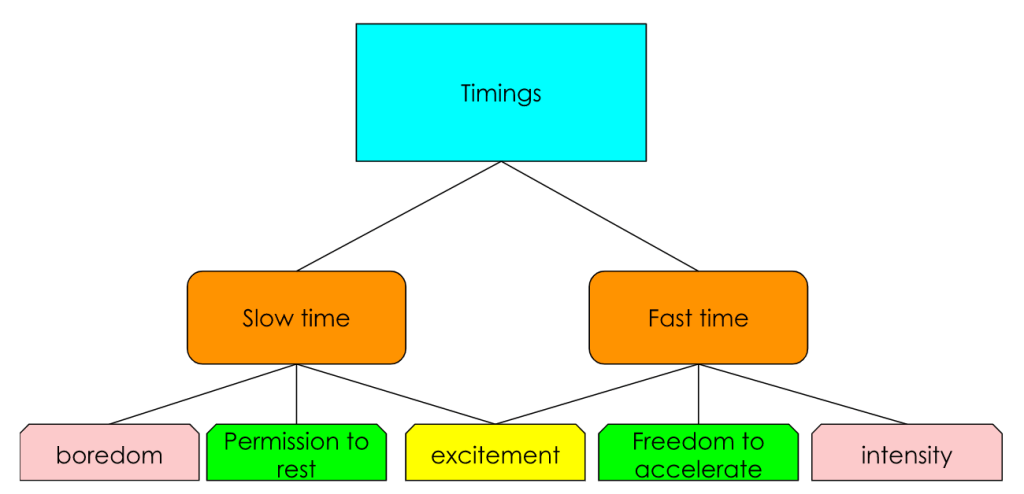
Based on Swinton’s book, I created this concept map with classmates on the timelessness and timefullness of God this month. I especially liked Swinton’s description of how Jesus redeems time through us.

Play

As I played with Helen’s children this month, I realized that children’s difficulty with time and timings has to do with their hunger for open space. This hunger to explore without limitations reminds me of Isaiah 49:20

Yet as you listen, the children that you have been deprived of will say, ‘This place is too small for me; make room for me so that I may settle.’

Isaiah 49:20

As we played, I said to them and myself:

  • How can you make the fast time slow down?
    • How can you turn the slow time into permission to rest?
    • How can you turn the fast time into freedom to accelerate?
Did you catch how I turned this visual into a mountain? Perfect to blend into the Pacific Northwest.

As God’s children, how can we find freedom in the measure of room we have while STILL waiting on the more beautiful territory?

Most Impactful Movie

I love well done sci-fi, always have. Like everything on this list, I found the movie Arrival accidentally this month, and it was such a gift. The story is framed exclusively through the first person experience of the main character, a linguist turned scientist. It relates to timelessness, memory, a mother’s concern for her child, and making peace with the risks involved with loving others deeply. Unlike some sci-fi, it’s more about human experience than the intensity of special effects or the shock value of violent aliens. I felt really understood watching this movie, because my memory is organized by people and theme (stories), not in chronological order. The movie essential concludes with the idea that love is worth the risk.

After all, where there is no mess, there is no unconditional love.

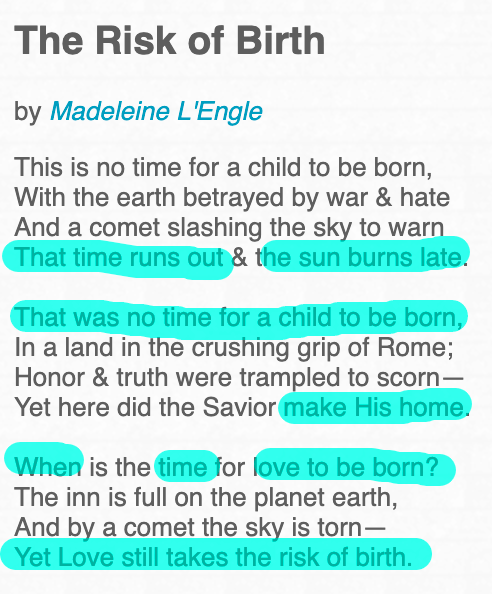
Most Impactful Poem

At seminary this month, my classmate shared this poem by Madeleine L’Engle, author of A Wrinkle in Time. This poem manages to talk both about the risk Jesus took to enter into the mess of human life, but also the risk of falling in love. Lord, teach us how to make peace with risk. Lord, when you are in a situation, you make the mess safe.

“Risk of Birth” by Madeleine L’Engle, who wrote A Wrinkle in Time

Most Impactful Songs

Compassion
Jesus alone
Mercy

Please Pray For:

  • For me to find my lower limit of rest, coming to absolute stillness before things speed up again
  • Fluent, God-facilitated opportunities for provision
  • Strategy, revelation, and joy in supporting my friend in her call as an Apostle
  • The right partnerships to fall into place regarding part time work or next steps at the right timing
  • Continued grace over family restoration

Interested in hearing more updates from Age of the Unexpected? Enter your email below to subscribe to the mailing list.

Hope is Prophetic: Establishing a Future for the Generations

Hope is Prophetic

In times of great adversity,

Prophets offer a hope for the future.

In times of social chaos,

When all man’s wisdom is razed like grass,

The Lord establishes visions through his servants:

That reach across timings and resonate with generations,

As dandelions that endure, consistently producing.

Visionary people speak and the hearers receive endurance,

The Lord clears the canvas of man’s wisdom so that his solutions can be rightly perceived as brilliant.

The vision heals, restores, and re-establishes.

When none can hope or celebrate,

As people tire of cynicism and bitterness,

Prophets offer hope for the future.

Isaiah Demonstrated this Supernatural Hope

The life and prophetic writings of Isaiah demonstrate God’s capacity to give hope for the future. At the same time as Amos prophesied to the Northern Kingdom of Israel, much of Isaiah’s prophesy is directed at Southern Kingdom of Judah.

Larger than the specific territory he was assigned, Isaiah’s life word was about the New Covenant for All People in Christ Jesus.

The book of Isaiah introduces Isaiah’s vision for the New Covenant through the first 5 chapters:

  • Isaiah 1:26-28 Purification of Israel
  • Isaiah 2:1-5 Promise to All People
  • Isaiah 4:2-6 Messianic Hope
  • Isaiah 5:26-30 God Establishes his Own Army

Isaiah weaves these sections of hope through lament and judgment prophesies, modeling the future experience of Jews living through the exile and longing for a better future.

A shoot will come up from the stump of Jesse;

    from his roots a Branch will bear fruit.

The Spirit of the Lord will rest on him—

    the Spirit of wisdom and of understanding,

    the Spirit of counsel and of might,

    the Spirit of the knowledge and fear of the Lord—

and he will delight in the fear of the Lord.

He will not judge by what he sees with his eyes,

    or decide by what he hears with his ears;

but with righteousness he will judge the needy,

    with justice he will give decisions for the poor of the earth.

He will strike the earth with the rod of his mouth;

    with the breath of his lips he will slay the wicked.

Righteousness will be his belt

    and faithfulness the sash around his waist.

Isaiah 11:1-5

This vision of the New Covenant defines Isaiah’s entire life.

These themes weave throughout the remainder of his prophecies as the text alternates between history (stories of events and Isaiah’s life) and prophecies to and against nations. Isaiah’s life is a prophesy, and like Hosea, he names his children according to the messianic vision he receives (Isaiah 7:4). Throughout the remainder of Isaiah in chapters 55-66 (Trito-Isaiah), the vision of the Kingdom of God intensifies so greatly that these prophesies have become some of the most famous of the entire bible.

Though Isaiah spent his entire tenure prophesying the 70 year captivity of Israel under the Judean kings Uzziah, Jotham, Ahaz and Hezekiah, his legacy is defined by uncharacteristic hope in the face of pain. Seventy years would be enough time for 3-4 generations to pass, and for god to fulfill his promise to bring the people back to their own land. Without this word, Israel would have struggled to endure the exile and may not have surrendered their remaining hope to return to their own land.

Through this prophesy, all people have the hope of being restored to a restored New Heavens and New Earth, to be grafted into a land full of safety through faith in Jesus.

Even through this disaster, God used Isaiah’s life to unveil his hope for all people.

Supernatural Hope for Today

Luckily, we don’t have to wait multiple generations for God to release a new vision for the future. Across the Earth right now, God is raising up minsters of this supernatural, strategic hope for the future. Though the governments of the world are in chaos and COVID has exposed the tectonic faultlines of our societies, we are in a new Renaissance where the Church will act with strategic vision and power to restore a hurting world.

Individuals will emerge out of the razed ground with vision that will shape their industries for hundreds of years. Their visions will outlive them, and their children will finish the work. God will pour out vindication on his remnant who do not glory in their own lives but pursue the wellbeing of the world. Christlike people will pour out grace of Jesus, and the Lord will favor them to dismantle and build. All nations will taste the beauty of Jesus through their faithful obedience, and Jesus will visibly rule through their sacrificial love. When all willing people have chosen Jesus, he will return in beauty and glory to be with his people forever.

We Need the Generations

One generation cannot accomplish the work that God has called us to do. We must provide multi-generational leadership so that these visions of God will shape society with longevity.

The book of Luke intentionally weaves the birth stories of John the Baptist and Jesus to demonstrate this intergenerational tapestry between old and new covenants. It is demonstrated in the birth of John the Baptist, the last (and greatest) of the Old Testament Prophets. John the Baptist is born strategically in order to “prepare the way of the Lord” (Isaiah 40:3, Matthew 1:1-13) , and in this way, the Old Testament prophets bless the work of Christ as he comes to save the world. This work of intergenerational blessing is sealed when John the Baptist baptizes Jesus.

And this was [John’s] message: “After me comes the one more powerful than I, the straps of whose sandals I am not worthy to stoop down and untie. I baptize you with[e] water, but he will baptize you with[f] the Holy Spirit.” At that time Jesus came from Nazareth in Galilee and was baptized by John in the Jordan. 

Mark 1:7-9

It is unsurprising that after the Great Cloud of Witnesses (Hebrews 11, Hebrews 12;1) has blessed Jesus through John, the Father loudly cries out, confirming Jesus:

And a voice came from heaven: “You are my Son, whom I love; with you I am well pleased.”

Mark 1:11

In what ways does the Church lack God’s confirmation and direction because of the lack of intergenerational leadership?

Elihu was also a younger person whose clarity helped restore Job’s hope for the future. When older generations assume all hope is lost, Christlike youth speak with maturity.

“I am young in years,

    and you are old;

that is why I was fearful,

    not daring to tell you what I know.

I thought, ‘Age should speak;

    advanced years should teach wisdom.’

But it is the spirit[b] in a person,

    the breath of the Almighty, that gives them understanding.

It is not only the old[c] who are wise,

    not only the aged who understand what is right.

Job 32:6-9

When the young are afraid because of the uncertainty of the world, elders are a reassuring anchor, modeling certain faith in Christ.

I am writing to you, dear children,

    because your sins have been forgiven on account of his name.

13 I am writing to you, fathers,

    because you know him who is from the beginning.

14 I am writing to you, young men,

    because you have overcome the evil one.

I write to you, dear children,

    because you know the Father.

I write to you, fathers,

    because you know him who is from the beginning.

I write to you, young men,

    because you are strong,

    and the word of God lives in you,

    and you have overcome the evil one.

1 John 2:12-14

The Church will not die, she has a future.

The Church will not forget, she has a past.

Together, wise elders and wise youth give us a hope for the future.

Being a Visionary Community

While revelatory people need community, it is actually easier for God to send strategic vision to individuals and use their lives as a testimony of that vision. Just like in the book of Isaiah, the calling process starts on the individual level as people opt into God’s plan for their lives. While prophets received callings as individuals, they formed communities to affect more change and in response to the threat of isolation. For this reason, the Lord instructs Elijah to disciple Elisha. Within the same geographical region, many prophets would have relied on assistants in the production of their texts. Prophets and prophetic scribes opted into the vision given to Isaiah, helping produce his 66 chapters. Apart from houses of prophets in specific geographic regions, prophets living in the same time period would likely know of one another even if they had different callings and audiences. For example, Amos and Isaiah were contemporaries whose similar style place them within a well established Hebrew prophetic tradition. Although Amos’ vocabulary is simpler as a reflection of his farming background and Isaiah’s expansive vocabulary betrays his family’s elite status, their prophecies have a similar, standardized Hebrew prophetic style that had been developed over hundreds of years. Prophesying in a similar fashion was reasonable at time when all Hebrew prophets shared a similar culture.

As a reflection of the New Covenant, Jesus moves prophesy into a more relational and culturally diverse direction. Jesus’s incarnation story begins in the context of relational prophesy, as the Lord entrusted him to a prophetic couple who both received revelation and specific instructions about the nature of his birth (Matthew 1:18-25, Luke 1:26-56). Later, their son would develop a community for the first prophets out of the original Twelve Apostles, an extremely culturally diverse group of disciples that Jesus collects and brings together as family before being sent out. Just like in the Old Testament, male and female apostles and prophets in the New Testament continued to build the Church. Like in the story of Agabus and Paul (Acts 21), prophets and apostles from various regions and cultures worked together to discuss and confirm the present day word of the Lord.

Today, God still gives strategic vision and life words to prophets as individuals. These prophets proclaim the word of the Lord and invite others into a vision that is greater than themselves. They recruit robust teams who can supplement their weaknesses and work towards a shared goal.

Under the New Covenant, God still favors collaboration between culturally diverse prophets. Just like the Twelve Apostles, the Lord brings diverse prophets together to live out their life words as a tapestry of the people of God.

Alliances between these visionary people’s organizations will produce movements of God that cannot happen in isolation. Similar to shared parenting responsibilities between a child’s parents and compadres within Mexican family structure, these ministries will share responsibility for the disciples they raise. Instead of territorial prophetic ministries, Prophetic Apostles who have built together in relationship will receive and equip one another’s disciples for ministry. As prophets take increasing responsibility to raise one another’s children, we will see magnified moves of God and shared impartations. Increasingly, there will be movements of God that are not specific to one nation, but are a hybrid gift to multiple regions, like children with mixed ethnicities.

In this age of Globalization, there will be more prophetic marriages (ministry alliances and actual marriages) between prophets called to different regions. Ultimately, these prophets will build highways between regions for the sake of Jesus.

Receiving a Vision (Life Word) as a Byproduct of Identity

As individuals grow relationally with Jesus, the Lord will draw them further and further into their calling, identity, and purpose. Generally, as God stretches us and heals us of past wounds, callings get clearer. Once distilled (over years), these callings become life words with prophetic purposes that outlive individuals. For example, after Moses had killed the Egyptian, he is adopted into his father-in-law Reuel’s family because Reuel recognizes him as a righteous person after Moses delivers Reuel’s daughters from a group of hostile shepherds. Moses found family with Reuel, whose name means “Friend of God”. Reuel was a righteous man whom God used to put Moses in community so that Moses could rediscover his life word as a Deliverer. In this instance, Reuel is a reflection of Moses’ later identity as God’s friend, and a mirror into Moses’ process of maturity (Exodus 33:11). . By Exodus 18, Reuel is called “Jethro”, a new name that means “overflow”, as a reflection of the blessings and responsibility the Lord has poured out on Moses. At this time, Reuel acts as a true father, sensing the limits of Moses’ capacity to govern the entire Israelite people alone. He suggests that Moses appoint Judges in Israel to help him govern the people, an administrative decision that lasts from the time of the Exodus until the crowning of Saul. All this from a man who was not an Israelite, but a righteous foreigner who had welcomed Moses under the Spirit of Adoption!

Characteristics of a Robust Vision

When God clarifies the life-word given to an individual, the resulting vision will be:

AttributeExample
Strategic, in that it is a hopeful, relevant answer to prayer.Haggai mobilizes the reluctant leaders among Israel’s exiles to rebuild the temple.
Far reaching, with echoes that apply outside of an individual’s context, industry, or time period.

Cumulative, in that the message is universal enough for people from diverse backgrounds to opt in.
Isaiah does not just referring to redemption of Judah, but to the redemption of humanity.
Pure, in that isn’t stained by political partiality or idolatry.Amos’ condemns the Israelite rulers not because of political factions, but because of their injustice to the poor.

Done properly, the Prophet becomes a mouthpiece and symbol of the vision, which reproduces and lives outside of them. Paul’s life word was “the full inclusion of the Gentiles”, a vision that he entrusted to his spiritual offspring to complete on his behalf. In this letter to Timothy, Paul has peace about dying because he knows that he has done his part in history and that someone else will take up his mantle once he has gone to be with the Lord.

“I have fought the good fight, I have finished the race, I have kept the faith. Now there is in store for me the crown of righteousness, which the Lord, the righteous Judge, will award to me on that day—and not only to me, but also to all who have longed for his appearing.”

2 Timothy 4:7-8

Like Paul, we must be people who “leave it all on the field”, running our races with all the skill we can and passing the baton to the next generation. We must be Prophets of a future not our own, knowing that “the Kingdom is always beyond us.”

“The secret of life is to have a task, something you devote your entire life to, something you bring everything to, every minute of the day for your whole life. And the most important thing is– it must be something you cannot possibly do. “

Henry Moore

Lord, help us do our part in history to see your Kingdom come.

“A Safe Place for My Children”

All people should have the opportunity to know God’s voice through Jesus Christ, and walk with him experientially all the days of their lives. Especially as miracles, signs, and wonders increase (Acts 2:17), the Church must be a community of fearsome love where children’s gifts are not silenced or exploited as a sideshow. The Church must be a nurturing, safe intergenerational family for these young prophets to thrive.

Jesus warns disdainful elders to imitate children:

“Truly I tell you, anyone who will not receive the kingdom of God like a little child will never enter it.”

Mark 10:15

He invites and does not silence them:

Jesus said, “Let the little children come to me, and do not hinder them, for the kingdom of heaven belongs to such as these.”

Matthew 19:14

He sends servants to liberate those who are being exploited:

As we were going to the place of prayer, we were met by a slave girl who had a spirit of divination and brought her owners much gain by fortune-telling. 17 She followed Paul and us, crying out, “These men are servants of the Most High God, who proclaim to you the way of salvation.” 18 And this she kept doing for many days. Paul, having become greatly annoyed, turned and said to the spirit, “I command you in the name of Jesus Christ to come out of her.” And it came out that very hour. But when her owners saw that their hope of gain was gone, they seized Paul and Silas and dragged them into the marketplace before the rulers.

Acts 16:16-19

Adults will not be prepared to navigate what God is about to pour out on the Earth in this hour unless they humble themselves to learn from children. In this century, the Church must learn how to depend on God’s wisdom to a greater degree. By creating healthy atmospheres where the young will be safe from spiritual abuse and neglect, adults will learn a lifestyle of revelation that displaces man’s striving and rests in the power of God.

Right now and across the next decade, God is pouring out grace for communities to prepare to receive these young prophets. God is aligning prophets from diverse communities to be mothers and fathers, comadres and compadres to this generation. We as individuals must consider what degree of personal character, what tools, what learning environments, and what organizational alliances will allow them to go as far as possible in Holy-spirit-led relationships with Jesus.

God will give some people property and freedom to stretch out in the natural and in the spirit as they make room for his children. These properties will be thin places, and open heavens will follow leaders to impart gifts to youth in different regions.

The children of your bereavement will yet say in your ears: ‘The place is too narrow for me; make room for me to dwell in.’

Isaiah 49:20

Youth-empowering leaders will need to be discerning to make organizational alliances where the prophesy is pure and the vulnerable are protected.

Responding to Potential Pitfalls

There are several potential obstacles that could limit the Church’s participation in this move of God.

Secularism ultimately threatens the right individuals have to live in the distinctiveness of Christian Identity. Secularism is the trend that asserts that Western society has progressed past the point of benefiting from the power and presence of Jesus.

Political Idolatry and the Religious Spirit in North America have further embittered divisions between religiously-motivated but unChristlike Christians and non-Christians. Political idolatry and the Religious Spirit create a false image of Jesus that polarizes individuals against the true expression of Christian faith, which is Christlikeness and sacrificial love for the vulnerable.

The Spirit of the Age (present timings) is seeking not just to justly expose the Church’s shortcomings, but erase the history of positive Christian contributions in arts, history education, medicine, science, sports, and culture.

Parents Rights

In the next decade, parents in the West will increasingly need to frame their right to raise their children in a tradition of faith as a right to preserve their own cultural background. There is a long history of families in Western nations seeking religious instruction for their children (whether schooling or training outside of school hours). The book, “Between Church and State” chronicles the history of religious instruction in America across academic contexts, and cites various influential court cases that have shaped America’s educational and religious culture. One of the book’s implicit theses is that parents have a right to public or private education where their family’s worldview will be honored, as it relates to decisions that directly affect their children.

Emphasizing Encounter with Jesus, Rebuilding Trust

At this point, many in the West have been wounded by the misappropriation of the name of Jesus in politics and in the Church. They have come out of contexts where there is an absence of deep encounter with God that transforms people to respond compassionately and justly to the needs of society.

Today, some parents choose to put their children in Christian schools because they see the value of Christlikeness in terms of moral values, but have not made a familial decision to follow Jesus. In these cases, the Church has often failed to embody Christlikeness in a way that is accessible to parents. At a time where increasingly common for families to let their children wait until they are older to make a personal choice of faith, the Body of Christ must be transformed so that we can embody the fullness of Christ’s character to the world. This is not a call to transformation for Christians within the sphere of education, but to the entire Body. Unless the Church becomes more Holy-Spirit filled and sacrificially serves the vulnerable, the world will not recognize Christ in us.

No parent who had experienced the fullness of God’s love for themself would ever want their child to live without it. The faithful action of individuals doing their part to be part of social solution, based on the tradition of Christlikeness will rebuild trust with generations of family members who have lost hope in the Church’s power to effect change. Not by law, but by humility and sacrificial love.

From this place of humility and mutual trust, the Church will demonstrate the experiential gospel, a lifestyle of walking closely with Jesus, through the power of the Holy Spirit. From this place of relational and communal wholeness, we will have the internal robustness to welcome a “miracles, signs, and wonders” generation.

Reclaiming Legacy of Christian Social Benefit

One of the greatest oversights in the contemporary Church is failing to know and be led by the history of Christian social benefit. While modern Christians may believe in some of the moral values of Jesus, the Church generally struggles to understand examples of how faithful people have put those values in action.

While the damage Christians have done to the world is well known, much less is known (including by the Church) of the ways the Church has transformed arts, history education, medicine, science, sports, and culture. Right now, people of all ages but especially Generation Z are hungry to know their heritage, to rediscover ways Christ has inspired people to transformative good throughout the ages. For this reason, the Religious Order Project I did with my 3rd and 4th graders has unintentionally become the most popular of my articles on this site

In the coming weeks, I will be working on videos to gather the Great Cloud of Witnesses (historic Christian leaders and Saints) to share more of this heritage.

History teaches us that Christians power for social transformation comes from Christlike sacrificial love, Christians must sacrificially serve people within their social contexts through the power of the Holy Spirit and bring present-day solutions to problems their industries are facing. God is commanding his Church to serve and engage with the world to restore the name of Jesus in the world’s sight. In order for us to be recognized as Christians, we respond obediently to God’s voice and be transformed.

A Church that is full of sacrificial love contradicts the need for separation of Church and State! She believes in the social benefit for listening to God through Christ, but uses service instead of law change to bring others to the table. The works Christians produce will testify to the power of God, and we will be held accountable for the impact of what we build on the broader community. God is taking his Church through a season of re-evaluating her works and razing faithless man-made initiatives. In general, if Christians cant build something holistically beneficial that isn’t true to our core values, we shouldn’t be building. Now and in the coming years, God will tangibly reject works that are not aligned to the culture of the Kingdom of Heaven and his values.

The Church Must Stand Out

In various cultures around the world, from Australia, Ireland, China, Brazil, to South Africa, tall poppy syndrome paralyzes the church from walking in the fullness of her destiny, calling and purpose. Tall poppy syndrome is a sociological term that relates to “a perceived tendency to discredit or disparage those who have achieved notable wealth or prominence in public life” (Oxford languages).

Related to deliverance ministry, Tall poppy syndrome is related to a Spirit of Jealousy, which motivates individuals to attack others who they perceive to stand out in gifting, talent, and character.

David faced the Spirit of Jealousy through Saul’s jealousy (1 Samuel 18), and Paul likely faced it in his dynamics with some of the other Apostles who considered him to be too ambitious and tried to discredit his ministry (2 Corinthians 11:1-15).

Due to a healthy value for ambition co-existing with the idolatry of success, the United States is perhaps the most supportive country in the world for individuals to stand out. However, in the United States, the Spirit of Jealousy combines with dehumanizing aspects of capitalism to breed competition and still targets “over-achievers”.

The Spirit of Jealousy is anti-Christian because of its lack of solidarity with others. In Christianity, one Christian’s success is all Christians’ success. We are called to bless, encourage, and strengthen on another as the body of Christ, celebrating one another’s victories and mourning one another’s losses.

“Bless those who persecute you. Bless and do not curse. 15Rejoice with those who rejoice; weep with those who weep. 16Live in harmony with one another. Do not be proud, but enjoy the company of the lowly. Do not be conceited.”

Romans 12:14-16

“Make my joy complete by being like-minded, having the same love, being one in spirit and of one mind.”

Phillipians 2:2

Realistically, the Church cannot accomplish her end time purposes without being extremely different than the world. In order to disarm the Spirit of Jealousy and continue to flourish in their ministry, Christian leaders must be so humble in character that even in standing out, they cannot be targeted.

In a broken world, the Church MUST stand out. By definition, the Church as it images Jesus, inevitable WILL stand out! Why?

In times of crisis, when no one else has the grace to be hopeful, Christians are the only people capable of receiving and proclaiming visionary hope.

“You are the light of the world. A town built on a hill cannot be hidden.”

Matthew 5;14

Both David and Saul left room for God to deal with their enemies and continued to serve and honor even the people who most hated them. David refused to hard his enemies, but allowed the Lord to lift him up:

But David said to Abishai, “Do not destroy him, for who can lift a hand against the LORD’s anointed and be guiltless?” 10David added, “As surely as the LORD lives, the LORD Himself will strike him down; either his day will come and he will die, or he will go into battle and perish. 11But the LORD forbid that I should stretch out my hand against the LORD’s anointed. Instead, take the spear and water jug by his head, and let us go.”

1 Samuel 26: 9-11

In this letter, Paul encourages Timothy to allow trust that God will make his righteousness “plain to all” in comparison to his critics. Instead, Timothy is meant to simply imitate Paul’s imitation of Jesus.

Just as Jannes and Jambres opposed Moses,a so also these men oppose the truth. They are depraved in mind and disqualified from the faith. 9But they will not advance much further. For just like Jannes and Jambres, their folly will be plain to everyone.

You, however, have observed my teaching, my conduct, my purpose, my faith, my patience, my love, my perseverance, 11my persecutions, and the sufferings that came upon me in Antioch, Iconium, and Lystra. What persecutions I endured! Yet the Lord rescued me from all of them. 

 12Indeed, all who desire to live godly lives in Christ Jesus will be persecuted13while evil men and imposters go from bad to worse, deceiving and being deceived.

2 Timothy 3:8-13

The Church is called to be gentle, regardless of her opponents.

5Let your gentleness be apparent to all. The Lord is near.

Phillipians 4:4-5

As the Church loves and serves her enemies, the difference between Christlike “outstanders” and jealous critics will be obvious to all.

Intergenerational leadership is built on Christlike solidarity and against jealousy, because the nonbiological disciples you raise will ultimately raise your grandchildren.

Conclusion

A Prophetic Church is hopeful and solutionary across generations,

In this Acts 2:17 era,

She will be known by hybrid movements of God across geographies,

Through co-parented disciples,

By the inexplicable power of God in the youngest,

And the humility and teachability of Christ in the oldest.

She will make room for the vulnerable and be unafraid of the world’s mess,

She will know her historic identity and be unafraid of the future,

And stretch out her borders to invite in righteous people (like Jethro) who were previously on the margins,

The wisdom of newly added people will protect and insulate her future,

And along with the Great Cloud of Witnesses,

We will continue to build the lineage of Christ.

June 2022 Monthly Summary

This month, I have been asking God to help me to come up higher into maturity in both my writing and waking hours. This is the first time I have intentionally outlined my monthly summary in order to weave personally complex themes and make sure that I have Jesus’ approval on each word before publishing.

Focusing on Just One Time Zone

In all the places I traveled from March to June, the Lord spoke to me about his long term plans for my life. As I passed through specific regions, the Lord explained some of his goals for 1, 3, 10, and 20 years out into the future. This process was really foundational to helping me trust God in the ministries that are emerging, for him to show me the landscape and share some details about things we’ll be developing years out from now. Having gone to so many places, I finally feel like a have a strong sense of how many of the details are meant to fit together, and that has released me to focus more on the present moment (staying in just one timing).

God is kind, and for some extreme words, he tells us well in advance so we have the capacity to adapt gradually versus all at once.

As a prophet who gets a fair amount of watchman dreams (future related prophetic dreams), I struggle can be all the more difficult to live in the present moment because I get distracted by details that aren’t relevant yet. For me, organizing the revelation is a way to cut the white noise. In plain language, I’m finding it much easier to rest in the present moment than I did before because I finally see how pieces fit together and can just focus on depth and maturity now.

I make known the end from the beginning,

    from ancient times, what is still to come.

I say, ‘My purpose will stand,

    and I will do all that I please.’

Isaiah 46:10

For still the vision awaits its appointed time; it hastens to the end—it will not lie. If it seems slow, wait for it; it will surely come; it will not delay.

Habakkuk 2:3

The Lord is good to those who wait for him, to the soul who seeks him. It is good that one should wait quietly for the salvation of the Lord.

Lamentations 3:25-26

At this point, I am hoping to return to Brazil in August to develop curriculum for children and teens to discern the Holy Spirit. The vision God has given me for developing these opportunities is so big that regardless of my geography, I will inevitably be working on this vision.

A Prayer to Trust God in All his Timings

May you perceive the purpose of God within your present timings,

And eagerly make peace with him as you wait,

May the Lord call you trustworthy as you pass through narrow places,

And comfort any area of rawness,

In the stillness, may you hear the Lord whispering his plans for your future,

May you not just hope, but have the strength to believe.

May the Lord give you deeper and deeper root systems

that it not even occur to you to worry.

Valuing Community

Of all the things I value, I have loved gathering people lately. While developing community among friends and ministry settings is not new wine, God is adding a Luke 2:52 grace for relating to different kinds of people to my life as he brings the old wine into maturity.

Shadowing a Hostel in Community

One of the ways God helped me create community last month was actually to develop friendships with individuals in my hostel, and from that place of connection, address the loneliness of the visitors. It was awesome to see how Jesus encountered people and changed the atmosphere in a place just by nature of risking reaching out, relational warmth, and his own care for them.

Emerging Prophets Friends

Lately, I’ve been using a closed Facebook group to schedule times to meet with my friends from the Emerging Prophets program. This has been some of my favorite time to catch up with people, and I’ve started to be able to meet their children and pets as we keep building community.

At Seminary

At seminary, I’ve been employed as a Proctor (similar to a Residential Assistant or a Dorm parent) in order to develop community on campus. I’ve been impressed by the amount of transparency that’s already developed in the 1.5 weeks residents have been here, and excited to see how the strength of these bonds will improve the depth of what students are learning. Here is a picture of some classmates and I with our professor on the way to a recent trip to the Bible Museum in DC.

“God Who Makes My Heart Safe”

Right now, the Church is in a season where en masse, God is challenging individuals to emotional wellness. The majority of my time this month has been shaped by responding to this call to wellness personally and envisioning what greater wellness could look like for the communities I hope to develop.

Leaving Room for Others to Step Forward

On a personal level, I have been allowing this call to wholeness shift the way I am doing communication with friends and family, so that God brings an end to my over-functioning.

In general, I have a very high value for communication. I would actually say that good communication is probably my greatest core value. Because of this value, I have generally taken responsibility for establishing and maintaining social ties with friends and family members. Communication is so important to me that my default setting assumes that if there is no communication, there is no connection. In the past, the most memorable of my mentors have honored this value by taking a direct but gentle communication style. Without relatively consistent and clear (generally, direct) communication, I do not usually feel valued or believe there is a connection.

Over the past 24 months, the Lord has taken me on a gradual process of stepping back from overfunctioning. However, this process became especially noticeable over the past 6 months, as family members have needed to step forward to bear their share of responsibility for communication as I’ve been in transition.

God is challenging me to leave a gap for others to step forward in developing friendships and maintaining good communication with family so that I can rest. While I have not seen a significant shift yet in others’ responses, I know that by maintaining boundaries in the degree that I allow myself to initiate, I am ultimately allowing God room to move in those relationships.

Looking to God and Not People

Over the past 9 months, the Lord has challenged me to have a healthy agnosticism of other people. It is God who reveals mysteries, God who provides, God who opens doors, God who is responsible for making room in people’s hearts for us. While it is a reflex of will to leave the work unfinished, I am leaving room for God to answer God’s own prayers for my life, and just listening, agreeing, and declaring what he has thoroughly said. 

One thing I did not expect in this season of transition was the degree that some people have been offended that I have chosen God over them. I know that God is jealous of this time in my life as a first fruits and I absolutely will not rush timings OR give others the attention he so deserves. The time doesn’t belong to me to give. The people who love me most have not been offended when I’ve chosen God over them in this season. They want better for me than they are able to give, and they understand that my best case scenario is him.

Lord, help us hear the song you sing over us so that we don’t need to take your place in the lives of others or try to establish our dreams by our own hands, without letting them pass through the fire.

Greater Depths: Sensitivity and Exposure

As I’ve given Jesus more access to my heart this month, he’s been sensitizing and tuning my emotions to God’s heart. I generally sense my emotions closer to the surface, but sensing God’s emotions feels 4+ inches below the surface. When God allows me to pick up on his joy, his grief, his anger, his excitement, there is a choice involved to tap into these emotions and voice them. There are specific situations this month where I didn’t take things personally, but in choosing to voice the complicated nature of God’s emotions, he transformed situations and people through it.

This month, Jesus showed me how polarizing deliverance ministry can be. When people sense Jesus in us nearby, the sensation of being completely naked can be terrifying. Even without intentional sin, being so exposed takes a lot of trust in the person ministering to you and the desire for God to make you bare and deliver you from whatever holds you back.

When Simon Peter saw this, he fell at Jesus’ knees and said, “Go away from me, Lord; I am a sinful man!”

Luke 5:8

How can I know all the sins lurking in my heart? Cleanse me from these hidden faults. Keep your servant from deliberate sins! Don’t let them control me. Then I will be free of guilt and innocent of great sin.

Psalm 19:12-13 NLT

At other times, being seen exactly as you are is refreshing

“Come, see a man who told me everything I ever did. Could this be the Messiah?”

John 4:29

She gave this name to the LORD who spoke to her: “You are the God who sees me,” for she said, “I have now seen the One who sees me.”

Genesis 16:13

As God continues to pour out grace on for emotional healing, in this season, God is asking his Church, “Will you let me uncover you? Will you let others see you and help?”

God is safe, and he is there to help. If shame or fear of exposure is keeping you from receiving more of Jesus, ask him to be God who Makes your Heart Safe.

Responding to Injustice: Meeting Jesus in Grief

This month, an event happened where I was left holding faith for something alone in spite of what God had already spoken to others. While God ultimately shifted the situation, remaining in faith was unbelievably costly. Since I didn’t have words or even know how to pray at first, I often found myself praying, “Search me, Holy Spirit.”

In one encounter with Jesus, he demonstrated how to remain in lightness even as he himself passed through incredible grief.

In the vision, I kept only getting glimpses of Jesus. I wanted to know him more fully. He brought me to the side of a lake that belonged to me, as a site of past and present griefs. Jesus showed me his own body of water that was as a large as an ocean. He called it, The Ocean of “Why?”

I began to watch him backstroke in the water, and he invited me to join him. As he swam, he repeatedly wiped his face the same way you’d wipe off the dried residue of tears in the shower. As we swam and the water passed my ears, I heard whispers, speaking, and even screams of unconscionable words that grieve the Lord. While some were directed at Jesus, even more were directed at other humans.

I watched him continue gliding forward, eyes closed. I could tell that he was enjoying the lightness and joy of being in the water, but there were still deep furrows around his cheekbones, etched into his thickened sunburnt skin. As we swam, Jesus kept modeling being alert to the beauty of the saltwater breeze, the sensation of letting himself float, and the warmth of the sunlight. His robust sense of vida integral (life in complexity) helped me not be lost in the grief, but to be held even in the midst of it.

He was despised and rejected by mankind, a man of suffering, and familiar with pain. Like one from whom people hide their faces he was despised, and we held him in low esteem.

Isaiah 53:3

Later, on the same day as I was leaving Brazil, I was at a Christian conference where I had an extreme encounter with God. I was on the floor for at least an hour as the Lord poured out warm protective love on an area near my heart. When I finally did get up, the Lord sealed the experience over the following 48 hours and the plane ride back to North America. Through this encounter, God revealed himself as “God Who Makes my Heart Safe.” He keeps building my trust to see him this way daily.

“Where is a Safe Place for My Children?”

As God challenges me to trust HIM to be the one to make my heart safe, he is challenging me to trust him with the future of my ministry and personal life.

In this season of life, the Lord has given me a tremendous vision to see children and teens discern his voice, prophesy, and walk closely with him as an Acts 2:17 generation. I know that he will use my life to serve them and their communities and we’ll see ridiculous signs, miracles, and wonders as he leads.

Presently, I am designing virtual training opportunities for teens and children to know the Holy Spirit. As I develop these programs, I am scanning organizations around me to try to discern which organizations would lead to healthy ministry alignments.

In fearsome love, I am unwilling for these children to become a sideshow, to have their gifts exploited, or to lack the kind of spiritual covering that a robustly healthy community of faith will provide them. I am looking for leaders who exude safety and who can provide this sort of environment for my children. This is the largest calling on my life (Jeremiah 20:9), and the work is highly personal.

Bearing up through the Timings: The Timelessness of Worship

Just yesterday, I got a new case delivered for my acoustic guitar, so I will be able to practice as I take it with me to visit a friend in Canada, and then to Brazil.

While I wait on God’s timings for my ministry and future, worship is the only thing that cuts through the cost of waiting, of unanswered prayers, and the pressure of where I know God is leading me. When I focus on the beauty of Jesus, I can lose myself in the timelessness of worship, and I don’t have to come out of it quickly. These moments of timelessness give me the strength to re-enter into the present moment and remain undivided in my mission to establish safe prophetic cultures for children.

Music I’m listening to

This track (“Do you Know…?”) wrecked me this month: over the beauty of Jesus, over the extent at which God sees and values hidden sacrifices, over the way he continuously chooses us. This song was medicine this month as I waited for God to make wrong things right.

Lord, help us to perceive you singing over us.

I love the song “Pieces” by Amanda Cook, because it reminds me of how unafraid God is to be known. The safe, willing, sacrificially self-giving, whole, compassionate, faithful love of Jesus.

Lord, help us to love as sacrificially and holistically as you love..

This Brazilian Portuguese kids worship song repeatedly made me cry this month. In the chorus, Jesus sings about how he loved to go visit his friends in Bethany, and repeatedly praises Mary of Bethany because “She has time for me”. While this song is upbeat, you can tangibly sense Jesus asking all of us “Who will have time for me?” As I listen to it, I still get choked up sensing his yearning for our time, for us to value him most of everything.

Lord, take all of our time.

Books I’m Reading

Dethroning Mammon

This month, I read “Dethroning Mammon” by Justin Welby. One of the concepts that most stood out to me in this text was the idea of “what we measure, we value; and what we value, we measure.” The author makes the argument that some of the most valuable things in an organization are intangibles, things that are felt rather than measured consciously. However, as organizations become more conscious of those things, they may choose to adapt their evaluative frameworks to capture those things.

It reminded me of a situation where an employee of an organization had a particular gift for inner healing and wellness. When this individual steps into a room, his presence has an immediately healing effect on people who have gone through trauma or neglect. However, because that attribute isn’t measured as part of his performance review, I have not seen him as able to partner with God’s design for his ministry or receive the appropriate recompense for the value he adds to the organization.

Materialism drains the Church and devalues individuals. Many churches’ financial structures have been formed under the performance-driven ideology of capitalism, which frequently dehumanizes the humble and overcompensates the striving. Saint Oscar Romero, a Salvadoran Martyr also decried the Church’s responsibility to defeat materialism and defend the rights of the poor, saying “the Church has an even greater impulse to work for liberation of the earth than the communists have, for she knows that no paradise such as the communists announce exists in this world.

Impact: Prophesy and Change the World by Arlene Westerhoff

Another book I’m reading this month is “Impact” by Arlene Westerhoff. One thing I love about Arlene as a prophet is the clarity of communication and accessibility of her language for teaching. Honestly, the value for clarity embedded in her writing is like medicine.

The most impactful (see what I did there) section of this book so far has been Chapter 8, titled “Fathers and Mothers, Sons and Daughters.” In this chapter, Westerhoff explores the difference between childlikeness and childishness, which I have seen frequently blurred in family life and in settings where I have worked. It can be difficult for individuals to allow God to carry them into the kind of maturity that makes them healthy spiritual mothers and fathers.

According to Westerhoff, “Maturity is a pre-requisite for procreation.”

In other words, we cannot develop disciples (spiritual children) or lead our biological families effectively if we refuse to mature into the men and women that God created us to be. Immaturity paralyzes and renders the Church impotent to influence the world and lead effectively. As Westerhoff says, “God will not entrust adult-sized responsibilities to those who are spiritually immature.” The world urgently needs Christians to allow God to shape them into mature men and women of God.

Towards the end of the same chapter, she tells a story of a man who had made a vow to never grow up. This man had “confuse[d] being childlike with being childish” and it “hinder[ed] his ability to grow and enter fully into God’s call for his life.” Once he allowed God to bring him into maturity and chose to break this vow, God poured out many opportunities for blessing and promotion on his life.

Funniest Dream this Month

Towards the middle of this month, one of my dreams made me laugh out loud on waking. Through this dream, the Lord addressed the work of redemption and new identity he was doing in me and many others in this season. For context, cats in my dreams generally symbolize false responsibility/neglect and fish normally symbolize flowing with the Holy Spirit.

In the dream, I saw a cat with a nonfunctional right paw and legs. He had a partially functional left paw. When he tried to walk, he scooted and would flip his partially functional paw like a fish. The omniscient narrator voice in my dream said loudly, “Dory was an abandoned cat but a redeemed fish.”

I nearly died. Honestly, I think God knew I needed a laugh.

Leaving Room for Joy

Portrait of Provision

It is hard to describe just how intensely God has been invested in my wellbeing over the past 6 months. Long before embarking on a season of travel, the Lord spoke to me about his extravagant provision through various dreams where he would invariably send me chocolate ice cream and/or cake. As the Lord knows I have a sweet tooth, he wanted to make it clear that even my most nonsensical “needs” would be provided for.

God is true to his word. Here is a portrait of just *some* of the free desserts I had in June. These pictures do not include the abundance of cakes, cheesecakes, and cookies that are served at seminary with *every single meal*. I tell you, even as I try to pace myself, the Lord loves demonstrating his love by being over the top.

Another instance of the dramatic nature of God’s provision was an instance in my last week in Brazil when I had caught a minor head. I stayed at my friend’s mothers’ home, and she really went out of her way to make sure I had more than enough. She made me tea, got us fresh bread from the bakery, raw honeycomb, and margarine. She boiled hot milk and let me add freshly ground cacao. She gave me extra blankets and lent me a set of her pink fuzzy pajamas and slippers. It was gloriously extreme generosity.

God loves to take care of us. He really does! At no point in the last 4 months traveling have I been in lack, in danger, or without community. I have been welcomed and trusted and honored. God is teaching me that he is “God who Makes a Place for Me.” May the Lord continue to reveal the depths of his love for all of us, so that we can show the same love to others.

Prayer Requests

  • Lightness, peace, and joy to displace heaviness, rawness, and pressure over events, geography, and timings
  • Favor, holy boldness, and answered prayers for provision as I finally start taking risks to fundraise in earnest
  • Grace to finish my assignments for seminary with clarity and long-reaching purpose
  • The beauty of Jesus to go ahead of me as I spend time July with my friend in Toronto
  • The right ministry alignments with emotionally safe and robust leaders. For God to make space for me and the children he is raising up as prophets.
  • God’s perfect will for my return to Brazil
Design a site like this with WordPress.com
Get started