As part of exploring the calling to build bridges between denominations in the Church, I have reflected a lot this summer on the groups and denominations that have formed me. As someone who intentionally doesn’t claim a denominational affiliation out of respect for the broad spectrum of Christian (Trinitarian) groups that have formed me, I wanted to develop a wearable way of explanation my formation process in traditional, denominationally specific settings. Out of the respect for the ways God has used these different threads to weave me together, I decided to weave my history into a bracelet.
My family history doesn’t come out of one liturgical tradition. My mother’s side of the family was raised as conservative Irish Catholics, while my father’s side of the family was raised United Methodist Protestant. Realistically, due to the name change my father’s family underwent in immigrating to the United States (from “Nussbaum” to “Nus”), it is also likely that my ancestor’s were ethnically Jewish.
While mixing these two Christian traditions was considered controversial at the time of my parents’ union, I now consider it as a precursor to my calling to work as a bridge between different sectors of the Church. As a child, I still have vivid memories of Catholic iconography around my home and saying memorized prayers that my mother taught us. While I do not claim Catholic practices like praying to the Saints or Virgin Mary as an adult, I still believe in learning from the Saints’ lives and have a deep respect for Catholic traditions like the Stations of the Cross. Catholicism’s focus on incarnationally finding Jesus throughout one’s entire life span, appreciation for the supernatural, and focus on the arts and scholarship as worship has significantly shaped my protestant faith.
In spite of being obliged to go to a United Methodist Church during part of my youth, I struggled to connect with God there. Prior to my definitive encounter with Jesus, I had various spiritual experiences as a kid and had been seeking God gradually since my teenage years. I first fully encountered Jesus 8 years ago on study abroad in Valparaiso, Chile. Due to the intensity of that encounter, when I came back to the United States, I went through a 180* change and identity-seeking process.
Red = Protestant, Blue = Catholic, Aqua blue = Nondenominational Evangelical, Pink = Latin American Protestant, Green = African American Methodist, Baptist, and COGIC, Gold = Asian American Presbyterian, Lutheran, Baptist, or Methodist, Purple = Charismatic, Dark red = Episcopal
As a result of having a conversion experience outside of my national context, I came back to the United States with questions like, “Why are denominational divisions necessary?” and “How can churches learn from one another?” Through friendships in college, I participated in Intervarsity Asian American Christian Fellowship and Inspirational Gospel Voices of KU. While I am neither Asian nor African American, the way I supported my friends in these groups (and the history of ethnic diversity in my family) made room for me to participate. The denominational streams represented in these groups incapsulated Asian American Presbyterians, Lutherans, and Baptists, as well as African American Methodists (AME), Baptists, and Church of God in Christ (COGIC) churchgoers.
After college, I moved to Washington, D.C. where through work, worship, and study, I continued to learn from various denominations. I worked at a Catholic School, attended an Episcopal seminary, and worshipped at Nondenominational Evangelical and Charismatic churches.
Ultimately, because of my focus on the nations, I decided to include a stone on this bracelet that commemorates all the traditions and countries I’ve learned from past and present.
Prayer
Lord, give us the grace to learn from and celebrate many denominations,
May we receive all the insight we can, and leave it to you to ultimately arbitrate our disagreements,
Help us recognize Christ in all cultures and ethnic groups,
Help us to know our history, even if we do not formally claim membership,
May we represent your Body of Christ and recognize one another through the indwelling, manifest Spirit of Jesus,
May we be a bridge-building people who can heal cultural divisions through your peace.
In this post, I present two versions of my Theology of Youth ministry.
Theology of Youth Ministry: Accessible Language
In this version, I use accessible language so that kids can understand my theology. While the primary audience is children, “less is more” with people of all ages. If your personal preference is for simplified, clear language, this version is for you too. Lastly, I was thinking of the needs of adults learning English (limited vocabulary) and adults with cognitive disabilities when I wrote this version, for accessibility. No matter what your age, capacity, or preferences, you are more than welcome to glean from either version.
You are Important to God
Children are special to God. God calls his people children, and loves them with the same tender love he has for Jesus. Jesus invites kids to get to know him. He tells adults to become more like kids so that they will understand Heaven. God is very protective and hates it when people hurt his kids.
Children are great teachers for adults! Children show grown ups that you don’t have to try hard to know God and help people. Kids are curious and teach adults how to ask good questions about God. Children want to go on adventures with God, and challenge adults to believe that God is powerful. Children love people, and challenge adults to care more about how they are treated. Adults need children’s faith to be healthy.
When adults respect how kids teach them about Jesus, they will listen to kids and protect them. They will train kids in safe and healthy places, and teach them good things. Even when kids are too young to say, “I choose you, God” with their words, adults should still learn from them.
You are Gifted
God is visible and invisible. In order to love God fully, you have to love the parts of him that are visible and invisible. God made people for this reason! When people choose to love and follow Jesus, God gives them gifts so they can walk closely with him and help others. Just like a kid can be good at math or reading, the Holy Spirit gives people new spiritual gifts like advanced understanding, knowing secret details, crazy trust, healing people’s bodies, doing miracles, sharing messages from God, telling the difference between God’s voice and other voices, speaking heavenly languages, and understanding languages. God gives some of these gifts to everyone, so they will help each other. Some kids may also experience things like special dreams or seeing angels as part of their calling. The bible tells us to want special gifts so that we can help people. God gives each person what they need for their calling, and gives more when we practice our gifts.
Just like how you might inherit your parents eye or hair color, you can inherit the gifts from your family. If your family members have special gifts like worshiping God with music, you might also be good at that too. Some gifts like creating new groups and things for God, sharing messages from the Holy Spirit, taking care of God’s church, teaching about God, or telling other people about God can also run in families. If your parents are able to, they should teach you about how to use your gifts. If your home family can’t teach you, don’t worry! Your church family can. The Church is responsible for teaching young Christians about their gifts.
You should be Protected
To protect kids spiritually, the church has to protect kids’ bodies and emotions too. Since kids are young and small, they need help more than adults. The fact that kids need help makes God love them even more. The Church should love and protect kids like God does. However, some churches haven’t protected kids, taught families about how to protect kids, or expected the rest of the world to treat kids well. When the Church doesn’t teach the world that kids need protected, entire families can be in danger. Children of color, kids with poor families, and refugees can be even more unsafe. In God’s eyes, the Church is more responsible for protecting kids than the government or volunteer groups. God especially cares about orphans and refugees. He cares so much that he says that if anyone hurts them, they will be cursed! The Church absolutely must help.
When people hurt your body, your emotions, your mind, or your spirit, it can make you feel bad about yourself and like you did something wrong. However, God will never think less of you for things that other people did. God’s tender love means that even if other people hurt you, he will heal you and make up for the pain. The Church must take responsibility to make sure you are safe.
The Church must also make sure that kids know how to navigate unseen, spiritual experiences or use their gifts. Ultimately, the whole point of having spiritual gifts is so that you can know the Holy Spirit, God, and Jesus better. Just like God called Samuel as a kid, kids can see pictures, hear words, have dreams, or know details from God. Kids need to learn from the Church and from historical figures in the Church to know how to use their gifts and not be scared. A good church will teach you about the supernatural through the bible and help you practice knowing what is and isn’t from God. Through training in your gifts, you will be able to know Jesus better, have fun, and make your life a celebration of God. Knowing that God will reveal his secrets to you when you follow Jesus and that Jesus has already protected you will help. When kids learn how to use their gifts, they make their communities richer. The Holy Spirit can use kids with disabilities too! God isn’t afraid of our limitations.
Finally, the Church should also teach you about how to navigate scary spiritual things that you might see, hear, or sense. These things aren’t from God, because God will never make you afraid on purpose. When kids are spiritually sensitive and don’t have enough help from adults, they might sense these scary things more often. Being scared can even make kids afraid of the supernatural parts of God.
Kids offer Hope
Just like adults, kids aren’t perfect. Kids are limited and have strengths and weaknesses. However, since kids are so young, they can teach adults about how to be kind to each other and care about the world. Just like David was brave in standing up for what he believed, children’s sensitivity makes them brave world changers. Adults should learn from the things that worry kids! For example, some kids don’t like it when animals are treated badly, especially the animals people eat for food. The way kids want animals to have healthy lives can teach adults how to take care of the world and do business. When adults listen to kids, they will be better at changing the world.
Theology of Youth Ministry: Scholarly Language
In this version, I reference biblical and academic sources so that educational leaders, church leaders, and parents can understand my theology. The primary audience is adults who are interested in scholarly language.
Full Inclusion
For good reason, the bible calls children precious. In Psalm 127:3 and Proverbs 17;6, children are a reward and an inheritance from the Lord. God refers to his people in the Old and New Testament by names like “Children of Israel” (Exodus 1:1) and “Children of Abraham” (Romans 9:7) to demonstrate his multigenerational covenantal love. God used the love he had for his own Son as grounds for the new covenant ( Ephesians 1:4-5, John 3:16, Romans 8:1-14). In this same Spirit, Jesus explicitly invites children to come to him (Matthew 19:14). He implies that God values children even more than adults, since their angels always behold God on his throne (Matthew 18:10). Jesus uses imagery of children and sonship in the Parable of the Prodigal son to express God’s mercy (Luke 15:11-32). He also draws on his audiences’ experience of the tenderness of parenting to understand the goodness of God (Matthew 7:11). Jesus invokes the imagery of vulnerable children when threatens individuals who would mislead his Church (Luke 17:2). Jesus also names childlikeness as the standard for entrance into heaven (Matthew 18:3). Childlikeness and sonship is the standard adults must imitate (John 1:12).
As the embodied future of the family of God, and within their own right, Children’s spirituality is profoundly important to the spirituality of adults. As part of the household of faith (Galatians 3:28), children have various qualities that make them excellent exemplars for older generations.Children model vocation that is inborn and unearned. They model innate curiosity in pursuing Christ with all their minds (Deuteronomy 6:5). Children’s hunger for the experiential gospel (John 14:9-21) raises adults’ faith in the power of God. Children’s genuine love challenges adults to greater sensitivity and sincerity in how they navigate challenging people (Romans 12:9-21). Children’s genuine hope challenges adults’ sensitivity to discern and establish God’s justice (1 Corinthians 13:7). Children must be fully valued and included within the leadership of a community for the Church to flourish.
Adequate respect for children looks like adults acknowledging Jesus’ work within them. Adults in the Church must honor the embodied gifts children bring to the community, explicitly incorporating children’s perspectives and committing to protect them from abuse and usery (Acts 16:16-34). Adequate respect also looks like creating a training environment that is safe and healthy for children’s flourishing (Luke 11:11-13), like a well-protected greenhouse (Psalm 144:12). Even when children may be too young to make a vocal confession of faith, the community of faith must be humble enough to discern the Holy Spirit working in and through them as a sign.
Gifted and Valued: Understanding Spiritual Gifts and Giftedness
Humans are created not just as natural, but supernatural beings. Christians serve a supernatural God who gives good gifts to his children (Matthew 7:11). In order to fully worship God, Deuteronomy 6:5 teaches that individuals must love God not just with their hearts or their intellect, but also with their spirits (Deuteronomy 6:5). Through the lens of holistic education, children can demonstrate gifts or giftedness that is intellectual, emotional, physical, social, or spiritual.
In 1 Corinthians 12:4-11, Paul explains that as a result of faith in Christ, the Holy Spirit apportions spiritual gifts to each believer (Acts 2:38). These gifts are diverse and include wisdom, word of knowledge, faith, healing, miracles, prophesy, discernment, diverse tongues, and interpretation of tongues (1 Corinthians 12:4-11). Similar to adults, as children put their faith in Christ, they individually receive gifts for the service of the community (1 Corinthians 12). Just like academic gifts in math or reading or socio-emotional gifts, these spiritual gifts are resources that help believers pursue their God-given vocations and minister to other people (1 Corinthians 12:4-11). In addition to gifts that all believers experience, some children experience exceptional spiritual sensitivity and giftedness (Ephesians 4:11-16) as part of their life calling for spiritual leadership inside (Matthew 10:6) and outside of the church (Acts 17:16-21). The bible tells believers to desire greater giftedness, because it helps the Church (1 Corinthians 12:31).
Similar to the way that cultural wealth or trauma can be inherited through families, individuals can inherit the physical and spiritual blessings (Deuteronomy 5:10) and deficits (Deuteronomy 5:9) of their forefathers. Since individuals are born into family systems, exceptional spiritual giftedness can be generational (1 Chronicles 25:1). The spiritual leadership callings in Ephesians 4:11 (such as apostleship, prophecy, pastoring, teaching, or evangelism) (Jeremiah 1:5) can be passed down through families (Deuteronomy 7:9, Romans 11:29, Acts 21:9, Isaiah 8:3, Zechariah 1:1). For example, the prophetic musicianship calling of Levites in 1 Chronicles 25:1 was a gift to an entire family system (1 Chronicles 25:1). Individuals would inherit some share of musical talent, and their relatives would be responsible for helping to provide training (1 Chronicles 6:33). The life of Johann Sebastian Bach is a strong modern example of an individual and family system who embodied this calling to sacred worship. As these stories demonstrate, parents bear the primary responsibility (Ephesians 6:4, Isaiah 54:13) and right for teaching their children how to worship God (Deuteronomy 6:7). Gifts for spiritual leadership can be stewarded generationally (2 Timothy 1:5-8, Psalm 145:4) when parents and children perceive the value of it (Romans 10:9-13).
And yet, individuals who experience high degrees of spiritual giftedness may not have family members who can support them. Similar to the story of the Gershonites in 1 Chronicles 23:11, God can group individuals who share similar gifts and assignments together as one family (Psalm 68:6, 1 Chronicles 23:11). As the body of Christ, and due to the lack of resources currently available to individuals and families, the Church must take greater responsibility to assist spiritually gifted children (1 Corinthians 12).
Greater Vulnerability, Greater Responsibility
In order to protect children’s spiritual wellbeing, the Church must also make a greater commitment to protect children’s holistic wellbeing. Due to their age and vulnerability, the physical and emotional challenges that children face are equal to if not greater than adults. Children’s vulnerability and weakness makes them indispensable in the eyes of God and accredits them greater protections ( 1 Corinthians 12:22-23). However, the Church as an organization has often failed to protect children from dangers that jeopardize their holistic wellbeing in Church, at home, or in society. Before God, the Church is more responsible (Matthew 28) than secular state government or non-profit organizations to protect the needs of vulnerable children. This negligence carries generational implications, as injustices against children through adverse childhood experiences (ACES) can affect families at a generational level. Furthermore, child abuse disproportionately affects children of color, children from low socioeconomic backgrounds, and refugees. Based on God’s fearsome love for children who have lost of parents (Exodus 22:22-23, Deuteronomy 10:18, Isaiah 10:1-3) or have refugee status (Deuteronomy 27:13, Exodus 22:21, Matthew 2:15, Deuteronomy 24:14), the Church must advocate and engineer greater forms of child protection. Furthermore, the Church’s response to practice or alleviate child abuse has lasting spiritual implications. According to Deuteronomy 27:13, anyone who mistreats orphans or refugees will be cursed.
While adverse childhood experiences may undermine children’s self worth and self-identified sense of innocence, God does not determine individuals’ innocence based on how others mistreat them (Jeremiah 31:30). To the refugee, God promises to provide the same protective love that delivered Jesus from Herod (Matthew 2:15, Romans 1:1-32). In situations of loss, God defines vulnerable children by his own tender regard for them and himself, restoring and healing what was stolen (Joel 2:25, Isaiah 53:5, Lamentations 3:21-23). In order to protect children’s spiritual wellbeing, the Church must take greater responsibility to protect children from trauma.
Irrespective of individual stewardship of spiritual gifts (Romans 11:29, 1 Samuel 28), degrees of giftedness, or age, people have supernatural experiences (Jeremiah 1:7). In addition to physical and emotional wellbeing, the Church must provide resources to support children’s spiritual wellbeing. Similar to the story of Samuel’s calling, in the midst of everyday life, children have supernatural experiences. Children can receive impressions (1 Corinthians 12:10), words of knowledge, or holy spirit led pictures or dreams (1 Samuel 3). Just as Samuel needed Eli’s parental and pedagogical protection, children need adults’ guidance to navigate the spiritual realm ( 1 Samuel 3:9, 1 John 4:4-6) using a biblical understanding of the supernatural (Deuteronomy 6:8). Children need guidance from the contemporary and historical witness of the Church in how to steward their gifts (1 John 4:1-4). Spirit-filled Churches can support adults and children to use their spiritual gifts in way that is biblically-based (1 Samuel 3:9, 1 John 4:4-6), life-giving ( John 4:4, John 7:37-38, Revelation 22:17, Isaiah 55:1, Isaiah 41:17-18, Ezekiel 47:1-12, Isaiah 49:10, Psalm 23:2), Jesus seeking (Jeremiah 29:13), and God glorifying (Ephesians 5, Jeremiah 2:13). Teaching children that God will reveal his secrets to them (Matthew 11:25) as they abide in him (John 15:4-11) and that Christ has already overcome all supernatural opposition on their behalf (1 John 2:12-14) can be an empowering part of this process.
When children are taught to navigate their spiritual gifts or giftedness in a way that glorifies God, they enrich their communities. For example, in chapter 6 his book on disability, timefulness, and gentle discipleship, John Swinton describes a prayerful yet nonverbal young girl whose wordless, swaying prayers appeared to have the effect of healing an adult’s broken ankle. In instances like this, children demonstrate God’s power in and through their limitations (2 Corinthians 2:10, 1 Corinthians 1:27).
As part of training in the supernatural realm, the Church must also provide training to help children navigate spiritual harassment. When children experience spiritual giftedness but do not have adequate parental, ecclesiastical, or pedagogical support to navigate their experiences, they are more likely to experience spiritual harassment. Spiritual harassment can be defined as intermittent or episodic sensory experiences that increase children’s distress through external spiritual stimulus, giving the sensation of being attacked. For example, children who experience episodic night terrors that they or their families perceive to have a spiritual root may be the victims of spiritual harassment. Ongoing experiences of spiritual harassment in childhood can lead individuals to fear and disengage from the supernatural parts of God.
Prophetic Hope
Children are not superhuman or more morally outstanding than adults (Romans 3:23). They face similar challenges, and are born with inherent imperfections and virtues (Psalm 139: 13-18, Psalm 130:3). However, children’s lack of years can provide greater sensitivity and innocence in navigating the human experience. Similar to David’s willingness to stand on his convictions in the face of near certain death, children’s sensitivity can guide them into courageous hope (1 Samuel 17: 45-46). Furthermore, children’s hope can function as prophetic criticism that provides adults strategic direction in pursuit of justice. For example, in 2018, approximately 4% of American youth aged 8-18 adopted a vegetarian diet, compared to 3.3% of adults. Many of these youth adopt vegetarianism out of “ethical concerns and [concern for] the toll that meat production takes on the environment”. Children concerned with the current American meat industry may intuitively long for animals to live holistically healthy lives and die as painlessly as possible. From observing and learning from children who ethically abstain from unjustly produced animal products, adults may become more aware of their Christian responsibility to steward the earth (Genesis 1:28). As adults humble themselves to receive children’s sensitivity, this increased awareness may lead to systemic reform. By listening to children’s concerns about the effects of pollution, gun violence, and mental illness, adults will be more equipped to establish the Kingdom of God.
“No government is safe from challenge or subversion by the community of faith…It is neither possible nor desirable for people of faith to extricate themselves from the political conditions of the day”
Eugene Peterson, “Where your Treasure Is: Psalms that Summon You from Self to Community”
Instead of retreating into either comfort-seeking or monastic communities (as even well-intentioned saints of the past have done), Christians have the responsibility to demonstrate lively faith that has the power to bless and reform broken governmental systems. We must demonstrate a fearless pursuit of God in our midst.
Sacred Learning: God’s Sovereignty over Educational Institutions
Within current educational trends, God is working to dismantle the harsh separation of scientific and sacred learning from the Western Enlightenment Era (17th and 18th centuries). During this time, people accepted the lies that:
in order to pursue science, people need to abandon their faith (Rationalism)
Recently, I was in conversation with various emerging national prophets when the conversation turned to the spiritual harassment that individuals faced as children to successfully navigate their gifts. Apart from being just socially mis-categorized or rejected, many of these prophets shared stories of physical ailments, mental health struggles, or reoccurring sleep issues related to their greatest areas of gifting. While these confessions are concerning, given the current lack of resources for parents to navigate children’s spiritual harassment, their feedback isn’t surprising.
Ultimately, while Aron appears to be correction in her research related to human nervous system (ie, some people’s nervous systems are more sensitive than others), the applications of her findings can be misapplied. Furthermore, while Aron’s research includes findings from neuroscience and anatomy, it fails to address spiritual factors that can support or limit children’s thriving.
I have written this guide in order to respond to the lack of resources available to parents on spiritual harassment. It is based on the experiences of friends’, their children, former students’, and family.
The goals of this resource are to:
Present a framework to help discern emotional, physical, or spiritual root of challenges children face
Define and describe spiritual harassment
Discuss how spiritual harassment can also relate to children’s specific gifts
Provide bible verses that guide parents’ prayers and declarations
Help parents support and advocate for their children at home, at school, and at church
The goals of this resources are NOT:
To over spiritualize problems that have a physical or emotional origin
To limit children’s access to medical care that corresponds to the type and severity of their physical or emotional concerns
To dismiss scientific diagnostic criteria or devalue it’s right use
To reduce individual differences or assume that all children develop on a set timetable
A Note on Schools
I hope that by providing this resource to parents, families can make informed choices for treatment. While there is a risk that parent may misidentify the cause of their children’s challenges, in my experience as a former classroom teacher, I have seen multiple instances when spiritual harassment increased students’ likelihood of being misidentified for a disability. Especially within high poverty teaching settings where students were frequently misidentified as injustice, there were occasional instances where students’ physical, emotional, or academic challenges had clear spiritual roots.
For Teachers: While the primary audience for this bible verse resource is parents, teachers can check out this resource on the approach I took to navigating spiritual warfare while in the classroom.
Spiritual harassment can be defined as intermittent or episodic sensory experiences that increase children’s distress through external spiritual stimulus, giving the sensation of being attacked. Similar to if children were being emotionally or physically attacked, when children experience ongoing spiritual harassment, they will demonstrate increased fear, fragility, and panicked-rather-than-deliberate decision-making.
For the Spirit God gave us does not make us timid, but gives us power, love and self-discipline.
2 Timothy 1:6-7
These attacks can happen through dreams during sleeping hours or through sensory input during waking hours. Universally, the effect is increased fear.
The concept of spiritual warfare is most robustly outlined within Ephesians 6:10-17, which provides specific instructions for resisting spiritual enemies.
Finally, be strong in the Lord and in his mighty power. 11 Put on the full armor of God, so that you can take your stand against the devil’s schemes. 12 For our struggle is not against flesh and blood, but against the rulers, against the authorities, against the powers of this dark world and against the spiritual forces of evil in the heavenly realms. 13 Therefore put on the full armor of God, so that when the day of evil comes, you may be able to stand your ground, and after you have done everything, to stand. 14 Stand firm then, with the belt of truth buckled around your waist, with the breastplate of righteousness in place, 15 and with your feet fitted with the readiness that comes from the gospel of peace. 16 In addition to all this, take up the shield of faith, with which you can extinguish all the flaming arrows of the evil one. 17 Take the helmet of salvation and the sword of the Spirit, which is the word of God.
Ephesians 6:10-17
The bible also documents that just as adults, children will face spiritual warfare that can impact their health and overall wellbeing.
When they came to the crowd, a man came up to Jesus and knelt before Him. “Lord, have mercy on my son,” he said. “He has seizures and is suffering terribly. He often falls into the fire or into the water.
Mark 17:14-15
In response to children’s vulnerability, Jesus invites children and their families to come to him for help.
But Jesus said, “Let the little children come to me and do not hinder them, for to such belongs the kingdom of heaven.”
Matthew 19:14
It would be better for them to be thrown into the sea with a millstone tied around their neck than to cause one of these little ones to stumble.
Luke 17:2
I will not leave you as orphans; I will come to you.
John 14:18
John the Apostle makes it clear in his letters that children along with people of all ages have nothing to fear from Satan. Through faith, Christ has given children and their families all the authority they need to overcome spiritual harassment.
I am writing to you, little children, because your sins have been forgiven through His name.
I am writing to you, fathers, because you know Him who is from the beginning.
I am writing to you, young men, because you have overcome the evil one.b
I have written to you, children, because you know the Father.
I have written to you, fathers, because you know Him who is from the beginning.
I have written to you, young men, because you are strong, and the word of God abides in you, and you have overcome the evil one.
1 John 2:12-14
Spiritual Harassment and Prophetic Kids
Spiritually gifted children may face increased spiritual harassment related to their specific gifts. The goal of this targeted intimidation is to terrify children so that they will shut down rather than develop a godly use of their gifts. The enemy’s purpose is to manipulate the uniqueness of children’s callings to introduce fear, steal, and/or limit the expression of children’s gifts. Through preying on children’s senses, the enemy ultimately hopes to disrupt what would be a spiritually engaged, peaceful, life-giving pursuit of God.
The thief comes only to steal and kill and destroy; I have come that they may have life, and have it to the full.
John 10:10
For God is not a God of confusion but of peace.
1 Corinthians 14:33
Taste and see that the LORD is good; blessed is the one who takes refuge in him.
Psalm 34:8
When children become afraid of their gifts, the enemy can cause others to fear, ostracize, and misidentify them. While prophets generally face rejection in some measure, it is only healthy to the extent that they are rejected for the right reasons. Furthermore, like Daniel’s group of friends who refused to worship Babylonian idols, prophets can better withstand rejection and stand on their convictions when they have company.
For all of God’s people and especially prophets, Jesus prepares us for rejection.
“Behold, I am sending you out as sheep in the midst of wolves, so be wise as serpents and innocent as doves. 17 Beware of men, for they will deliver you over to courts and flog you in their synagogues, 18 and you will be dragged before governors and kings for my sake, to bear witness before them and the Gentiles. 19 When they deliver you over, do not be anxious how you are to speak or what you are to say, for what you are to say will be given to you in that hour. 20 For it is not you who speak, but the Spirit of your Father speaking through you. 21 Brother will deliver brother over to death, and the father his child, and children will rise against parents and have them put to death, 22 and you will be hated by all for my name’s sake. But the one who endures to the end will be saved. 23 When they persecute you in one town, flee to the next, for truly, I say to you, you will not have gone through all the towns of Israel before the Son of Man comes.
Matthew 10:16-23
“Truly I tell you,” he continued, “no prophet is accepted in his hometown.”
Luke 4:24
In the face of certain rejection, Jesus instructs his followers to be fearless and blameless.
“So have no fear of them, for nothing is covered that will not be revealed, or hidden that will not be known.”
Matthew 10:26
See what kind of love the Father has given to us, that we should be called children of God; and so we are. The reason why the world does not know us is that it did not know him. Beloved, we are God’s children now, and what we will be has not yet appeared; but we know that when he appears we shall be like him, because we shall see him as he is. And everyone who thus hopes in him purifies himself as he is pure.
John 3:1-13
Unlike being rejected for being Christlike with your community’s support, rejection becomes toxic when prophets are stigmatized and isolated.
“I have been very zealous for the LORD, the God of Hosts,” he replied, “but the Israelites have forsaken Your covenant, torn down Your altars, and killed Your prophets with the sword. I am the only one left, and they are seeking my life as well.”
1 Kings 18:22
The king of Israel answered Jehoshaphat, “There is still one prophet through whom we can inquire of the LORD, but I hate him because he never prophesies anything good about me, but always bad. He is Micaiah son of Imlah.”
1 Kings 22:8
When the enemy has lied to and harassed children for years, he can also cause them to misidentify themselves and use their gifts in ways that are contrary to God’s purposes. One example of individuals agreeing with the enemy’s identity for them is the negative national identity that Paul identifies in residents of the island of Crete.
One of Crete’s own prophets has said it: “Cretans are always liars, evil brutes, lazy gluttons.”
Titus 1:12
In order to come out of agreement with negative self-identity, the residents of Crete would need to allow God to reform their sense of value. From internal transformation of the individual, God allows behavioral change to become the steady, gradual outworking of that change.
To put off your old self, which belongs to your former manner of life and is corrupt through deceitful desires, and to be renewed in the spirit of your minds, and to put on the new self, created after the likeness of God in true righteousness and holiness.
Ephesians 4:22-24
First clean the inside of the cup and dish, and then the outside also will be clean.
Matthew 23:26
Holy Spirit Intensity: Mood Swings, Remit, and Current Events
Just like among prophetic adults, the sensitivity youth have to the Holy Spirit can cause mood swings based on what they are sensing. Children can react strongly to disturbing current events, places, or suspicious adults. When children become sporadically moody, anxious, or depressed, parents can ask the Lord to reveal the source. For example, a child with a passion for justice towards refugees could experience mood swings (anger, grief) over laws and events that mistreat refugees. Parents can teach children to identify what emotions belong to them and what emotions feel deeper than how they are personally feeling. Reading scriptures together that relate to the intensity of those feelings may create space to enquire further of the Lord.
Adults must build trust through listening. Parents can teach their kids how to describe what they are sensing, and find solidarity with God in the depth of his emotions. Parents who are tuned in to their children’s interests will be more flexible to help them process these strong feelings.
While children’s interests may change as they grow, God can form and guide them through short term and long term interests. Though these interests can be negatively influenced by their communities, peers, or families, parents can train their children to set godly boundaries so that they can remain in conversation with the world without being driven by it. Instead of being fearful of the negative influence of others, parents can model how to embody healthier values. Parents can teach their kids how to be both intentionally different while still honoring individuals with conflicting values.
Further Examples
Here is a non-exhaustive, introductory list of some ways that spiritual harassment or mis-identification can influence children’s lives. Though anonymous, these stories are all real childhood experiences of people I’ve met in across contexts. While limited, this list is ideally just long enough to start a conversation.
Physical Symptoms with a Spiritual Root
There are times when children’s issues with skin, digestion, hearing, speaking, or sight can have a spiritual cause. For example,
Chronic ear infections as a result of hearing and receiving family members’ violent word curses (could relate to a Nabi prophet’s specific calling)
Being prophetically horrified by an event or series of events that results in continuous loss of appetite (over 1 month)
Physical Symptoms as Prophetic Sign
Concurrent Developmental delays and Extreme emotional Maturity: Prophetic sign to the school about innocence
Food allergies/digestive issues: Prophetic sign of false teaching
Excessive minimalism in clothing: Prophetic sign against materialism
Protest of Abusive Gender Roles: Prophetic act misappropriated by warfare over sexual or gender identity
Spiritual Harassment at Night
Night terrors
Graphic dreams related to being molested (sexual perversion in the family line)
Misunderstanding of Gifts
Open visions being mislabeled as daydreaming
Conversations with [holy] angels being dismissed
Increased prophetic sensitivity to God’s emotions being mislabeled as tendency towards “emotional outbursts”
Increased sensitivity to graphic visual or auditory content in media, mislabeled as “squeamishness”
Outfits of clothing that reflects what God is doing within a specific time frame or space being dismissed as flatly “flamboyant”
Misuse of Gifts
Seer gift: Imaginary friends that are actually [negative] familiar spirits tied to the family bloodline
Sensing gift (intuitive “knowing,” inner revelation of Holy Spirit): Increased awareness used for people pleasing
Sensing gift (intuitive “knowing,” inner revelation of Holy Spirit): Increased warfare from Spirit of Heaviness related to mourning family members
Warring through Declarations
If you have discerned that a physical or emotional concern your child is facing could have a spiritual root, here are some bible verses that may relate. You can use these verses to empathize with your child and make declarations about the right use of children’s gifts.
For example, here is a story that sadly came from a Christian home. A child in the family was having continual ear infections. These ear infections were a prophetic sign of related to the constant verbal abuse in the home that needed to be exposed. In that situation, the child’s parents would probably start by repenting for their actions in verbally cursing the child and one another. Then once they have begun to demonstrate that repentance through their actions, the parents could declare something like:
“Lord, I thank you that you have given us ears to hear your voice” (Matthew 11:15). Now in the name of Jesus, I anoint ____’s ears and declare that ____ will hear your voice. Both spiritually and physically, _____’s ears will be completely healed in Jesus’ name.”
Stories like this remind us that even in externally healthy families, there may be things happening under the surface that God wants to address and heal.
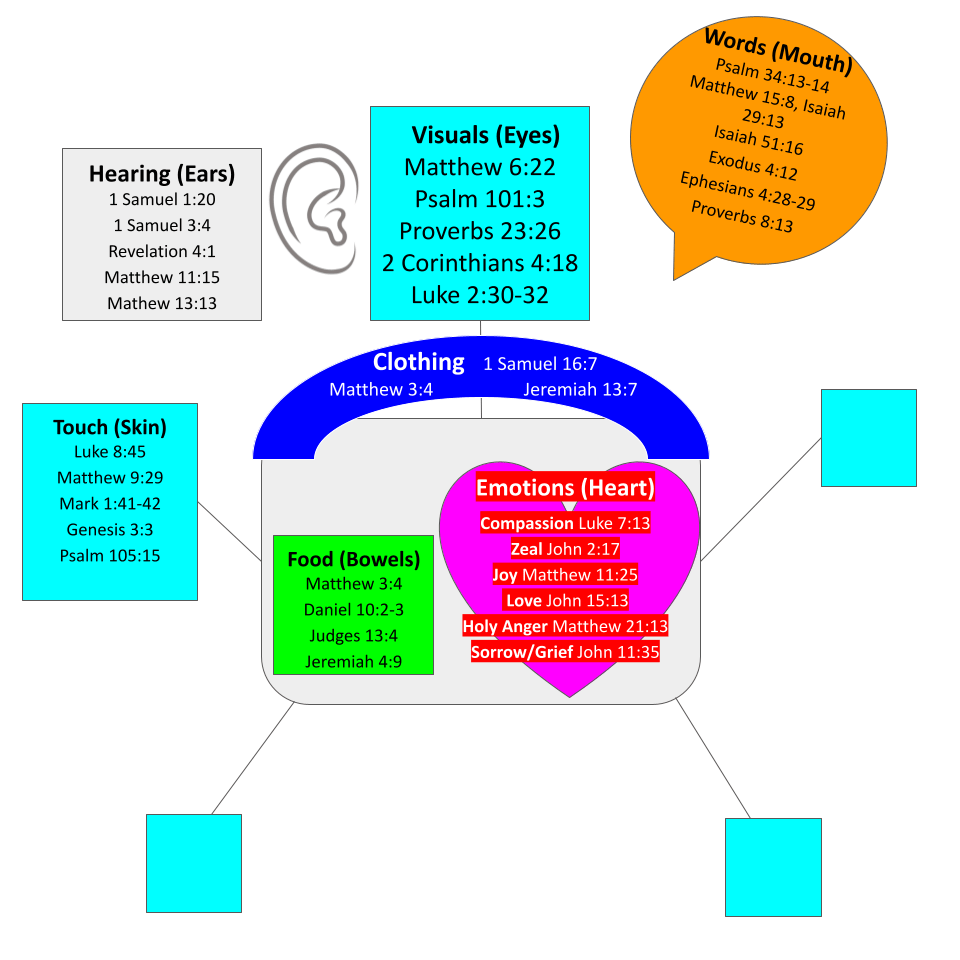
Check out the table and infographic below to find more verses!
Eyes (Visuals)
Verse
Text
Theme
Matthew 6:22
“The eye is the lamp of the body. If your eyes are healthy,[a] your whole body will be full of light. But if your eyes are unhealthy, your whole body will be full of darkness. If then the light within you is darkness, how great is that darkness!
Responsibility to have pure sight for God
Psalm 101:3
I will not look with approval on anything that is vile.
I hate what faithless people do; I will have no part in it.
Sensitivity towards unclean visuals
Proverbs 23:26
My son, give me thine heart, and let thine eyes observe my ways.
Invitation to observe God
2 Corinthians 4:18
“So we fix our eyes not on what is seen, but on what is unseen, since what is seen is temporary, but what is unseen is eternal.”
Invitation to observe the supernatural realm
Luke 2:30-32
“For my eyes have seen your salvation, which you have prepared in the sight of all nations: a light for revelation to the Gentiles, and the glory of your people Israel.”
Invitation to observe Jesus
Mouth (Words)
Verse
Text
Theme
Psalm 34:13-14
keep your tongue from evil and your lips from telling lies. 14 Turn from evil and do good; seek peace and pursue it.
Responsibility to be a pure mouthpiece for God
Ephesians 4:28-29
Let no unwholesome talk come out of your mouths, but only what is helpful for building up the one in need and bringing grace to those who listen.
30And do not grieve the Holy Spirit of God, in whom you were sealed for the day of redemption.
Responsibility to be a pure mouthpiece for God
Proverbs 8:13
To fear the LORD is to hate evil; I hate pride and arrogance, evil behavior and perverse speech.
Sensitivity to cursing, evil speech
Exodus 4:12
“Now go; I will help you speak and will teach you what to say.”
Responsibility to speak according to what you have heard from God
Isaiah 51:16
“I have put my words in your mouth and covered you with the shadow of my hand— I who set the heavens in place, who laid the foundations of the earth, and who say to Zion, ‘You are my people.’”
Word of God as inheritance
Isaiah 29:13, Matthew 15:8,
“’These people honor me with their lips, but their hearts are far from me.”
Discerning lip service versus truth
Bowels (Food)
Verse
Text
Theme
Matthew 3:4
John’s clothes were made of camel’s hair, and he had a leather belt around his waist. His food was locusts and wild honey.
Food choice as a prophetic sign
Judges 13:4
Now see to it that you drink no wine or other fermented drink and that you do not eat anything unclean.
Individual sensitivity to ingredients
Daniel 10:3-4
At that time I, Daniel, mourned for three weeks. 3 I ate no choice food; no meat or wine touched my lips; and I used no lotions at all until the three weeks were over.
Profound grief that leads to lost appetite
Jeremiah 4:9
My bowels, my bowels! I writhe! The walls of my heart! My heart is restless within me, I cannot keep silent, for I hear [in] my inner self the sound of a horn, [the] alarm of war.
Profound grief that leads to lost appetite or digestive pain
Appearance (Clothing)
Verse
Text
Theme
1 Samuel 16:7
But the Lord said to Samuel, “Do not consider his appearance or his height, for I have rejected him. The Lord does not look at the things people look at. People look at the outward appearance, but the Lord looks at the heart.”
Discerning people’s external appearance vs. spiritual reality
Matthew 3:4
John’s clothes were made of camel’s hair, and he had a leather belt around his waist. His food was locusts and wild honey.
Clothes choice as a prophetic sign
Jeremiah 13:7
So I went to the Euphrates and dug it out of the hole where I had hidden it. But now it was rotting and falling apart. The loincloth was good for nothing.
Clothes choice as a prophetic sign
Heart (Emotions)
Verse
Text
Theme
Luke 7:13
Compassion When the Lord saw her, his heart went out to her and he said, “Don’t cry.”
Intensity, sensing God’s emotions
John 2:17
Zeal His disciples remembered that it was written, “Zeal for your house will consume me.”
Intensity, sensing God’s emotions
Matthew 11:25
Joy At that time Jesus said, “I praise you, Father, Lord of heaven and earth, because you have hidden these things from the wise and learned, and revealed them to little children.”
Intensity, sensing God’s emotions
John 15:13
Love Greater love has no one than this: to lay down one’s life for one’s friends.
Intensity, sensing God’s emotions
Matthew 21:13
Holy Anger He said to them, “The Scriptures declare, ‘My Temple will be called a house of prayer,’ but you have turned it into a den of thieves!”
Intensity, sensing God’s emotions
John 11:35
Sorrow/Grief Jesus wept.
Intensity, sensing God’s emotions
Skin (Touch)
Verse
Text
Theme
Luke 8:45
“Who touched me?” Jesus asked. When they all denied it, Peter said, “Master, the people are crowding and pressing against you.”
Sensitivity to touch
Matthew 9:29
Then he touched their eyes, saying, “According to your faith be it done to you.”
Touch as part of healing
Mark 1:41-42
Moved with pity, he stretched out his hand and touched him and said to him, “I will; be clean.” And immediately the leprosy left him, and he was made clean.
Touch as part of healing
Genesis 3:3
But God said, ‘You shall not eat of the fruit of the tree that is in the midst of the garden, neither shall you touch it, lest you die.’”
Unclean touch as leading to a curse
Psalm 105:15
“Touch not my anointed ones, do my prophets no harm!”
Warning involving harmful physical touch
Ears (Sound)
Verse
Text
Theme
1 Samuel 1:20
So in the course of time Hannah became pregnant and gave birth to a son. She named him Samuel, saying, “Because I asked the Lord for him.”
Samuel’s Nabi calling relates to his mother’s experience, name meaning related to sound
1 Samuel 3:4
Then the Lord called Samuel. Samuel answered, “Here I am.”
Later, Samuel heard God calling to him
Revelation 4:1
After this I looked, and there before me was a door standing open in heaven. And the voice I had first heard speaking to me like a trumpet said, “Come up here, and I will show you what must take place after this.”
John the Revelator also heard in the Spirit, part of Seer gifting
Matthew 11:15
He who has ears to hear, let him hear.
Invitation to perceive revelation by sound
Matthew 13:13
This is why I speak to them in parables, because seeing they do not see, and hearing they do not hear, nor do they understand.
Parables as a means of overcoming issues with spiritual sight and sound
Prayer
Lord, please equip each of the people using this resource to war effectively for their families.
Give them discernment to understand the root cause of their child’s physical or emotional symptoms.
In the name of Jesus’, protect their children from spiritual harassment and abuse.
Help us learn more about you through the way we take care of our families.
One of the most common biblical precepts from the life of Daniel through Jesus is, “You have got to know your history to know your inheritance.”
Before the coming of Jesus, John the Baptist reminded Israel of their history as part of his ministry to “turn the hearts of the children to their fathers” (Malachi 4:5-6). When new generations learn the history of people of faith, they receive an inheritance which “makes straight the way for the Lord” to do even more on the Earth (Isaiah 40:3).
Transition: From Captivity into Reformation
Corporately right now, spirit-led Christians around the world are crossing over from a historical period of captivity into reformation. In order to have wisdom to navigate this radical shift in the Body of Christ, Christians must learn from the biblical history of the Babylonian exile and reconstruction of Jerusalem.
There are various lessons that Israel’s pre-exile, exile, and post-exile periods can teach contemporary Christians about how to partner with God at this time.
Neglect that Causes Exile: Learning from Hezekiah’s Failure Pre-Exile
Not long after social success, military victory, and personal deliverance does Hezekiah stumble. Success causes Hezekiah to fall asleep at a time when he should have been most alert. Instead of discretely hiding the strength of his Kingdom, he leads visiting Babylonian emissaries on a grand tour of his stored riches. In both pride and naïveté, he flaunts the inheritance that should have been guarded and stored up for his children.
In light of this colossal failure of judgement, Isaiah tells him that in the days of his predecessors, his indiscretion would cause disaster.
“Behold, the days are coming, when all that is in your house, and that which your fathers have stored up till this day, shall be carried to Babylon. Nothing shall be left, says the Lord.”
Beyond just material wealth, Babylon would even steal his most important gift: his offspring.
And some of your own sons, who will come from you, whom you will father, shall be taken away, and they shall be eunuchs in the palace of the king of Babylon.”
Isaiah 39:7
In moments like these, most parents would beg God for forgiveness. But in shocking disregard, Hezekiah focuses merely on himself.
Then Hezekiah said to Isaiah, “The word of the Lord that you have spoken is good.” For he thought, “There will be peace and security in my days.”
Isaiah 39:8
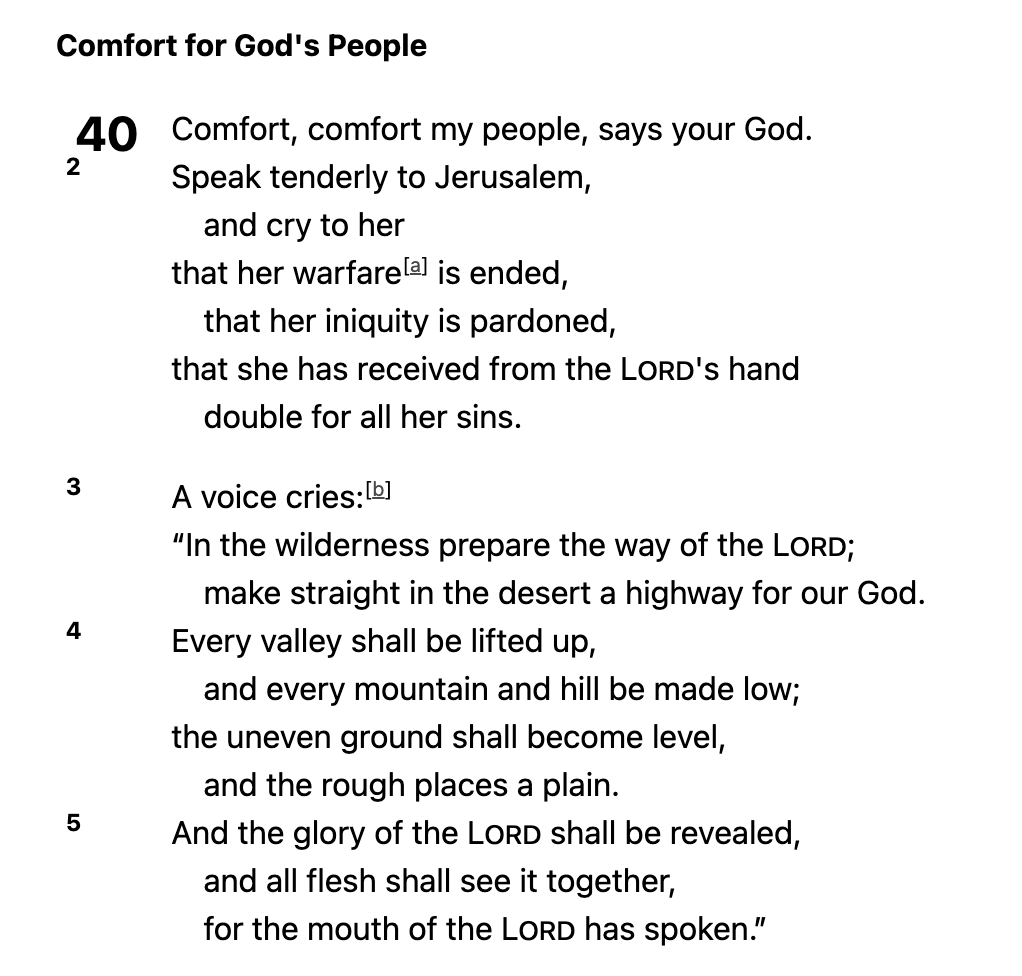
As a prophet, Isaiah’s response is much more attuned to God’s emotions. In Isaiah 40-45, he prophesies comfort to children of Israel that would be taken captive.
Later on, John the Baptist would reveal the same highway of repentance that Isaiah prophesies (Isaiah 40:3, John 1:23). Ultimately, God would overcome the sins of David, Hezekiah, and all of Israel’s leaders through his own King, Jesus. Ultimately, Jesus’ faithfulness to the Church would restore and create a highway for all people to become Godly offspring.
Has not the one God made you? You belong to him in body and spirit. And what does the one God seek? Godly offspring. So be on your guard, and do not be unfaithful to the wife of your youth.
Malachi 2:15
I will proclaim the Lord’s decree:
He said to me, “You are my son; today I have become your father. 8 Ask me, and I will make the nations your inheritance, the ends of the earth your possession.
Psalm 2:7-8
During the Exile: Learning from Babylon’s Mis-example
In the composition of the books of Esther and Daniel, the biblical writers insert tongue-in-cheek mockery of Babylon’s pride and sense of permanence.
In both Daniel and Esther, the royal advisors and Kings claim that their law is perfect and “cannot be repealed” by even the king’s decrees.
“Now, Your Majesty, issue the decree and put it in writing so that it cannot be altered—in accordance with the law of the Medes and Persians, which cannot be repealed.”
Daniel 6:8
“Now write another decree in the king’s name in behalf of the Jews as seems best to you, and seal it with the king’s signet ring—for no document written in the king’s name and sealed with his ring can be revoked.”
Esther 8:8
God upstages the laws of Babylon through his authority to command the Lion’s mouths to remain shut (natural law), and through causing Xerxes to issue an entirely separate (contradictory) law in defense of the Jews. Ultimately, only Yahweh’s law is eternal.
As a symbol of all nations whose pride, materialism, and injustice would ultimately inspire God’s wrath, God ultimately defeats Babylon through Jesus’ triumph on the cross.
A second angel followed and said, “’Fallen! Fallen is Babylon the Great,’ which made all the nations drink the maddening wine of her adulteries.”
Revelation 14:8
God blames Babylon for the spirit of Whoredom that turns the nations hearts away from him, increases injustices like slavery, and allows human lives to be made worthless.
The merchants of the earth will weep and mourn over her because no one buys their cargoes anymore— 12 cargoes of gold, silver, precious stones and pearls; fine linen, purple, silk and scarlet cloth; every sort of citron wood, and articles of every kind made of ivory, costly wood, bronze, iron and marble; 13 cargoes of cinnamon and spice, of incense, myrrh and frankincense, of wine and olive oil, of fine flour and wheat; cattle and sheep; horses and carriages; and human beings sold as slaves.
Revelation 18:11-13
“‘Woe! Woe to you, great city, dressed in fine linen, purple and scarlet, and glittering with gold, precious stones and pearls! 17 In one hour such great wealth has been brought to ruin!’
Revelation 18:17
Like Daniel, God’s people are warned to not assimilate to Babylon but instead to value the humility, service, generosity, and justice of Jesus’ Kingdom.
The certain defeat of Babylon carries a strong warning for national leaders and nationalist churches today: Proclaiming your own national greatness will result in ruin.
Pride may be the rule of the earth, but Christians serve a different King and Kingdom. Judging from the life of Jesus, no one is qualified to rule within the Kingdom of God without first becoming a servant (Matthew 23:11, Isaiah 49).
Coming out of Exile: Each One has a Part to Play
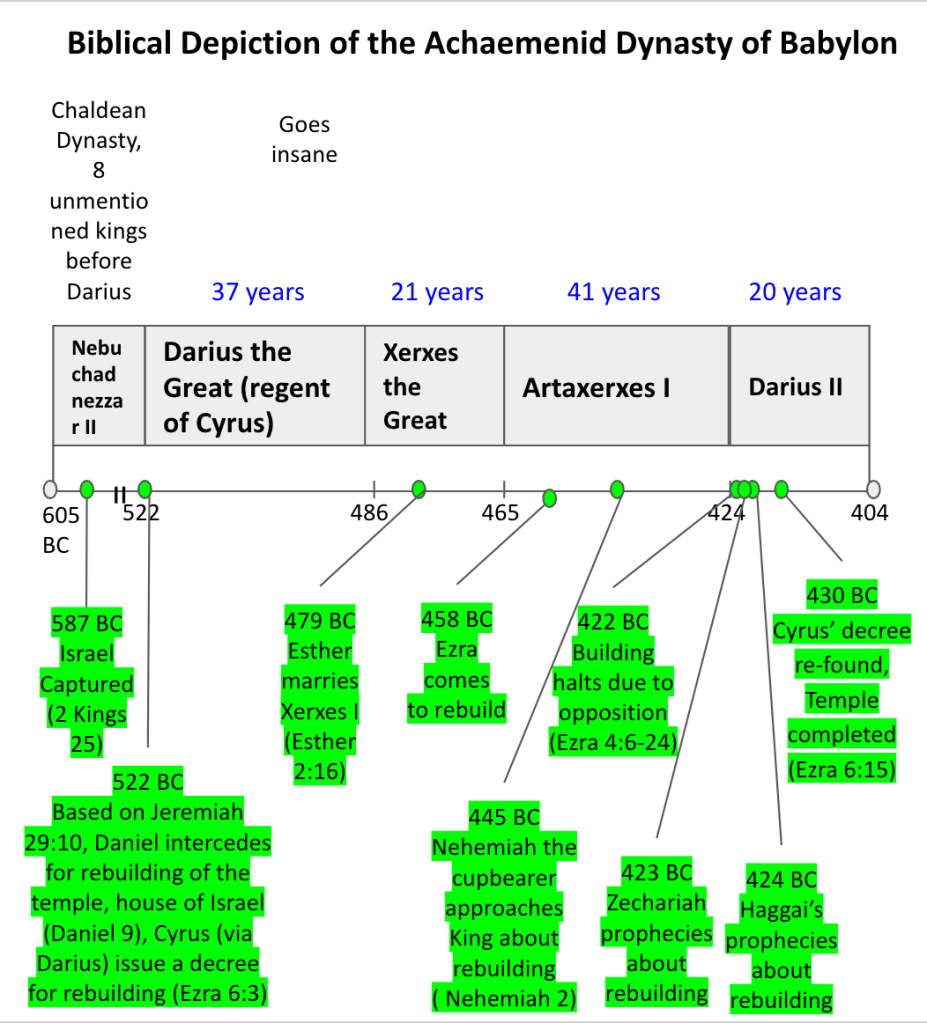
About 100 years after Isaiah, as King Nebuchadnezzar II of Babylon approached, Jeremiah would also offer hope of restoration to Jerusalem’s offspring (Jeremiah 30:18-24). Only the poorest people would remain in the land while the descendants of Israel’s kings were taken captive. In order to come out of captivity, each of the children of Israel would need to play their part in seeing God’s promises fulfilled.
“I will raise up Cyrus in my righteousness: I will make all his ways straight. He will rebuild my city and set my exiles free, but not for a price or reward, says the LORD Almighty.”
Isaiah 45:13
Daniel’s stewardship of God’s word ultimately sets both the process of rebuilding the temple and rebuilding God’s house through Christ in motion.
Stewardship’s Effects on Human History
Similarly to the revelation released, sealed, and rediscovered after Daniel, God sends scribes at the beginning of all major social reformations. For that reason, the Church will and already is seeing a rise of prophetic scribes and written prophesy. These scribed words and scribes will provide a rudder for decades and centuries into the reformation process God is currently initiating.
This pattern is well-documented in biblical history. For example, in 2 Chronicles 34 under King Josiah’s reforms, priests re-discovered lost books of the law (2 Chronicles 34:14-33). In response to Josiah’s heart posture of worship, the Lord allowed these books to be found so that the people would have guidelines to eliminate the idol worship that had become common.
In general, God is not mocked. He waits until appointed times to share things he has intentionally hidden, and moves through individuals to see his reformation purposes established.Can you imagine what would happen if all of us were that intentional as Daniel in our personal and public lives, to hide things entirely until their appointed times?
The Role of the Deliverer
As stated earlier, Babylon’s empire used excessive violence as a way of saving face domestically and promoting military strength abroad.
Gentleness and Humility
Esther’s role as Deliverer would have been different than Deborah’s role as Judge. While both women served as leaders for their people, Esther’s priority was to preserve the people’s lives long enough to see the day of deliverance. Therefore, Esther had to find a style of leadership for a foreign context where in spite of her title, she held no true authority. While Deborah’s purpose was to directly lead people into victory to deal with crises within Israel’s borders, Esther had to serve as a symbol of her people, modeling Christlike humility and gentleness in order to avoid becoming a target. While humility and gentleness in conduct are the responsibility of all Christians, the humility of Christians in high risk and hostile ministry contexts today saves lives.
A gentle answer turns away wrath, but a harsh word stirs up anger.
Proverbs 15:1
A king’s wrath is a messenger of death, but the wise will appease it.
Proverbs 16:14
Discretion
Esther also models an outstanding degree of discretion. At the request of her uncle, she sees the wisdom in keeping her Jewish identity private. She obediently conceals aspects of herself so that she can reveal these traits at a time when it would serve her community. Unlike (Western) cultures that focus excessively on individuals’ rights to self-expression, there are specific situations where a high degree of discretion makes individuals and their communities safe.
Discretion will guard you, Understanding will watch over you.
Proverbs 2:11
As a ring of gold in a swine’s snout So is a beautiful woman who lacks discretion.
Proverbs 11:22
Obedience
Lastly, Esther’s obedience in the face of tangible danger preserved the lives of herself and her family.
Esther passed the test of hiddenness, but she needed to pass the test of action in order to not die.
“Do not think that because you are in the king’s house you alone of all the Jews will escape. For if you remain silent at this time, relief and deliverance for the Jews will arise from another place, but you and your father’s family will perish. And who knows but that you have come to your royal position for such a time as this?”
Esther 4:13-14
Today, Christians sometimes believe that because of their privilege or position, they will be able to remain in hiding and avoid opposition. Sadly, conditional prophesy demonstrates that hiding when God has called you into action can have catastrophic consequences. In conditional prophetic words, God attaches specific conditions that his people are called to align with and action. If Esther would have stayed at a theoretical level of knowing God’s promises and remained hidden, at minimum her life, her family’s lives, and their future generations would have been eliminated.
Esther’s humility, discretion, and obedience allowed her to adopt a leadership style that would keep her and her community safe in the midst of chaos. She demonstrated that when intentionally chosen, meekness can be its own form of strength.
Role of the Shepherd
Vulnerability
Several decades after Esther marries the King, Nehemiah has a position of influence as Artaxerxes I’s cupbearer. Similar to Esther’s role in proximity to the King, Nehemiah has to choose to risk. However, unlike Esther, who has to remain calm in presenting her requests to the King, Nehemiah must own his emotions.
Like men and women today who would prefer to remain composed but may instead need to be transparent about the sin’s emotional toll on their lives, Nehemiah actually has to lead with vulnerability.
And the king said to me, “Why is your face sad, seeing you are not sick? This is nothing but sadness of the heart.” Then I was very much afraid. 3 I said to the king, “Let the king live forever! Why should not my face be sad, when the city, the place of my fathers’ graves, lies in ruins, and its gates have been destroyed by fire?”4 Then the king said to me, “What are you requesting?” So I prayed to the God of heaven.
Nehemiah 2:2-4
It isn’t surprising that some of God’s early adapters are those who are most in touch with his heart to see the new thing established. Nehemiah demonstrates that without emotional engagement, the people of God are next to useless to the world.
Justice and Mercy
The King’s solidarity with Nehemiah gives Nehemiah favor to travel and lead the rebuilding effort in Jerusalem. Throughout the book of Nehemiah, for many decades, and likely the majority of his life, Nehemiah continues to enlist the people, delegate responsibility, and persevere until the temple is established.
However, in order to build a new temple, Nehemiah would have to correct the abuses of the Old temple. Specifically, God was looking for Nehemiah to address the injustices against Israel’s poorest citizens, who had long been taken advantage of by the ruling class prior to the ruler’s exile. Like all Reformations, Nehemiah knew that justice for the oppressed must be part of the rebuilding process.
In Nehemiah 4, listens to the people and discovers that some of the poor who remained in Jerusalem are have made themselves a new ruling class. These leaders have extorted the poor for money so severely that the poor have had to sell their children into slavery.
Still others were saying, “We have had to borrow money to pay the king’s tax on our fields and vineyards. 5 Although we are of the same flesh and blood as our fellow Jews and though our children are as good as theirs, yet we have to subject our sons and daughters to slavery. Some of our daughters have already been enslaved, but we are powerless, because our fields and our vineyards belong to others.”
Nehemiah 4:4-5
Once again, the depravity of the house of Israel can be measured by the treatment of its’ children. In mercy, Nehemiah confronts and rebukes the leaders and gives them an opportunity to make things right. Through a prophetic act, he warns them that if they return to injustice, they and their children would be defrauded.
Then I summoned the priests and made the nobles and officials take an oath to do what they had promised. 13 I also shook out the folds of my robe and said, “In this way may God shake out of their house and possessions anyone who does not keep this promise. So may such a person be shaken out and emptied!”
Nehemiah 4:12-13
Since God’s warnings against extortion date back to the Exodus, Nehemiah demonstrates tremendous mercy.
Take no interest from him or profit, but fear your God, that your brother may live beside you.
Leviticus 25:36
Woe to those who enact evil statutes And to those who constantly record unjust decisions, So as to deprive the needy of justice And rob the poor of My people of their rights, So that widows may be their spoil And that they may plunder the orphans.
Isaiah 10;1-2
Ultimately, mercy and justice were the sacrifices that God wanted all along.
For I desire mercy, not sacrifice, and acknowledgment of God rather than burnt offerings.
Hosea 6:6
Beyond just rebuking leaders, Nehemiah’s authority to establish justice comes from the mercy he demonstrated to the poor as their leader. Just as Christ gave himself away, When Nehemiah recognized the extent of the suffering of the poor, he surrenders his own rights in order for them to flourish.
In spite of all this, I never demanded the food allotted to the governor, because the demands were heavy on these people.
19 Remember me with favor, my God, for all I have done for these people.
But I have made no use of any of these rights, nor am I writing these things to secure any such provision. For I would rather die than have anyone deprive me of my ground for boasting. 16 For if I preach the gospel, that gives me no ground for boasting. For necessity is laid upon me. Woe to me if I do not preach the gospel! 17 For if I do this of my own will, I have a reward, but if not of my own will, I am still entrusted with a stewardship. 18 What then is my reward? That in my preaching I may present the gospel free of charge, so as not to make full use of my right in the gospel.
1 Corinthians 9:15-18
Today like Nehemiah, Jesus challenges Christians to give away their rights in service of vulnerable people who could not receive good news without sacrificial giving.Through vulnerable leadership, justice, and mercy, Nehemiah demonstrates capacity as a Good Shepherd.
And he answered them, “Whoever has two tunics is to share with him who has none, and whoever has food is to do likewise.”
Luke 3:11
Before the people can re-inhabit the new Jeru-shalem (“City of Peace”) true peace must come from Christlike justice.
Righteousness and justice are the foundation of your throne; love and faithfulness go before you.
Psalm 89:14
The Role of the Prophets
Strategic, Timely National Words
After Nehemiah starts rebuilding and before Ezra comes to consecrate the temple, prophets Haggai and Zechariah shared the Lord’s sense of urgency for the work to be completed. The effect of these strategic prophesies was that both the future governor of Israel (Zerubbabel) and Israel’s future High Priest (Jeshua) supported the rebuilding process.
Now the prophets, Haggai and Zechariah the son of Iddo, prophesied to the Jews who were in Judah and Jerusalem, in the name of the God of Israel who was over them. 2 Then Zerubbabel the son of Shealtiel and Jeshua the son of Jozadak arose and began to rebuild the house of God that is in Jerusalem, and the prophets of God were with them, supporting them.
Ezra 5:1-2
Now, even though Haggai and Zechariah gave similar prophetic words within a year of one another, they were very different as prophets. Haggai 1:1 identifies Haggai as a nabi prophet or someone who receives mostly internal auditory revelation. Another clue that Haggai is a nabi prophet is that most of his prophesies start with the address, “This is what the Lord says“, as though he is repeating God’s articulated words secondhand (ex: Haggai 1:5). The book of Haggai is relatively short compared with the narrative style of the book of Zechariah, it almost serves as a ledger of the specific words Haggai delivers and their effects.
While Zechariah is also described in Zechariah 1:1 as a Seer prophet, the book of Zechariah contains so much visual revelation that it is likely he functioned in some ways as a Seer prophet also. While Haggai’s prophecies focus mostly on the current day issues facing leaders and the God’s promise to re-purify the people, Zechariah’s prophesies stretch from current events, Messianic hope, even until the Day of the Lord (ie, Judgement Day).
Knowing Your Identity as a Prophet: Comparing Haggai and Zechariah
Another reason Haggai and Zechariah’s prophesies were effective is that each owned their own specific assignment as a prophet without needing to assimilate or compete with one another. Immature prophets are not very useful to the Kingdom of God for various reasons, but with maturity and a clear sense of identity comes the capacity to collaborate as part of a prophetic team.
Haggai
Zechariah
Year that prophecies are first recorded
~424 BC
~423 BC
Types of Revelation
Auditory
Visual
Length
2 chapters
12 chapters
Major Themes
Exposing leaders’ excuses to delay rebuilding the Temple, God’s promise to re-purify the people, God endorsing Zerubabbel to finish the work
Haggai more focused on the qualitative difference between the first and second temples/houses of Israel/covenants.
Testing and Gathering, Gathering, Purification of the Priesthood from False Prophesy, Jesus as New High Priest, Justice and Mercy, Promise to Bless Jerusalem again, Judgment on God’s enemies, Re-unification of Israel, Jesus as the Better Shepherd
More specifically, Zechariah underscores the importance of justice to define and usher in Jesus’ Kingdom (Zechariah 7), the redemption of Judah (Southern Kingdom) (Zechariah 10), the people’s repentance after murdering Christ (Zechariah 12:10-14), cleansing from false prophesy (Zechariah 13), and the Day of the Lord (Zechariah 14).
Style
Ledger of verbal prophesies and their effects
Narrative
Length of Time Prophesied
Current events
Current events – Judgment Day
Regardless of their distinctions, as National Prophets, both Haggai and Zechariah specifically name and address Israel’s leaders:
To Rulers: Zerubbabel, son of the Shealtiel the Governor of Judah
To Priests: Joshua, son of Zodak the High Priest
Furthermore, both prophets give personal prophesy as an element of their effective national prophetic words.
Haggai prophesies to Zerubbabel that God has chosen him as an instrument to finish the rebuilding (Haggai 2:20-23).
Zechariah prophesies to Jeshua about purifying his conduct (Zechariah 3:6-7) and then uses him to prefigure Jesus (3:8), since Joshua and Yeshua mean the same thing (Deliverer).
Hope
Lastly, in each personal prophesy and the arch of their national prophetic words, both Haggai and Zechariah ground their prophesies in hope.
“The glory of this present house will be greater than the glory of the former house,” says the Lord Almighty. “And in this place I will grant peace.”
Haggai 2:9
Without hope, it is impossible for people to receive words effectively.
Without these strategic, well-timed national words, Israel would not have had the formal support and internal alignment they needed to overcome spiritual and physical opposition to the temple’s rebuilding.
The Role of the Teacher
Finally, Ezra is a Priestly Teacher who comes to oversee the rebuilding of the Temple in the reign of Artaxerxes. While Ezra travels to Jerusalem over 10 years in advance of Nehemiah, he ultimately oversees not just the construction but the future of the temple.
Similar to the differences between Haggai and Zechariah, Nehemiah and Ezra were wildly different builders. While the book of Nehemiah is written as a narrative, the historical sections of the book of Ezra demonstrate Ezra’s training as a priest. The first six chapters of the book focus on the history of the rebuilding effort from Cyrus (time of Daniel) to Artaxerxes (Ezra’s day).
Ezra needed to help the people understand their community’s sacred history so that they could embody its future. During Reformation, the Priest Teacher’s primary focus is to build the new thing in a way that honors the past. Just as Jesus’s new covenant build on the foundation of the Old Covenant, so the new temple would have to mimic and expand the responsibility of the first temple. Today, believers know that the body of each believer in Christ has become a new temple of the Holy Spirit.
Under Ezra, the people acknowledged the specific sins that led to the temple’s destruction (Ezra 9).
Nevertheless, they were disobedient and rebelled against you and cast your law behind their back and killed your prophets, who had warned them in order to turn them back to you, and they committed great blasphemies.
Nehemiah 9:26
Under Ezra, they took responsibility for obeying God’s covenant (Nehemiah 10:28-39).
We will not give our daughters to the peoples of the land or take their daughters for our sons. 31 And if the peoples of the land bring in goods or any grain on the Sabbath day to sell, we will not buy from them on the Sabbath or on a holy day. And we will forego the crops of the seventh year and the exaction of every debt.
Nehemiah 10:30-31
Just like the New Covenant under Jesus, Ezra’s leadership demonstrates that there is no salvation and restoration without repentance.
Just as a person seeks God because they have faith that he exists (even if only at the level of a nudge)…
And without faith it is impossible to please God, because anyone who comes to him must believe that he exists and that he rewards those who earnestly seek him.
Hebrews 11:6
So salvation requires you to be personally aware that you need a Savior.
For all have sinned and fall short of the glory of God,
Romans 3:23
Peter replied, “Repent and be baptized, every one of you, in the name of Jesus Christ for the forgiveness of your sins. And you will receive the gift of the Holy Spirit.
Acts 2:38
Reformation under Ezra caused the Israelites to not merely blame their ancestors for the sins’ of the community. They recognized that they had a responsibility before God to be part of the solution and set a new standard.
Purity and alignment with the righteousness of Christ causes qualifies Priestly Teachers to teach. When Priestly Teachers lead in Reformation, the people respond by being teachable.
Over time, a community’s teachability produces wisdom that they can pass on to the generations. In term, wisdom prevents exile by preventing the conditions for sin.
The beginning of wisdom is this: Get wisdom. Though it cost all you have, get understanding.
Proverbs 4:7
Fear of the LORD is the foundation of wisdom. Knowledge of the Holy One results in good judgment.
Proverbs 9:10
Who is wise and understanding among you? Let them show it by their good life, by deeds done in the humility that comes from wisdom.
James 3:13
This Era: Choose to Engage
Just like Daniel, today’s Christians have various ancestors of faith who “longed to see the day of Christ” but were unable to (Matthew 13:17, Luke 10:24).
After thousands of years of history waiting on the full revelation of Jesus, the Church is at the precipice of a new Apostolic Era of Reformation. The era of isolation and standing in judgment of secular society is over. Right now, Jesus is challenging his church to enter into the Era of Engagement to see his Kingdom be fully established on the earth.
For those who are willing to hear, the lives of the Israel’s exiles reveal key truths for how to come out of exile:
Daniel: Be diligent with every word of God and hold him to his promises. Intercede with leaders and seal up the revelation.
Esther: Lead with meekness, discretion, and obedience to preserve the people’s lives. Let the gentleness of your approach set you apart.
Haggai and Zechariah: Prophesy strategically and in season to enlist key leaders and organize the people.
Nehemiah: Lead with vulnerability and solidarity with the oppressed. Lay justice as your foundation.
Ezra: Respect the past as you establish the new. Lead the people in repentance so that wisdom can flourish and preserve what God has established.
Prayer
Jesus, give us the grace to perceive how you are calling us to partner with you at this time in history.
Help us to draw on the history of your faithful people as our inheritance, to enrich and establish the generations.
Deliver us from being too comfortable or too distracted political or economic crises to be any earthly good.
Help us to be doers (James 1:22) and not spectators of the world, remaining in Babylon while others are out building.
Make clear the roles that we are meant to play so that we can establish your Kingdom on Earth as it is in Heaven.